A hair transplant works when the right patient has the procedure at the right time. Stable hair loss, adequate donor density, realistic expectations, and good general health are the foundation of every successful result. This blog covers what qualifies a patient, what disqualifies them, what specific factors are assessed at consultation, and what can change a patient’s candidacy over time.
Not everyone who wants one is ready for one. And not everyone who is turned away today is turned away permanently.
A hair transplant moves follicles from an area genetically resistant to DHT to an area where loss has occurred. For that to produce a lasting natural result, several conditions need to be true simultaneously: the loss pattern must be stable, the donor supply must be adequate, the follicles in the recipient area must be genuinely absent rather than temporarily inactive, and the patient must have realistic expectations about what the procedure can deliver. When these conditions are met, a hair transplant produces a permanent, natural-looking result. When they are not, the result either fails, looks wrong, or deteriorates quickly.
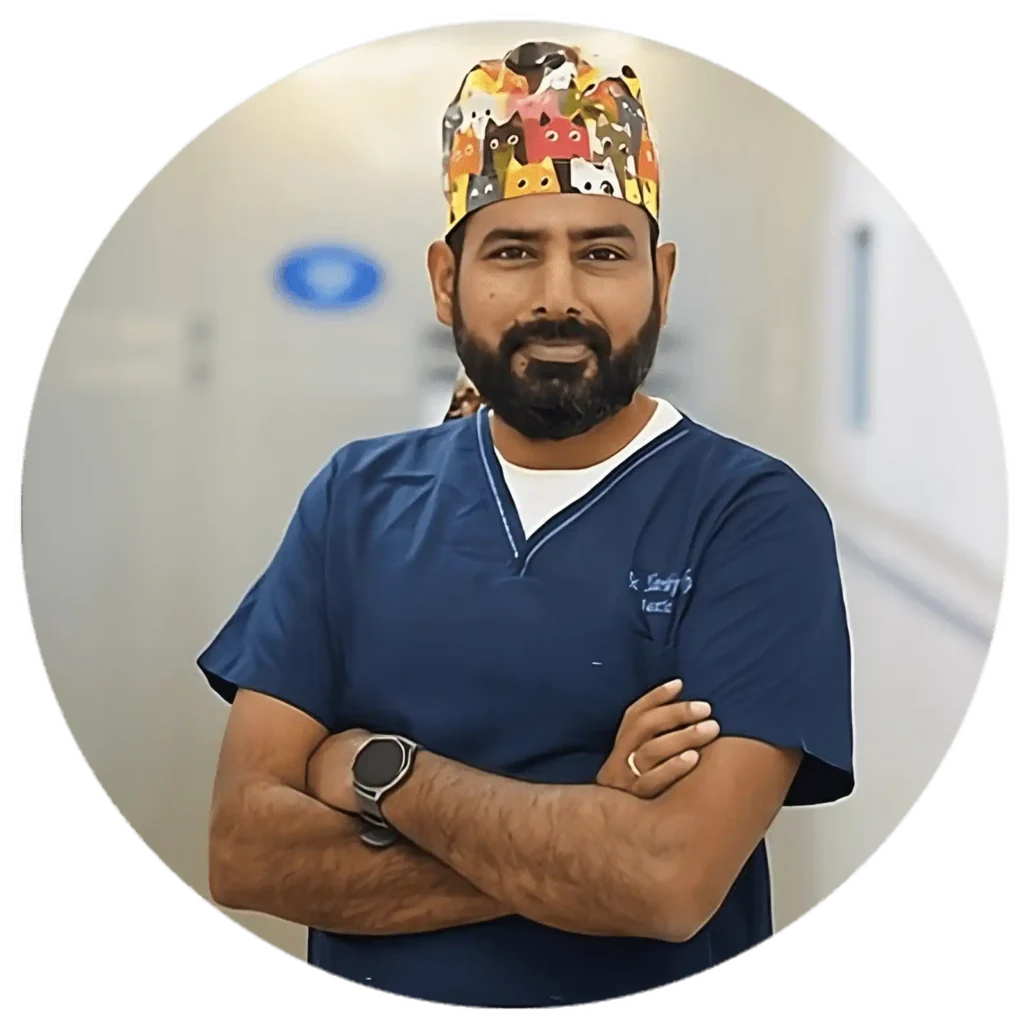
According to Dr Harikiran Chekuri, one of India’s pioneering plastic surgeons, “The ideal candidate is not defined by how much hair they have lost. It is defined by whether the conditions for a successful result are in place. Stable loss, adequate donor, realistic expectations, and good health. All four need to be present. A clinic that never declines a patient is not doing its job.”
What Makes Someone a Good Candidate for a Hair Transplant?
Five criteria determine candidacy. All five matter.
Stable hair loss pattern: Surgery on an active loss pattern deteriorates around the transplanted area. Most surgeons require 12 months of documented stability confirmed by trichoscopy, not the patient’s impression.
Adequate donor density: Donor follicles are finite. A graft count offered before scalp examination is not based on the patient’s actual case. Hair transplant planning at Redefine begins with a trichoscopy-based donor assessment.
Age and loss trajectory: Early 20s patients with a strong family history are often not candidates yet the final loss pattern isn’t established. Operating too early risks placing grafts into areas that will later lose native hair. Read Best Age for Hair Transplant for a full breakdown.
Realistic expectations: The result is constrained by donor availability. Dense coverage across a large bald area with limited donor supply is not achievable.
General health: Uncontrolled diabetes, active autoimmune conditions, bleeding disorders, and certain medications must be addressed before surgery prerequisites, not permanent disqualifiers.
Who Is Not a Good Candidate Right Now And What Can Change?
Being declined at consultation is not the same as being declined permanently.
Active or unstable hair loss: A patient whose loss is progressing month on month is not a surgical candidate until stability is confirmed. Medical therapy finasteride, minoxidil, or PRP is used to stabilise loss during this period before candidacy is reassessed.
Insufficient donor supply: Patients with diffuse thinning across the entire scalp, including the donor zone, do not have the DHT-resistant follicles that a successful transplant requires. This is a genuine anatomical limitation that surgery cannot overcome.
Unrealistic expectations: A patient who has decided what result they want before the consultation and is not open to understanding what their donor supply can deliver is not a surgical candidate until that expectation is aligned with clinical reality.
Age under 25 with progressing loss: Surgery at this stage risks locking in a plan based on an incomplete picture of the final loss pattern. The answer is not never it is not yet. Medical therapy during this period manages loss while the pattern establishes itself.
What changes candidacy over time: Stability achieved with medical therapy. Weight loss in patients whose BMI was elevated. Resolution of a nutritional deficiency that was contributing to ongoing shedding. Maturation of the loss pattern in younger patients. For patients with hormonally driven loss PCOS, post-partum, thyroid-related hormonal stabilisation is a prerequisite. Once these conditions are met, a previously declined patient can become a strong candidate.
What to tell your surgeon at consultation: How long the loss has been progressing, any medications or treatments already tried, family history of baldness and at what age it progressed significantly, and your honest expectation for the result. That information shapes the assessment before trichoscopy begins.
Why Choose Redefine for Hair Transplant in Hyderabad?
At Redefine Hair Transplant and Plastic Surgery Centre, Dr Harikiran Chekuri brings over 20 years and more than 20,000 surgeries to every treatment decision. He is a Gold Medallist in Plastic Surgery from NTR University of Health Sciences, Paul Harris Fellow, and Vaidya Siromani awardee 2015. Redefine has been ranked No.1 Plastic Surgery Centre in the Twin States by the Times of India Health Survey for three consecutive years, 2019, 2020, and 2021.
Every hair transplant patient at Redefine receives a trichoscopy-based donor assessment, a frank discussion of what the donor supply can deliver, and a clear explanation of where they stand on each candidacy criterion before any surgical plan is confirmed. Patients who are not ready yet leave with a plan for what changes that.
Frequently Asked Questions
Who is an ideal candidate for a hair transplant?
Someone with a stable hair loss pattern for at least 12 months, adequate donor density, realistic expectations, and no medical conditions that impair healing. All four criteria need to be present.
What is the minimum age for a hair transplant?
Most surgeons are cautious with patients under 25 because the final loss pattern is not yet established. Age is not the primary criterion stability of loss and donor adequacy are.
Can women get a hair transplant?
Yes, when the candidacy criteria are met. Women with a stable, well-defined loss pattern and adequate DHT-resistant donor density are suitable candidates. Diffuse thinning across the entire scalp including the donor zone is the main disqualifier in female patients.
Does hair loss need to be completely stopped before a transplant?
It needs to be stable for a minimum of 12 months. Medical therapy is used to achieve and maintain that stability before surgery is planned.
What happens if a transplant is done too early?
Native hair around the transplanted area continues to thin, eventually leaving the transplanted follicles as an isolated dense zone in an otherwise bald area. This is why stability and loss trajectory assessment matter as much as the surgery itself.
Reference
- Bernstein RM, Rassman WR. Follicular transplantation: patient evaluation and surgical planning. Dermatol Surg. 1997;23(9):771–784.
https://pubmed.ncbi.nlm.nih.gov/9311368/ - Hair Transplantation StatPearls (2024) covers ideal candidacy criteria, donor zone assessment, and patient selection
https://www.ncbi.nlm.nih.gov/books/NBK547740/ - Shapiro R, Shapiro P. Hair transplant: patient candidacy, medical optimization, and surgical considerations. Int J Dermatol. 2026.
https://pubmed.ncbi.nlm.nih.gov/40660483/