
Scabs after a hair transplant are a normal part of healing. They form within two to three days of surgery and resolve within seven to fourteen days when the correct protocol is followed. This blog covers why scabs form, the safe day by day removal method, what accelerates their natural resolution, and the specific mistakes that cause graft loss.
You do not remove them. You create the conditions for them to come off naturally. That distinction matters more than most patients realise.A scab forms over each graft site as the body seals the micro-incision. The follicle sits directly beneath it. Forcing a scab off before it is ready pulls the follicle with it. That graft does not grow back. The correct approach is to soften, loosen, and let the scab detach on its own terms through the washing protocol, without any picking, scratching, or direct pressure.
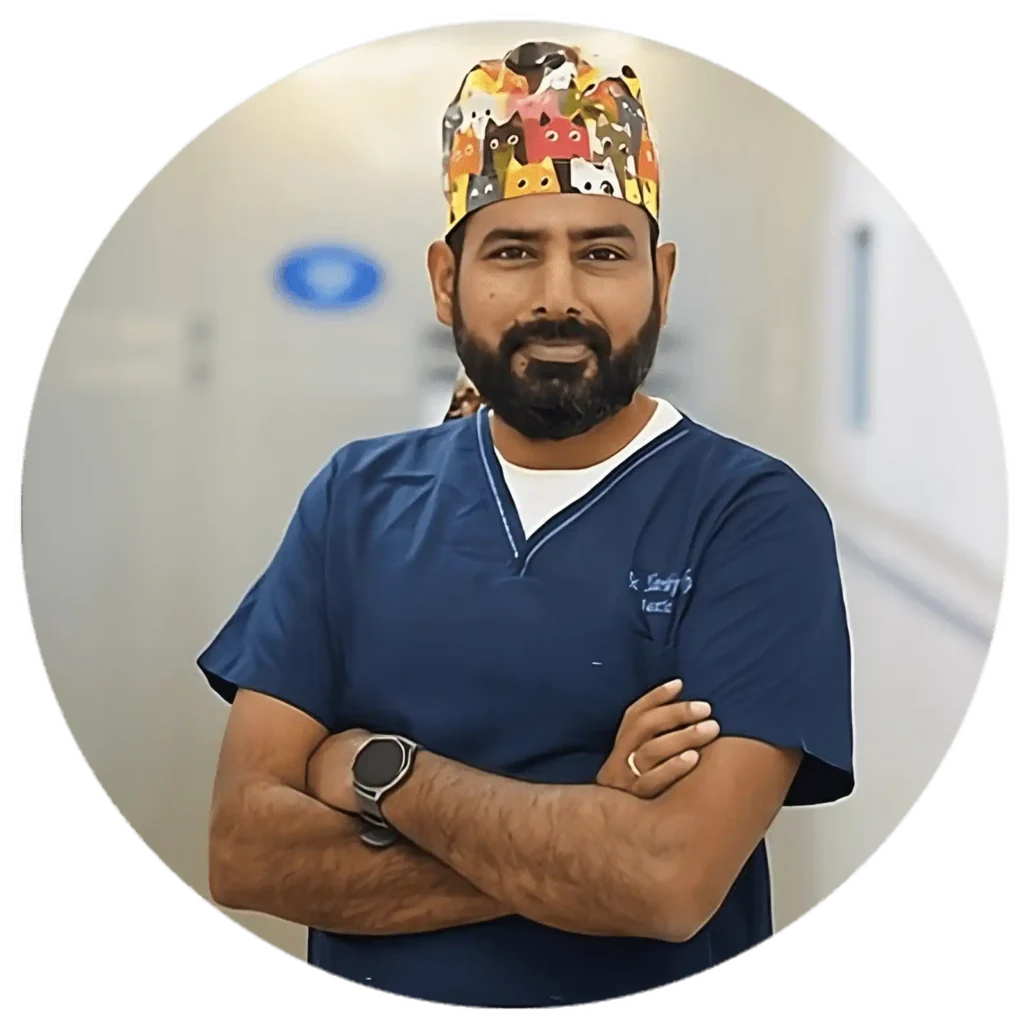
According to Dr Harikiran Chekuri, one of India’s pioneering plastic surgeons and hair transplant specialists, “The number one cause of unnecessary graft loss in the first two weeks is patients picking at scabs. The scab is not the problem. It is the body doing its job. The goal is to soften it gradually until it comes away without resistance. If it requires force, it is not ready.”
Why Do Scabs Form and What Do They Mean?
Scabs are fibrin-based crusts that form at each extraction and implantation site as part of normal wound healing. They are not a sign of infection or a problem to solve. They are confirmation that healing has begun.
- When they appear: Scabs begin forming within two to three days of surgery as fibrin and wound exudate dry at the graft sites
- What they look like: Small, slightly raised brown or reddish crusts sitting at the base of each transplanted hair shaft in the recipient area. The donor area develops similar but smaller crusts at the extraction sites
- When they resolve: Most scabs begin loosening between days seven and ten and come away fully by day fourteen with correct washing. Delayed scab detachment beyond two weeks, often caused by inadequate washing or premature manipulation, increases the risk of folliculitis and perifollicular inflammation
- What is underneath: The transplanted follicle. This is why forced removal is dangerous. The follicle is attached to the scalp through the fibrin anchoring process, but in the first week that attachment is still maturing. A scab that is mechanically removed before day ten takes a meaningful risk of dislodging what is beneath it
- Patients who want to understand the full recovery timeline alongside scab resolution can read Hair Transplant After 10 Days at Redefine, which covers what the scalp should look like at each point in the first two weeks
The Safe Scab Removal Protocol: Day by Day
The scab removal process runs in parallel with the washing protocol. Each stage builds on the last.
Days 1 to 2: Do not touch the scalp
Saline spray only. No washing, no contact, no attempts to examine or disturb the grafts. The fibrin anchoring process requires undisturbed time in this window.
Days 3 to 9: Soften with washing, no contact
- Apply clinic-supplied post-transplant shampoo or baby shampoo as foam, patted gently onto the scalp with no direct fingertip contact on the recipient area
- Pour lukewarm water from a cup to rinse. No direct shower pressure on the grafts
- The daily washing during this period softens the scabs progressively. You will notice them beginning to loosen at the edges from around day seven. Do not pull them
- Air dry only. No towel rubbing. No hair dryer
Days 10 to 14: Gentle contact to loosen scabs
This is when active but gentle softening begins.
- Apply Panthenol lotion or clinic-recommended moisturiser to the scalp thirty minutes before washing. This softens stubborn scabs and makes them easier to dislodge without force
- Wash with fingertip pads using small circular movements. Fingertip pads only. No nails
- The softened scabs will come away during washing. Let them. Do not chase or pick at the ones that do not come away in a given session. They need another day
- Pat dry with sterile gauze or paper towel. Air dry where possible
What to never do at any stage
- Do not scratch. Do not use nails. Do not use a comb or brush on the recipient area before day fourteen
- Do not pick at individual scabs. A scab that requires force is not ready
- Do not let the scalp dry out completely. Dry, hard scabs are harder to remove safely and more likely to take follicles with them when they do detach
- Do not use hot water. Hot water irritates healing tissue and does not accelerate scab softening
Every patient who undergoes hair transplant treatment at Redefine leaves with a written scab management protocol as part of their post-surgical aftercare pack. Patients can also read about how washing and scab management fit into the broader recovery plan at How to Wash Newly Transplanted Hair at Redefine.
Why Choose Redefine for Hair Transplant in Hyderabad?
At Redefine Hair Transplant and Plastic Surgery Centre, every patient leaves surgery with a complete written aftercare guide covering the scab management protocol, washing technique, and a direct line to the clinical team throughout recovery. Dr Harikiran Chekuri brings over 20 years and more than 20,000 procedures to every case. He is a Gold Medallist in Plastic Surgery from NTR University of Health Sciences, Paul Harris Fellow, and Vaidya Siromani awardee 2015. Redefine has been ranked No.1 Plastic Surgery Centre in the Twin States by the Times of India Health Survey for three consecutive years, 2019, 2020, and 2021.
Patients at Redefine do not manage scab removal through guesswork. The protocol is explained before discharge and clinical support is available for every question that comes up between surgery and the follow-up appointment.
Frequently Asked Questions
When do scabs fall off after a hair transplant?
Most scabs begin loosening between days seven and ten and come away fully by day fourteen with correct washing. Scabs persisting beyond two weeks should be assessed at a follow-up appointment.
Is it safe to scratch scabs after a hair transplant?
No. Scratching is one of the most common causes of unnecessary graft loss. The follicle sits directly beneath the scab. Forced removal risks dislodging the graft. Scabs should be softened and allowed to detach naturally through the washing protocol.
Can I use oil to soften scabs after a hair transplant?
A clinic-recommended moisturiser or Panthenol lotion applied thirty minutes before washing from day ten onwards is the appropriate softening agent. Avoid heavy oils, coconut oil, or any product not cleared by your surgeon in the first two weeks.
What if my scabs have not come off after two weeks?
Contact your surgeon or clinic. Delayed scab detachment beyond two weeks can indicate inadequate washing technique or early folliculitis. It is not a situation to manage independently.
Do scabs mean my hair transplant is failing?
No. Scabs are a normal part of healing. Their presence confirms the wound-healing process is active, not that something has gone wrong. Graft survival is not visible on the surface during this period.
References
- Jiménez-Acosta F, et al. An International Expert Consensus Statement Focusing on Pre and Post Hair Transplantation Care. Journal of Dermatological Treatment. 2023.
https://www.tandfonline.com/doi/full/10.1080/09546634.2023.2232065 - Romera de Blas C, et al. Complications in Follicular Unit Excision Hair Transplantation: Current Evidence and Practical Approaches. Frontiers in Medicine. 2026.
https://www.ncbi.nlm.nih.gov/pmc/articles/PMC12909172/ - StatPearls. Hair Transplantation. NCBI. 2024.
https://www.ncbi.nlm.nih.gov/books/NBK547740/