


Beard Hair Transplant in Hyderabad
A Beard Hair Transplant in Hyderabad may be an option for men who want to address naturally sparse facial hair, patchy beard growth or areas where hair has been lost due to scars or injuries. Since beard growth varies from person to person, the right approach depends on the cause of hair loss, facial structure and availability of suitable donor hair. A specialist consultation can help determine whether the procedure is appropriate and what results may realistically be achievable.
At Redefine Plastic Surgery & Hair Transplant Centre, we offer beard hair transplant procedures in Hyderabad for men looking to improve facial hair coverage. We assess your existing beard growth, donor hair availability, facial structure and preferred beard style before planning the procedure. Our aim is to create a beard pattern that complements your facial features while keeping expectations realistic.
Dr. Harikiran Chekuri, founder of Redefine, has over 15 years of experience in hair restoration and surgical procedures. He evaluates each patient’s concerns and discusses the suitability, approach, expected outcomes and limitations of beard transplantation before proceeding.

Beard Hair Transplant: What Should You Know?
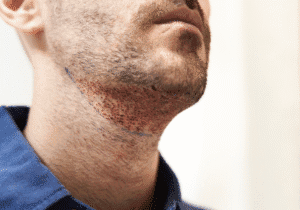
Let’s first understand how beard transplantation works and when it may be considered.
A beard hair transplant involves taking hair follicles from a donor area, usually the scalp, and transplanting them into selected areas of the face where beard growth is sparse or absent. It may be considered for men with naturally thin facial hair, patchy beard growth or hair loss resulting from scars, injuries or previous surgery.
The treatment plan depends on the existing beard pattern, facial proportions, donor hair characteristics and the density you wish to achieve. A consultation helps determine whether transplantation is suitable and what kind of coverage may realistically be possible.
What Is the Procedure for a Beard Hair Transplant in Hyderabad?
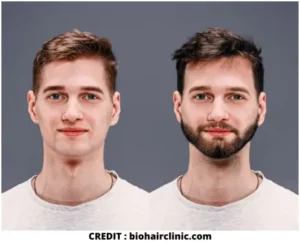
Here’s how we plan and carry out a beard hair transplant, depending on your facial hair pattern and individual requirements.
Step 1: Consultation and beard design
We assess your existing facial hair, donor area, skin condition and the areas where you want additional coverage. The beard outline, cheek line, jawline, moustache and density requirements are discussed before finalising the treatment plan.
Step 2: Donor hair assessment
Our surgeon evaluates the availability and characteristics of donor hair, generally from the back or sides of the scalp. We also discuss the number of grafts that may be needed and whether your expectations are achievable with the available donor hair.
Step 3: Medical evaluation
A medical assessment is carried out to review your medical history, medications, scalp and facial skin condition, and suitability for surgery. Any required tests are recommended based on your health and the planned procedure.
Step 4: Hair follicle extraction and implantation
Once the treatment plan is finalised, the donor follicles are extracted and implanted into the beard area according to the planned direction, angle and distribution of hair. Careful placement is important because facial hair grows in different directions across the cheeks, chin, moustache and jawline.
Beard Hair Transplant Techniques
There are different approaches to harvesting and implanting hair follicles. The technique recommended for you depends on your donor area, treatment requirements and surgeon’s assessment.
FUE (Follicular Unit Extraction)
FUE involves extracting individual hair follicular units from the donor area, commonly the back or sides of the scalp. These follicles are then implanted into selected areas of the beard.
FUE is commonly used for beard transplantation because it avoids the need for a linear donor-area incision. Small extraction marks may remain, and healing, scarring and recovery vary from person to person. The placement of follicles is planned according to the natural direction and pattern of facial hair growth.
Direct Hair Transplant (DHT)
Direct hair transplant is an implantation approach in which extracted hair follicles are placed into the recipient area using a specialised implantation instrument, according to the clinic’s technique.
The follicles are implanted individually into the beard area, with attention to the angle, direction and distribution of growth. The suitability of this approach depends on the patient’s requirements, donor hair characteristics and the surgeon’s assessment.
No technique can guarantee a particular density, scar-free result or outcome, and the most appropriate method should be discussed during consultation.
What Is the Recovery and Aftercare Following a Beard Transplant?
Proper aftercare is important following beard transplantation. Your recovery instructions may vary depending on the procedure and how your skin responds.
Our surgeon may recommend the following:
- Follow prescribed medicines and instructions for cleaning the transplanted area.
- Avoid shaving the transplanted area until your surgeon advises it is appropriate.
- Avoid touching, scratching or rubbing the implanted follicles during the initial healing period.
- Follow instructions regarding washing your face and protecting the treated skin.
- Avoid strenuous exercise or activities that may cause excessive sweating for the period advised.
- Attend follow-up appointments so the healing process can be assessed.
Transplanted hair may shed during the early weeks after surgery. This is commonly part of the hair transplant growth cycle. New growth may become noticeable over the following months, with changes continuing as the transplanted hair matures. The timeline and final appearance vary between individuals.
When Should You Consider a Beard Hair Transplant?
But how do you know if a beard transplant may be an option for you?
A beard transplant may be considered if you have:
- Naturally sparse or patchy beard growth.
- Areas of facial hair loss caused by scars or previous injuries.
- Hair loss in the beard area following surgery.
- Selected areas of facial hair loss following medical treatment or a medical condition, after appropriate evaluation.
- Uneven beard density that you wish to address.
- A beard or moustache area where additional hair coverage may be possible.
Not every type of facial hair loss requires surgery. If the hair loss is sudden, ongoing or associated with an underlying skin or medical condition, it may need evaluation and treatment before considering transplantation.
What Is the Cost of a Beard Hair Transplant in Hyderabad?
The cost is usually based on the number of grafts required and the complexity of the beard design.
At Redefine, the estimated beard hair transplant cost in Hyderabad may vary depending on the area being treated, donor hair availability, the number of grafts and the surgical plan.
The following graft estimates are indicative only and may differ after assessment.
| Facial area | Indicative graft requirement |
|---|---|
| Moustache | 500–800 grafts |
| Full goatee | 600–1,200 grafts |
| Each cheek | 300–500 grafts |
The estimated cost per graft may range from ₹50 to ₹80, depending on the treatment plan. For example, a procedure involving 600 grafts may cost approximately ₹40,000–₹60,000.
The actual beard transplant cost will be confirmed after consultation, as the graft requirement and procedure may differ from these estimates.
A beard transplant involves more than filling areas with hair. The design needs to account for facial proportions, hair direction, angle, density and the way the beard may be styled. Our team discusses the proposed treatment plan and cost with you before proceeding.
What Are the Potential Benefits of a Beard Hair Transplant?
So, what can beard transplantation help address?
A beard transplant may offer the following potential benefits for suitable candidates:
- Improved beard coverage: May help fill selected sparse or patchy areas.
- Individualised beard design: Hair placement can be planned around facial proportions and your preferred beard style.
- Use of your own hair: The procedure uses follicles harvested from your own donor area.
- Options for styling: Once the transplanted hair has grown and matured, it can generally be trimmed and styled like other beard hair.
- Scar coverage in selected cases: Transplantation may help improve hair coverage over certain scars, depending on the scar’s condition and suitability.
The final appearance depends on graft survival, healing, donor hair characteristics and other individual factors. The outcome cannot be guaranteed.
What Are the Possible Side Effects of a Beard Hair Transplant?
Like other surgical procedures, beard transplantation can involve side effects and risks. Some of these may be temporary during the initial healing period.
Possible side effects include:
- Redness, swelling and tenderness around the transplanted area.
- Mild bruising or bleeding.
- Temporary itching or discomfort.
- Crusting around implanted follicles.
- Temporary shedding of transplanted hair.
- Uneven growth or density.
- Small scars in the donor or recipient areas.
- Infection or delayed healing in some cases.
The transplanted area may look uneven during the early growth stages. Hair growth and maturation take time, and additional treatment may sometimes be considered depending on the outcome and donor hair availability.
Your surgeon will explain the risks, expected recovery and aftercare before surgery. If you experience increasing pain, significant swelling, fever, persistent bleeding or other concerning symptoms, contact your treating team.
What Precautions Should You Take Before and After a Beard Transplant?
Preparation and aftercare can help you understand how to care for the donor and recipient areas throughout recovery. Follow the specific instructions provided by your surgeon rather than relying on general advice alone.
Before Surgery
- Inform your doctor about your medical history, allergies and all medications or supplements you take.
- Do not stop prescribed medicines, including blood thinners, without medical advice.
- Avoid smoking and alcohol if advised by your surgeon.
- Follow the instructions regarding food, hydration and preparation on the day of surgery.
- Report any infection, skin irritation or recent illness before the procedure.
- Follow the recommended instructions for washing and preparing your hair and face.
After Surgery
- Follow the prescribed medication schedule and cleaning instructions.
- Avoid rubbing, scratching or putting pressure on the transplanted area.
- Avoid shaving until your surgeon gives clearance.
- Protect the treated area from direct sunlight as advised.
- Avoid swimming and strenuous physical activity until permitted.
- Do not apply unapproved creams, oils or products to the transplanted area.
- Attend follow-up appointments and report unusual symptoms.
Why Consider Redefine for a Beard Hair Transplant in Hyderabad?

Choosing a clinic for facial hair restoration involves understanding the surgeon’s experience, the treatment plan, the procedure and the care provided during recovery.
At Redefine Plastic Surgery & Hair Transplant Centre, we focus on assessing your facial hair pattern, understanding your expectations and discussing the options that may be suitable for you.
Our approach includes:
- Personalised beard planning: We discuss your preferred beard style and assess how it may suit your facial proportions and existing hair growth.
- Donor area evaluation: We assess donor hair availability and characteristics before determining the graft requirement.
- Medical consultation: We discuss the procedure, limitations, potential risks and recovery expectations.
- Individualised treatment approach: The harvesting and implantation technique is selected based on your treatment needs and clinical assessment.
- Follow-up care: We provide guidance on aftercare and monitor healing and growth during follow-up.
If you have patchy beard growth, sparse facial hair or hair loss in specific areas, schedule a consultation with Dr. Harikiran Chekuri to discuss whether a beard hair transplant may be suitable for you.
Read What Our Patients Say on Google




















Medically Reviewed By
Dr Harikiran Chekuri
MBBS, MS, MCh – Plastic Surgery
Medical Registration No.: 59949 Andhra Pradesh Medical Council, 2008
Last reviewed: Nov 2026
Frequently Asked Questions
How long do beard hair transplants last?
Is it possible to have a natural-looking beard transplant?
Does a beard transplant leave scars?
When will I see beard transplant results?
Can I shave and style my beard after a transplant?
Is a beard transplant suitable for covering scars?
How many grafts are required for a beard transplant?
Can beard transplant hair grow like normal facial hair?
Latest Blogs
What Actually Causes Hair Breakage?
Hair breakage and hair loss aren't the same problem breakage happens at the shaft while the...
Should You Stop Finasteride and Minoxidil Around Hair Transplant Surgery?
Finasteride and minoxidil are often lumped together, but they get very different instructions...
Local, Sedation or General Anaesthesia: Which Is Used in Cosmetic Surgery?
Cosmetic surgery uses local anaesthesia, local with sedation, or general anaesthesia, and the...
Book a Beard Hair Transplant Consultation in Hyderabad
If you have sparse, patchy or uneven beard growth, a specialist assessment can help you understand whether a beard transplant may be suitable for you.
Visit Redefine for a consultation with our hair restoration team. We can assess your facial hair growth, donor hair availability and preferred beard style, discuss suitable treatment options, and explain the procedure, recovery and estimated cost.
Book a consultation to discuss your beard restoration goals and the options that may be appropriate for you.

Get in Touch
Address
3rd Floor, Millennium Square, Above Ratnadeep Supermarket, Lumbini Avenue, Gachibowli, Hyderabad, Telangana 500032
Phone
Get in Touch
Address
3rd Floor, Millennium Square, Above Ratnadeep Supermarket, Lumbini Avenue, Gachibowli, Hyderabad, Telangana 500032
Phone