

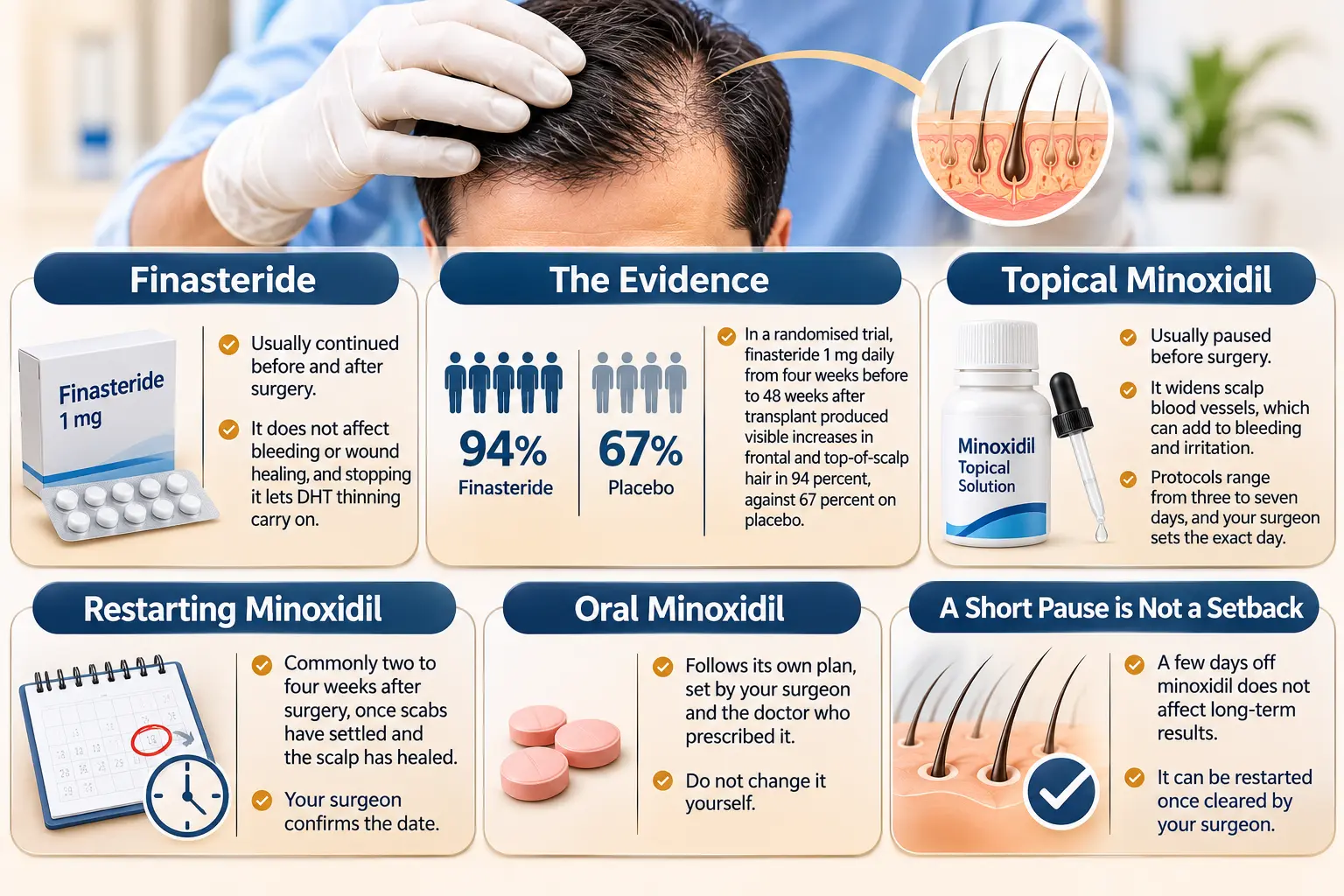
Not both, and not for long, which surprises most patients who assume surgery means stopping everything. Finasteride is generally continued through the procedure, while topical minoxidil is paused a few days before and restarted once the scalp has healed. The difference comes down to mechanism: one works systemically on hormones, the other works locally on scalp blood flow. The more important point is that a transplant moves hair; it doesn’t treat the underlying loss. Without continued medical therapy, the hair around the grafts keeps thinning regardless of how well the procedure goes.
According to Dr Harikiran Chekuri, a plastic surgeon in Hyderabad, “Patients ask me whether they should stop everything before surgery. Almost never. One medicine gets a short pause and the other keeps working through the whole process, because the hair around the grafts is still the part that is thinning.”
What to Do With Each Medication Before and After Surgery?
“Both medicines protect the hair around the grafts, not the grafts themselves. That is why every Hair Transplant plan we make includes a medication plan alongside the surgical one.”
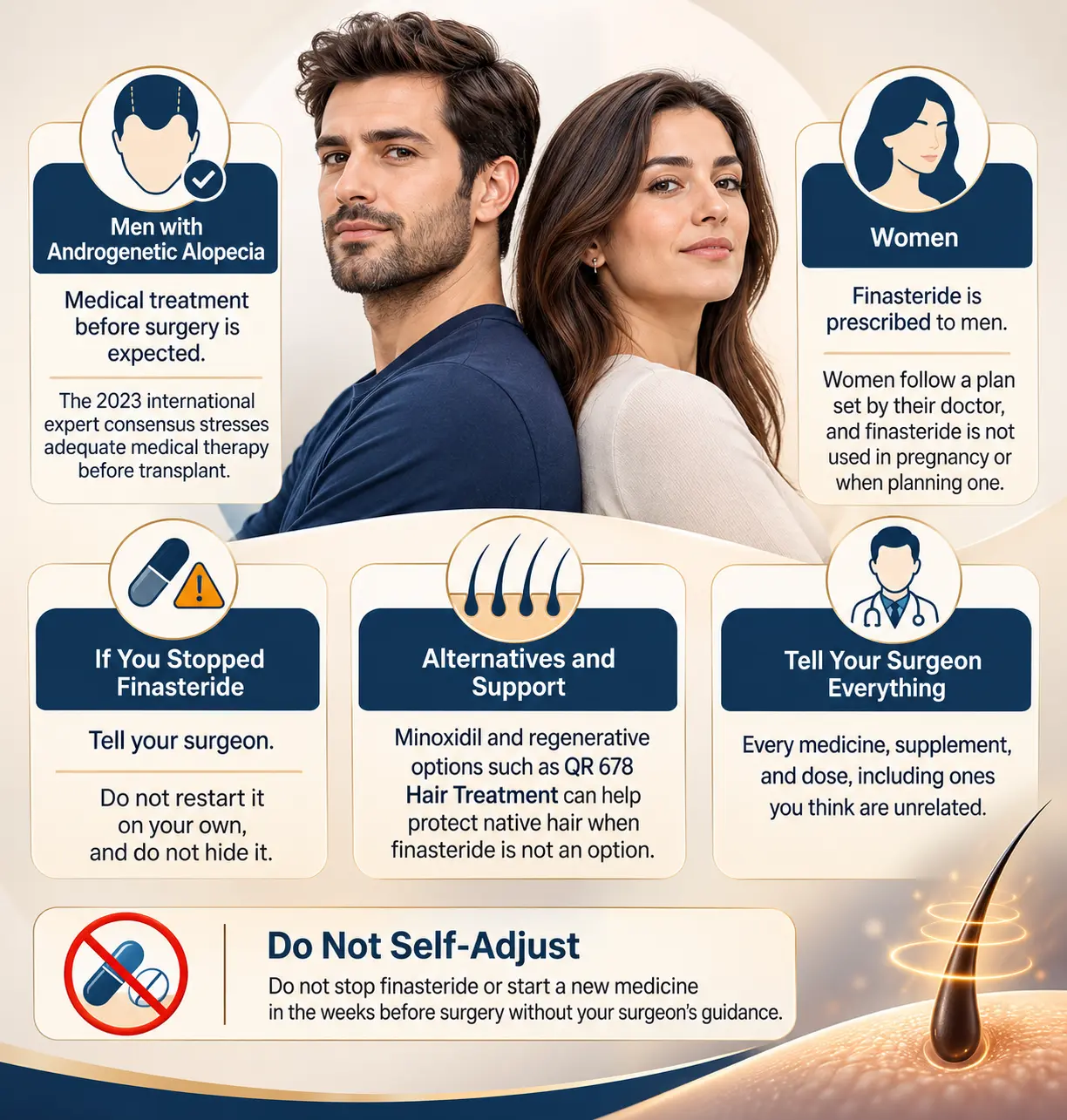
Who Needs What, and What to Do If You Cannot Take Finasteride?
“Medication is just one item on a longer checklist. Things You Should Know Before a Hair Transplant Treatment covers the rest, from blood thinners to alcohol and smoking.”
What Determines the Right Treatment Approach?
- The underlying cause of hair loss androgenetic alopecia, diffuse thinning, or other shapes the entire treatment plan before surgery is even considered.
- The stage of thinning determines whether a transplant is the right step now, or whether medical therapy should come first.
- Medication tolerance matters: a patient who cannot take finasteride needs a different support plan than one who has been on it for years without issue.
- Surgical timing is built around the individual’s response to existing treatment, not a fixed schedule.
- Regenerative options such as QR 678 Hair Treatment are factored in where native hair needs additional support beyond the transplant zone.
The right medication plan is built around the individual, not a default protocol and it sits alongside the surgical plan as one decision, not two. For patients also managing hair thinning beyond the transplant zone, options such as PRP treatment in Hyderabad can support native hair as part of the same care plan.
Frequently Asked Questions
Should I stop finasteride before a hair transplant?
Generally no. It does not affect bleeding or wound healing, so surgeons often recommend continuing it before and after surgery. Confirm with your surgeon.
When should I stop minoxidil before a hair transplant?
Topical minoxidil is usually paused three to seven days before surgery. Follow the day your surgeon gives you.
When can I restart minoxidil after a hair transplant?
Commonly two to four weeks after surgery, once scabs have settled and the scalp has healed. Your surgeon confirms the date.
Do I still need finasteride and minoxidil after a hair transplant?
Usually yes. A transplant does not stop thinning in the hair around the grafts, so medical treatment continues.
What if I stopped finasteride because of side effects?
Tell your surgeon and do not restart it on your own. Minoxidil and regenerative treatments can help protect native hair.
Reference
- Vañó-Galván S, et al. An International Expert Consensus Statement Focusing on Pre and Post Hair Transplantation Care. J Dermatolog Treat. 2023;34(1):2232065.
https://pubmed.ncbi.nlm.nih.gov/37477225/ - Leavitt M, Perez-Meza D, Rao NA, et al. Effects of Finasteride (1 mg) on Hair Transplant. Dermatol Surg. 2005;31(10):1268-1276.
https://pubmed.ncbi.nlm.nih.gov/16188178/ - The Potential Role of Minoxidil in the Hair Transplantation Setting. Dermatol Surg. 2002;28(10):894-900.
https://pubmed.ncbi.nlm.nih.gov/12410672/