Hair transplant for diffuse thinning is safe only when the donor zone is confirmed stable and the underlying cause of thinning has been identified and treated. Diffuse thinning that spreads across the entire scalp, including the donor area, does not provide a reliable donor source. When the donor zone is intact and the thinning is limited to specific zones, surgery becomes a viable option with proper planning.
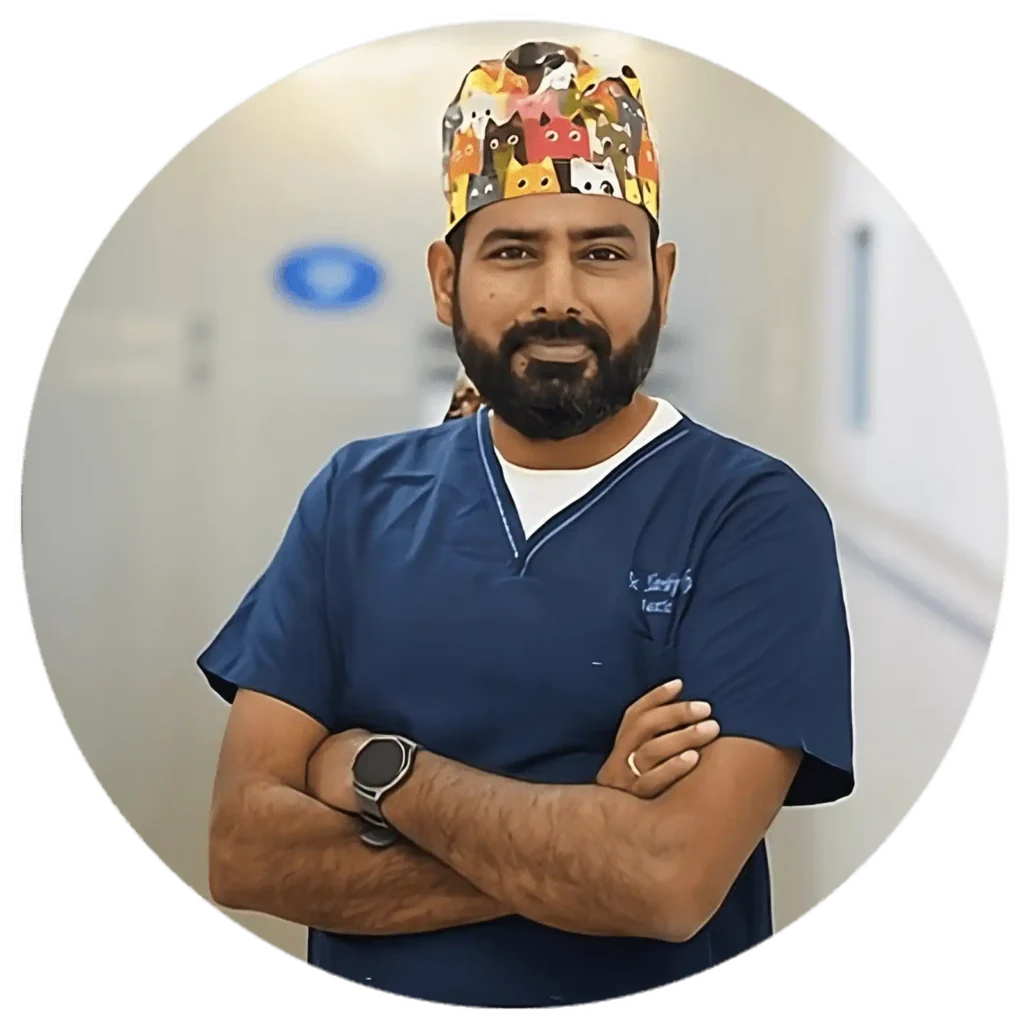
According to Dr Harikiran Chekuri, one of India’s pioneering plastic surgeon, “Diffuse thinning is one of the most complex presentations in hair restoration. The challenge is not just where to place the grafts but whether the donor zone will hold up after extraction. Operating without confirming donor stability in a diffuse case is one of the most common ways a hair transplant fails before it even starts.“
Why Is Diffuse Thinning Different from Pattern Baldness for Hair Transplant Planning?
Pattern baldness has defined zones of loss and a predictable stable donor area. Diffuse thinning spreads across the scalp without clear boundaries, which changes the assessment process and the surgical risk profile entirely.
- Donor zone stability is not guaranteed: In diffuse thinning, the follicles at the back and sides of the scalp that are normally DHT-resistant may themselves be miniaturising. Extracting from an unstable donor zone produces grafts that continue thinning after transplantation, making the procedure clinically unreliable.
- The underlying cause must be identified first: Diffuse thinning is frequently driven by thyroid dysfunction, hormonal imbalance, nutritional deficiency, chronic stress, or autoimmune conditions. Transplanting into a scalp where the underlying cause is still active wastes grafts and produces results that deteriorate as the cause continues unchecked.
- Trichoscopy assessment is non-negotiable: A visual assessment of a diffuse case does not reliably identify which follicles are stable and which are miniaturising. Trichoscopy maps donor density and miniaturisation percentage across the entire scalp before any surgical recommendation is made.
- Diffuse unpatterned alopecia is a contraindication: Patients with hair loss spreading uniformly across the entire scalp without a clear safe donor zone are not surgical candidates. The procedure has no stable foundation to work from and produces results that fail as donor follicles continue their own miniaturisation.
- Diffuse patterned alopecia is different: Some patients present with diffuse thinning that still spares the back and sides of the scalp in a predictable pattern. This group, when the underlying cause is treated and donor stability is confirmed, can be viable surgical candidates with appropriate planning.
The distinction between diffuse unpatterned alopecia and diffuse patterned alopecia is a clinical finding, not something a patient can determine from how their hair looks. Patients who get this assessed properly at Redefine Hair Transplant and Plastic Surgery Center leave knowing which category they fall into and what that means for their surgical options.
When Can Diffuse Thinning Patients Safely Consider Hair Transplant Surgery?
Diffuse thinning does not permanently disqualify surgery in every case. Several clinical conditions need to be met before the procedure becomes safe and results become predictable.
- Underlying cause confirmed and treated: Thyroid levels normalised, hormonal balance confirmed, nutritional deficiencies corrected, and autoimmune conditions managed before surgery is considered. Grafts placed into a scalp that is finally stable have a genuinely good environment to survive in.
- Donor zone stability confirmed over time: Trichoscopy assessment showing that the donor zone follicles are not miniaturising is the clinical confirmation needed before extraction begins. This needs to be confirmed over time, not just at a single assessment point.
- Hair loss stability for twelve months: Diffuse thinning that is still actively progressing at the time of consultation needs medical management and a waiting period before surgery is appropriate. Stability over twelve months is the minimum clinical requirement.
- Medical therapy running alongside surgery: Finasteride and minoxidil address the DHT-driven component of diffuse thinning in patients who have that driver active. Starting medical therapy before surgery and continuing it after significantly protects the native hair and the surgical result over time.
- Realistic density expectations: Even in suitable diffuse thinning candidates, graft distribution covers a larger surface area than in localised pattern baldness. The density outcome per session is lower and patients need a clear understanding of what one procedure realistically delivers versus what a staged approach achieves.
Diffuse thinning patients who go through the right clinical groundwork before surgery consistently see outcomes that hold. Patients who skip the assessment and go straight to a graft count do not. Read about hair thinning causes to understand what drives diffuse thinning and how identifying the cause changes what treatment is appropriate.
Diffuse thinning is treatable. Whether surgery is part of that treatment depends on what the assessment finds.
Why Redefine's Diffuse Thinning Assessment Produces Safer Surgical Outcomes
Dr. Harikiran Chekuri is one of India’s pioneering surgeons in hair transplant and every diffuse thinning case at Redefine goes through a full trichoscopy-based donor stability assessment, underlying cause investigation, and progression review before surgery enters the conversation because operating on diffuse thinning without this process produces results that fail in ways that are difficult and expensive to correct.
Patients who come to Redefine Hair Transplant and Plastic Surgery Center with diffuse thinning leave with a clear clinical picture of whether surgery is safe, what needs to happen before it becomes safe, or whether a non-surgical treatment path is the more appropriate direction for their case.
Frequently Asked Questions
Is hair transplant safe for diffuse thinning?
Hair transplant is safe for diffuse thinning only when the donor zone is confirmed stable, the underlying cause has been treated, and hair loss has been stable for at least twelve months.
What is the difference between diffuse patterned and unpatterned alopecia?
Diffuse patterned alopecia spares the back and sides of the scalp in a predictable pattern and can be surgically treatable. Diffuse unpatterned alopecia affects the entire scalp including the donor zone and is not a suitable surgical candidate.
What causes diffuse thinning that affects hair transplant candidacy?
Thyroid dysfunction, hormonal imbalance, nutritional deficiencies, chronic stress, and autoimmune conditions are common causes. Identifying and treating the underlying cause is the first clinical requirement before surgery is considered.
Can medical therapy help diffuse thinning patients become hair transplant candidates?
Finasteride and minoxidil stabilise the DHT-driven component of diffuse thinning and protect the donor zone over time, which can convert borderline candidates into viable surgical candidates when combined with confirmed stability.
REFERENCE LINKS
- International Society of Hair Restoration Surgery: https://www.ishrs.org
- American Academy of Dermatology — Hair Loss: https://www.aad.org/public/diseases/hair-loss
- PubMed Central — Diffuse Alopecia and Hair Transplant: https://www.ncbi.nlm.nih.gov/pmc
Disclaimer: Reference links are provided solely for academic and clinical context and do not imply endorsement or accountability for third-party medical content.