
Hair transplant works for thyroid-related hair loss only when the underlying thyroid condition is medically controlled. Unmanaged thyroid dysfunction disrupts the hair growth cycle and transplanted grafts face the same hormonal environment as the native hair that was lost. Once thyroid levels are stable and shedding has stopped, surgical restoration produces reliable results.
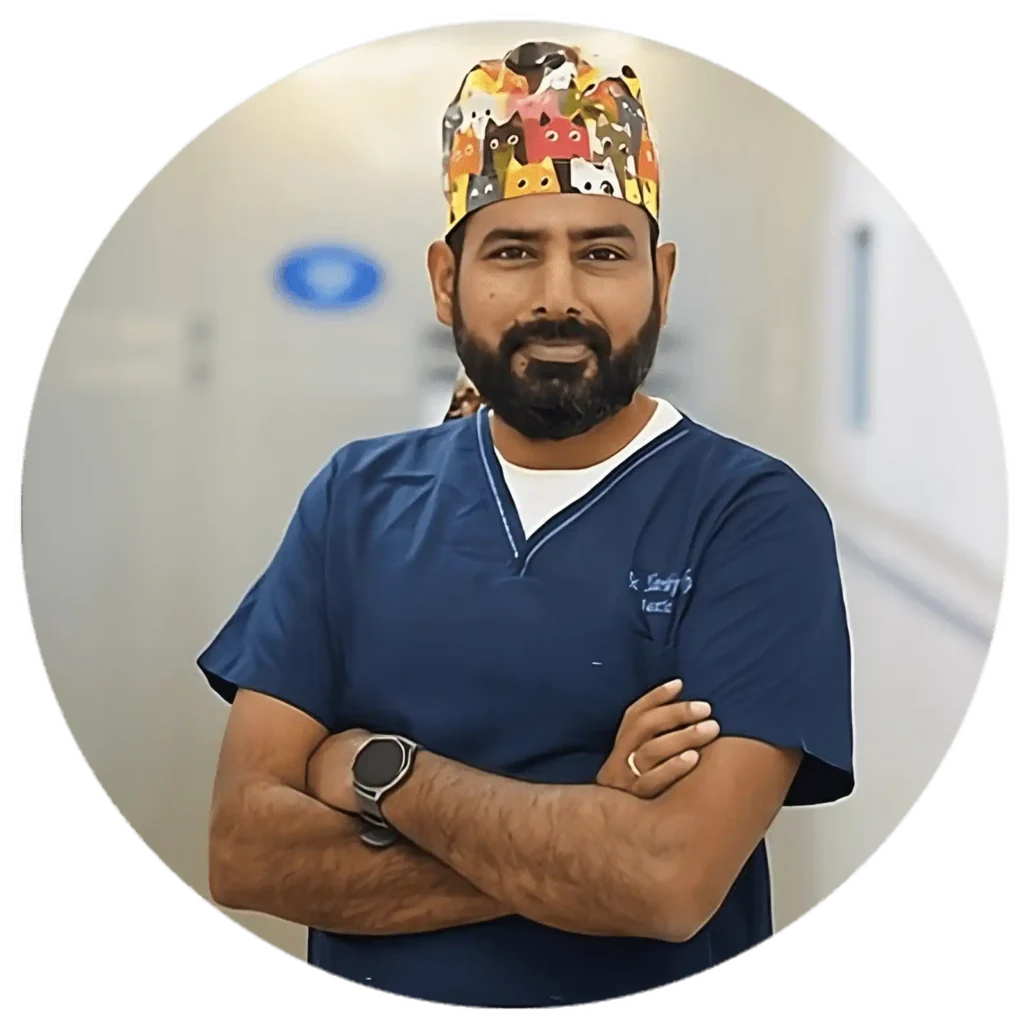
According to Dr Harikiran Chekuri, one of India’s pioneering plastic surgeon, “Thyroid-related hair loss is one of the most misunderstood presentations in hair restoration. Operating before the hormonal environment is stable sets the graft up for the same disruption that caused the original loss. Getting the timing right changes everything.“
How Does Thyroid Dysfunction Cause Hair Loss and When Is Surgery Right?
Thyroid-related hair loss gets mismanaged more often than most hormonal conditions because patients and clinicians both rush past the stability question. The type of dysfunction, how long it ran, and whether it has genuinely resolved are what determine whether surgery is even on the table.
- Hypothyroidism: Slows follicle metabolism and shifts hair into extended telogen. Shedding is diffuse across the whole scalp, not the localised pattern most patients expect from a hormonal condition.
- Hyperthyroidism: Excess hormone cuts the anagen phase short. Thinning looks similar on the surface but the biology runs in the opposite direction and needs completely different management.
- When surgery is right: Six to twelve months of confirmed hormonal stability, shedding stopped, and remaining loss is structural. All three need to be true before a surgical date makes sense.
- When surgery is not right: Even mild active dysfunction creates poor conditions for grafts. Continued native loss around the transplanted zone is a consistent finding when the timing question gets ignored.
- Pre-surgical bloods: TSH, T3, T4 within normal range and stable over time. One acceptable draw on the day of assessment is not the same as confirmed sustained stability.
The difference between resolved thyroid loss and ongoing disruption is a clinical assessment call. For patients in Hyderabad, Redefine Hair Transplant and Plastic Surgery Center assesses thyroid status as a core part of every complex hair loss evaluation before any surgical planning begins.
What Changes About Hair Transplant Planning for Thyroid Patients?
Standard androgenetic alopecia planning does not transfer directly to thyroid cases. The differences are specific and each one affects the outcome if it gets skipped.
- Surgery timing: Six to twelve months post-stabilisation is the window that confirms shedding has genuinely resolved, not just paused briefly before the next hormonal shift.
- Graft mapping: Diffuse loss across a larger surface area changes how recipient zone density gets distributed. It is not the same calculation as defined pattern baldness.
- Donor zone: Diffuse thinning can reduce donor density in ways that only appear on trichoscopy. A visual check of the back of the scalp misses it.
- Post-surgical monitoring: Thyroid fluctuations after the procedure can trigger telogen effluvium in both transplanted and native hair. Hormonal stability through recovery is part of the plan, not an afterthought.
- Combined approach: Continued thyroid management alongside post-surgical medical therapy gives better long-term outcomes than surgery treated as a standalone fix.
Thyroid patients who go through proper groundwork see results comparable to non-thyroid patients. Read about hair thinning causes to understand where thyroid dysfunction sits within the broader picture of hormonal hair loss.
Your thyroid status determines your transplant timeline. Get it assessed properly first.
Why Choose Redefine for Thyroid-Related Hair Loss and Hair Transplant?
Dr. Harikiran Chekuri is one of India’s pioneering surgeons in hair transplant and treats thyroid hair loss as a staged clinical process where hormonal stability is confirmed before any surgical recommendation is made, rather than treating it as a standard transplant case.
Patients with thyroid-related hair loss who come to Redefine Hair Transplant and Plastic Surgery Center receive a full hormonal and scalp assessment identifying whether they are surgically ready or need further stabilisation before any procedure date is set.
Frequently Asked Questions
Can thyroid patients get a hair transplant?
Yes, when thyroid hormone levels are stable for six to twelve months and shedding has resolved, hair transplant produces reliable results.
Does thyroid hair loss grow back without surgery?
Thyroid-driven telogen effluvium often reverses once hormonal levels are stabilised, but structural loss that remains after stabilisation requires surgical restoration.
How long should thyroid be stable before hair transplant?
Most surgeons require six to twelve months of confirmed hormonal stability before proceeding with surgical hair restoration.
Does thyroid dysfunction affect graft survival after transplant?
Yes, active thyroid fluctuation post-surgery can trigger shedding in both transplanted and native hair, which is why pre-surgical
REFERENCE LINKS
- American Thyroid Association: https://www.thyroid.org
- American Academy of Dermatology — Hair Loss: https://www.aad.org/public/diseases/hair-loss
- PubMed Central — Thyroid Disorders and Hair Loss: https://www.ncbi.nlm.nih.gov/pmc
Disclaimer: Reference links are provided solely for academic and clinical context and do not imply endorsement or accountability for third-party medical content.