PCOS affects 20 to 30 percent of women who develop female pattern hair loss. A hair transplant is a clinically recognised option for PCOS-related hair loss, but it is not the first step and not always the right one. This blog covers how PCOS causes hair loss, what makes a woman with PCOS a suitable candidate, what needs to be in place before surgery, and what the clinical evidence actually shows.
Yes. With the right timing and the right medical context in place.
PCOS-related hair loss is driven by elevated androgens that shorten the hair growth cycle and cause follicle miniaturisation. A hair transplant moves follicles from a donor area where they are resistant to that androgen effect into areas where thinning has occurred. The transplanted follicles survive. The underlying hormonal driver does not disappear. That distinction determines everything about how surgery is planned and when it is appropriate.
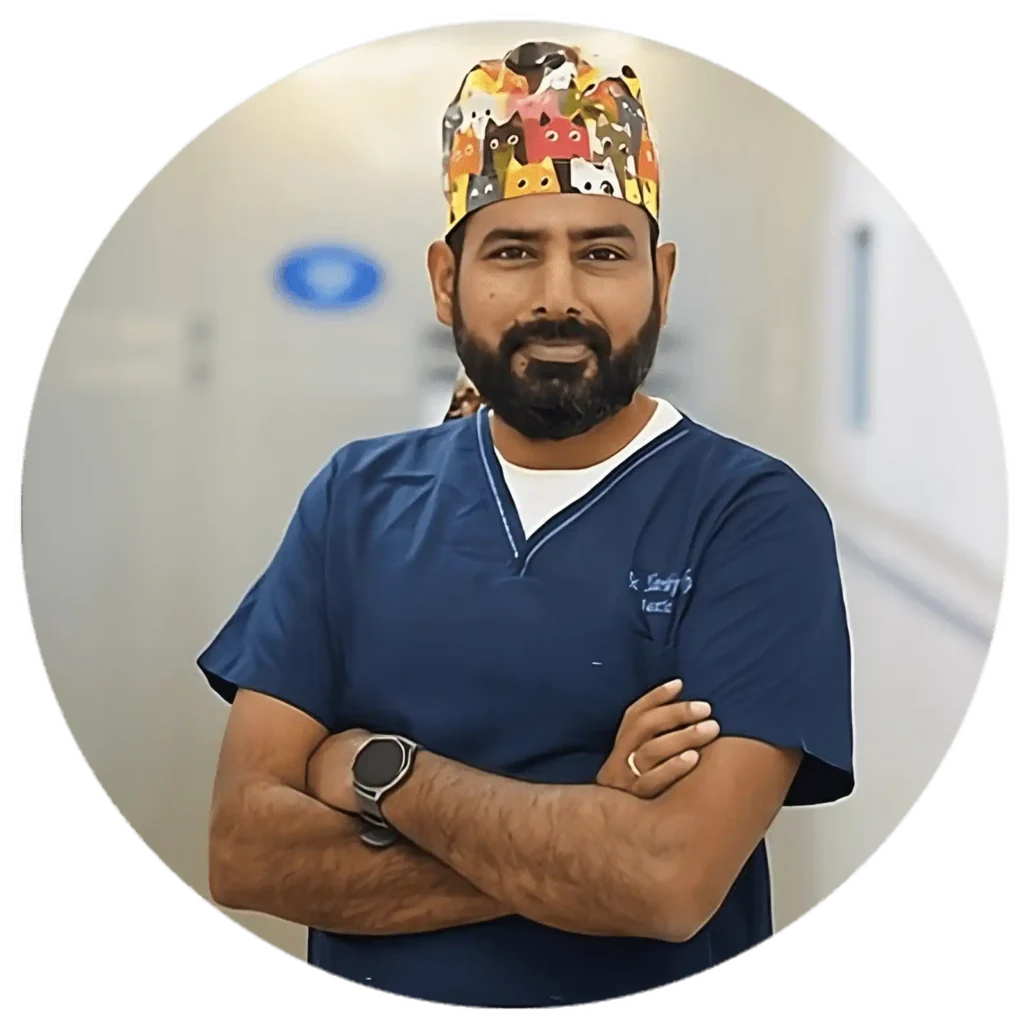
According to Dr Harikiran Chekuri, one of India’s pioneering plastic surgeons and hair transplant specialists, “PCOS-related hair loss is one of the most frequently mismanaged presentations in hair restoration. The mistake is offering surgery before the hormonal environment is stable. A transplant into an actively progressing loss pattern produces a result that deteriorates. The medicine has to come before the surgery.”
How Does PCOS Cause Hair Loss and What Does That Mean for a Transplant?
PCOS causes hair loss through elevated androgens, particularly DHT. These androgens bind to hair follicles on the scalp, gradually shrinking them over time. The growth phase shortens, hairs become thinner and lighter, and eventually the follicle stops producing visible hair altogether.
The pattern this produces is distinct from male pattern baldness. PCOS-related female pattern hair loss typically presents as:
- Diffuse thinning across the crown and mid-scalp with the frontal hairline largely preserved
- A Christmas tree pattern: widening and thinning at the central parting, broader at the front
- In some cases bitemporal recession similar to male pattern loss
This pattern matters for transplant planning because diffuse thinning across the entire scalp means the donor area may also be affected. Unlike male pattern baldness where the occipital donor region is reliably stable, women with PCOS and diffuse thinning may have compromised donor density. This is assessed at examination before any surgical plan is formed.
The Androgen Excess and PCOS Society recognises hair transplantation as a valid option for female pattern hair loss, but recommends it alongside ongoing medical treatment rather than as a standalone solution.
Patients wanting to understand how hormonal imbalance drives hair loss more broadly can read “Can Hormone Imbalance Cause Hair Loss?“, which covers the full hormonal picture, including PCOS, thyroid issues, and post-pregnancy hair loss.
Who With PCOS Is a Suitable Candidate and What Needs to Be in Place First?
Not every woman with PCOS and hair loss is a surgical candidate. The assessment is more detailed than for male pattern baldness and several conditions must be met before surgery is appropriate.
- Hormonal stabilisation first: Surgery performed while androgens are actively elevated and hair loss is still progressing produces a result that continues to deteriorate. PCOS must be medically managed, typically with anti-androgen medications such as spironolactone or oral contraceptives, and hair loss must be stable for at least 12 months before surgical candidacy is confirmed
- Medical therapy must continue post-surgery: A hair transplant does not address the androgen excess driving PCOS-related loss. Without ongoing medical management, thinning continues in the non-transplanted areas. The transplanted follicles are selected for androgen resistance but the surrounding native follicles are not protected by the surgery
- Donor density must be adequate: Diffuse thinning can affect the donor area. A full scalp examination and dermoscopy assessment confirms whether the occipital and temporal donor regions have sufficient density and stability for harvesting. Patients with diffuse unpatterned alopecia affecting the donor area are not suitable candidates
- Blood work must be reviewed: Thyroid function, ferritin, vitamin D, total and free testosterone, DHEAS, and prolactin are all assessed before surgical candidacy is confirmed. Deficiencies in iron and vitamin D compound PCOS-related loss and must be corrected before surgery
- Hair loss stable for minimum 12 months: Confirmed by serial dermoscopy, standardised photography, or trichoscopy at multiple time points. Stability, not just apparent plateau, is the requirement
- PRP as a bridge treatment: For patients who are approaching candidacy but not yet at a surgical threshold, PRP therapy supports follicle health during the stabilisation period. It is not a replacement for the transplant but reduces ongoing miniaturisation while medical management takes effect. Patients can read more about PRP Hair Treatment at Redefine and how it fits into the broader treatment plan for hormonally driven hair loss
Why Choose Redefine for Hair Transplant in Hyderabad?
At Redefine Hair Transplant and Plastic Surgery Centre, hair transplant for women with PCOS is planned by Dr Harikiran Chekuri, who brings over 20 years and more than 20,000 procedures to every consultation. He is a Gold Medallist in Plastic Surgery from NTR University of Health Sciences, Paul Harris Fellow, and Vaidya Siromani awardee 2015. Redefine has been ranked No.1 Plastic Surgery Centre in the Twin States by the Times of India Health Survey for three consecutive years, 2019, 2020, and 2021.
Every female hair loss consultation at Redefine includes a full hormonal and scalp assessment before any treatment is recommended. Surgery is not the starting point. It is confirmed only when the clinical picture supports a result that will last.
Frequently Asked Questions
Can women with PCOS get a hair transplant?
Yes, when hormonal levels are stable, hair loss has not progressed for at least 12 months, donor density is adequate, and medical management is in place. Surgery is not appropriate while hair loss is still actively progressing.
Does a hair transplant cure PCOS hair loss permanently?
The transplanted follicles are selected for androgen resistance and hold their result long term. The underlying PCOS and androgen excess continue to affect non-transplanted follicles. Ongoing medical management is required to protect native hair after surgery.
How long does PCOS hair loss need to be stable before a transplant?
Most surgeons require a minimum of 12 months of documented stability confirmed by dermoscopy or trichoscopy. Many prefer 12 to 24 months alongside a demonstrable response to medical therapy.
What blood tests are needed before a hair transplant for PCOS?
Thyroid function, ferritin, vitamin D, total and free testosterone, DHEAS, and prolactin are the standard panel. Nutritional deficiencies are corrected before surgery proceeds.
Is PRP useful for PCOS-related hair loss?
Yes. PRP supports follicle health during the stabilisation period and reduces ongoing miniaturisation. It is used alongside medical management as a bridge treatment and as post-transplant support, not as a standalone solution.
References
- Carmina E, et al. Female Pattern Hair Loss and Androgen Excess: A Report From the Multidisciplinary Androgen Excess and PCOS Committee. Journal of Clinical Endocrinology and Metabolism. 2019.
https://pubmed.ncbi.nlm.nih.gov/30785992/ - PMC. Efficacy of Treatment in Female Pattern Alopecia in Patients With PCOS. 2023.
https://www.ncbi.nlm.nih.gov/pmc/articles/PMC10561348/ - PMC. Short-Term Clinical Assessment of Treating Female Androgenetic Alopecia with Autologous Stem Cells Derived from Human Hair Follicles. 2024.
https://www.ncbi.nlm.nih.gov/pmc/articles/PMC10813176/