A hair transplant is a permanent surgical decision. Not everyone who wants one qualifies for one. Donor density, hair loss stability, age, health status, and realistic expectations all factor into candidacy. This blog covers who is a suitable candidate, who is not, why rejections happen, and what the options are when surgery is not yet or not ever the right answer.
No. And a clinic that says otherwise is not doing you a favour.
A hair transplant moves viable follicles from a donor area into thinning or bald regions. For that to work, there must be enough healthy donor follicles to harvest, the hair loss pattern must be stable enough to plan around, and the patient must be in a condition to heal safely. When those conditions are not met, surgery produces a result that looks wrong, fails to last, or causes donor damage that cannot be undone.
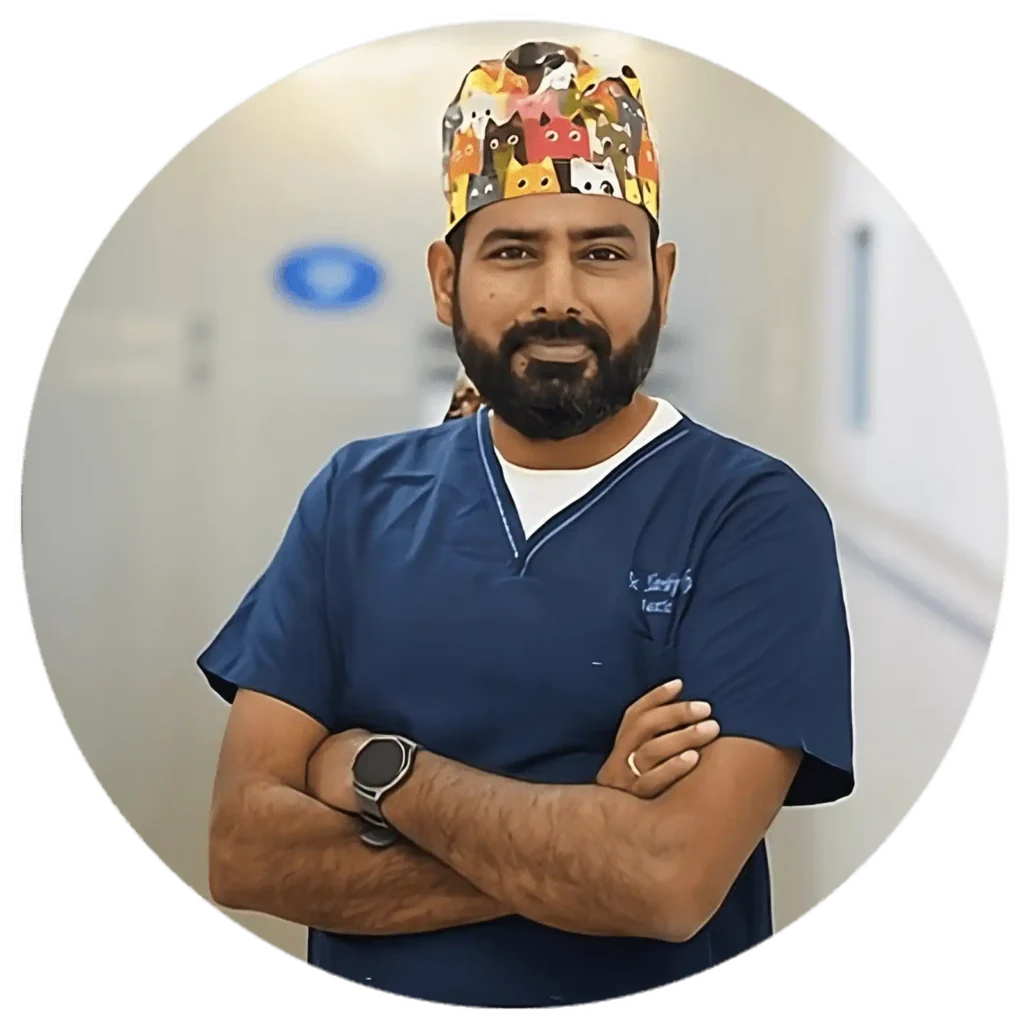
According to Dr Harikiran Chekuri, one of India’s pioneering plastic surgeons and hair transplant specialists, “The most dangerous thing in hair transplant surgery is not the procedure. It is operating on a patient who was not a candidate. A responsible no at consultation is worth more to that patient than a yes from a clinic willing to take their money without confirming their suitability.”
Who Is and Who Is Not a Suitable Candidate?
Candidacy is determined by a combination of scalp, health, and timing factors. All of them are assessed before any surgical plan is formed.
| Factor | Suitable Candidate | Not Suitable |
| Donor density | 60 to 80 follicles per cm² is the ideal range, giving your surgeon enough grafts to work with comfortably. | 40 follicles per cm² is the minimum. Below this, the donor area is considered too thin to support a reliable transplant. |
| Hair loss pattern | Patterned, defined recession or baldness | Diffuse unpatterned alopecia affecting donor zone |
| Hair loss stability | Stable for minimum 12 months | Actively progressing loss |
| Age | 25 and above as a general guide | Under 25 in most cases, pattern not yet defined |
| Health | No uncontrolled systemic conditions | Uncontrolled diabetes, bleeding disorders, active infection |
| Scalp condition | Healthy scalp, no active inflammation | Active scarring disorders, lichen planopilaris |
| Expectations | Realistic understanding of what surgery achieves | Expecting full original density from a single session |
| Smoking | Non-smoker or stopped minimum 4 weeks | Active smoker |
The most common reason patients are declined at responsible clinics is insufficient donor density. Donor supply is finite. It cannot be created. A patient without enough harvestable follicles cannot be given a meaningful result through surgery, and extracting from a thin or compromised donor zone permanently damages what little remains.
Patients wanting to understand the specific donor density thresholds used at Redefine can read Minimum Donor Density for Hair Transplant before their hair transplant consultation.
What Signs Mean You Should Get a Hearing Test?
Being declined is not always permanent. Understanding why it happened determines what comes next.
- Hair loss still progressing: Operating on an active loss pattern produces a result that continues to change after surgery. Grafts placed into a stable area today may be surrounded by thinning native hair in two years. Most surgeons require 12 months of documented stability before proceeding. Medical management with finasteride or minoxidil is used to establish that stability
- Too young: Patients under 25 present a specific problem. The final loss pattern is not yet established. A hairline placed today may look dramatically out of place as loss continues over the next decade. Most surgeons decline to operate on patients under 25 unless the loss is very advanced and the pattern very clearly defined
- Insufficient donor density: The clinical lower boundary is 40 FU per cm². Below this threshold, meaningful extraction risks visible donor depletion. Patients in this category are better served by scalp micropigmentation or a combination approach. Patients wanting to understand this in detail can read Why Patients Get Rejected for Hair Transplant at Redefine
- Diffuse unpatterned alopecia: Hair loss spreading across the entire scalp including the donor zone means there is no stable donor source. Grafts extracted from a miniaturising donor zone continue thinning after transplantation. The procedure is clinically unreliable in this pattern regardless of technique or clinic
- Active scalp conditions: Lichen planopilaris, frontal fibrosing alopecia, and other scarring alopecias are contraindications. Operating on an actively inflamed scalp damages grafts and accelerates the scarring process. These conditions must be in remission before surgery is appropriate
- Unrealistic expectations: A patient expecting full original density from a single session, or expecting a hairline that does not match their age or remaining hair, cannot be given a result they will be satisfied with. This is a reason to defer until expectations are aligned with what the anatomy can actually support
- Uncontrolled health conditions: Uncontrolled diabetes impairs healing. Active anticoagulation increases bleeding risk. These are not permanent disqualifiers but require medical clearance and management before surgery is appropriate
Why Choose Redefine for Hair Transplant in Hyderabad?
At Redefine Hair Transplant and Plastic Surgery Centre, every hair transplant consultation begins with trichoscopy-based donor density mapping, scalp examination, and a full clinical assessment before any procedure is discussed. Dr Harikiran Chekuri brings over 20 years and more than 20,000 procedures to every case. He is a Gold Medallist in Plastic Surgery from NTR University of Health Sciences, Paul Harris Fellow, and Vaidya Siromani awardee 2015. Redefine has been ranked No.1 Plastic Surgery Centre in the Twin States by the Times of India Health Survey for three consecutive years, 2019, 2020, and 2021.
Patients who are not candidates at the time of consultation leave with a clear explanation of why, what would need to change, and what the options are in the meantime. A responsible clinic does not just operate. It plans.
Frequently Asked Questions
Can everyone get a hair transplant?
No. Candidacy depends on donor density, hair loss stability, scalp health, age, and overall health. Patients who do not meet the clinical criteria are declined because surgery on an unsuitable candidate produces a result that fails, looks unnatural, or causes permanent donor damage.
What is the minimum age for a hair transplant?
Most surgeons decline to operate on patients under 25 because the final hair loss pattern is not yet established. Operating too early risks placing a hairline that looks out of place as loss continues. Exceptions exist for very advanced, clearly patterned loss.
What happens if donor density is too low for a hair transplant?
Patients with insufficient donor density are not suitable for surgery. Scalp micropigmentation is the most appropriate primary option in this case, creating the visual appearance of density without requiring follicle harvesting.
Can a hair transplant be done while hair loss is still progressing?
No. Operating during active progression produces a result that continues to deteriorate as surrounding native hair thins. Hair loss must be stable for a minimum of 12 months, confirmed by dermoscopy or trichoscopy, before surgery is appropriate.
What conditions disqualify someone from a hair transplant permanently?
Diffuse unpatterned alopecia affecting the donor zone and active scarring scalp conditions such as lichen planopilaris are the most common permanent disqualifiers. Most other reasons for rejection, including age, active loss, and health conditions, are addressable over time.
References
- Okhovat JP, et al. Hair Transplant: Patient Candidacy, Medical Optimization, and Surgical Considerations. International Journal of Dermatology. 2026.
https://pubmed.ncbi.nlm.nih.gov/40660483/ - Gupta AK, et al. Hair Transplantation: Indications, Patient Selection and Expectations. Skin Appendage Disorders. 2022.
https://pubmed.ncbi.nlm.nih.gov/36034027/ - StatPearls. Hair Transplantation. NCBI. 2024.
https://pubmed.ncbi.nlm.nih.gov/31613520/