
The first seven to ten days after a hair transplant, sleep with your head elevated at a 45-degree angle. This reduces swelling around the forehead and eyes, protects grafts from direct pressure against the pillow, and keeps blood flow to the scalp at a level that supports early healing rather than working against it. After day ten most patients transition back toward a normal sleeping position gradually, avoiding direct pressure on the recipient zone until the grafts are fully settled.
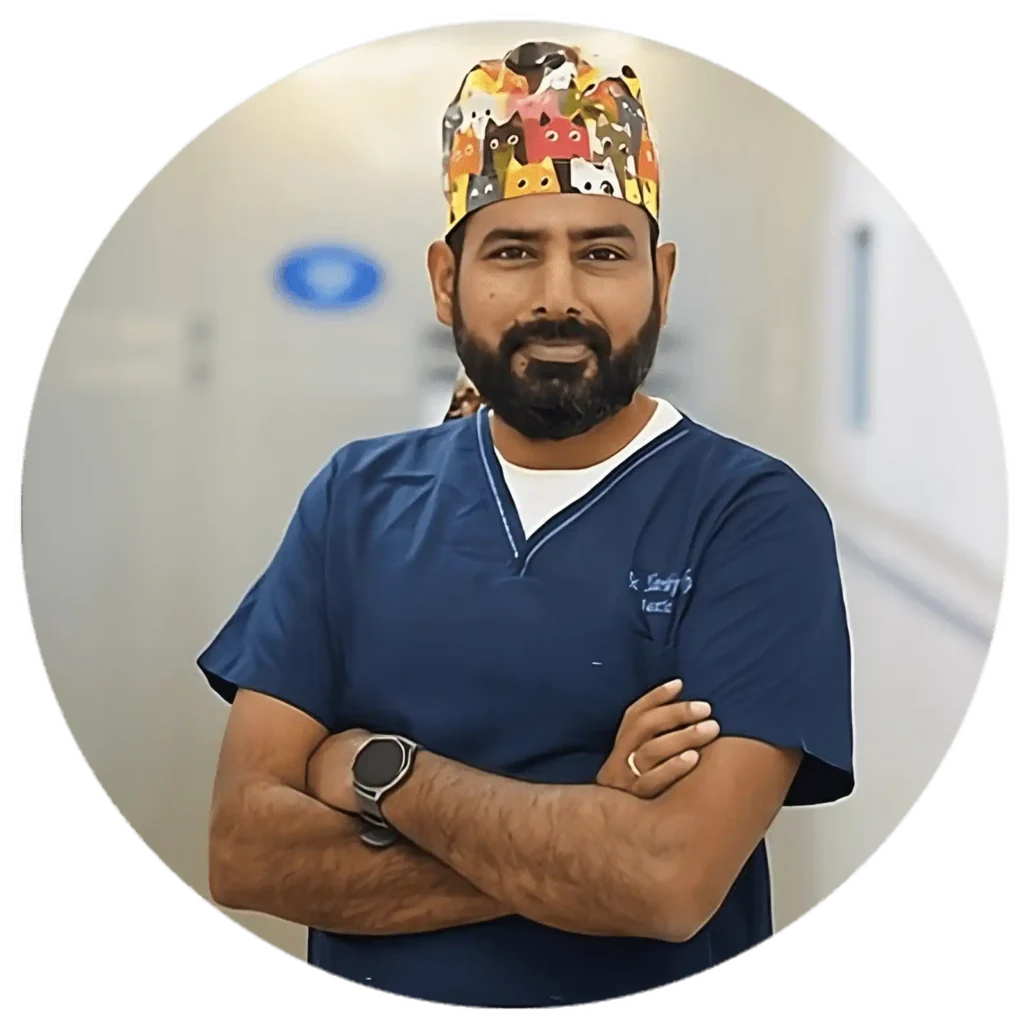
According to Dr Harikiran Chekuri, one of India’s pioneering plastic surgeon, “Sleep position is one of those recovery details patients underestimate. The head elevation in the first few nights is not just about comfort. It directly affects how much swelling you wake up with, which affects how the scalp heals and how the grafts settle. Getting this right costs nothing and makes a measurable difference to the early recovery picture.“
Why Does Sleeping Position Matter After Hair Transplant Surgery?
The first seven days are when grafts are at their most vulnerable. They have not yet established a secure blood supply in the recipient zone and the scalp tissue is still actively healing at both surgical sites. How you position your head during sleep directly affects both of these processes.
- Swelling management: When the head stays flat during sleep, fluid accumulates around the surgical sites overnight and patients wake up with significant forehead and eye swelling. Elevating at 45 degrees lets gravity work with the lymphatic drainage rather than against it, and the difference in morning swelling is noticeable from night one.
- Graft pressure protection: Direct pillow contact with the recipient zone in the first five days risks physically dislodging grafts that have not yet anchored into the scalp tissue. A neck pillow or travel pillow keeps contact away from the transplanted area while still supporting comfortable sleep.
- Donor zone protection: The back of the scalp where grafts were extracted is tender and the extraction points are healing. Sleeping on the back of the head with direct pressure on the donor zone before it has closed properly is uncomfortable and slows healing at that site.
- Blood pressure at the scalp: Lying completely flat increases blood pressure at scalp level compared to an elevated position. In the first few days when extraction and implantation sites are still closing, elevated scalp blood pressure increases the risk of minor bleeding and prolongs the wound closure process.
- Sleep quality affects recovery: Patients who are uncomfortable because of poorly managed swelling sleep less and sleep worse. Cortisol released through poor sleep quality has a documented effect on healing speed. Getting the position right from night one is not just about the scalp. It is about the whole recovery environment.
The elevation does not need to be dramatic. Two or three pillows stacked to bring the head to roughly 45 degrees is sufficient. At Redefine Hair Transplant andm Plastic Surgery Center, patients receive specific sleep position guidance as part of the post-surgical briefing on the day of the procedure so nothing about the first night is figured out at home.
How Does the Sleeping Position Change as Recovery Progresses?
The 45-degree elevation is most critical in the first week. As the scalp heals and grafts establish their blood supply, the restrictions ease progressively and most patients are sleeping normally by the end of the second week.
- Days one to five: Strict 45-degree elevation throughout sleep. Neck or travel pillow to avoid recipient zone contact with the pillow surface. Back sleeping is the safest position. Side sleeping puts pressure on either the donor zone or the recipient zone depending on which side, and is best avoided in this window.
- Days five to ten: Elevation can reduce slightly as swelling settles and the acute graft vulnerability window closes. Most patients can sleep more comfortably at a lower angle but still benefit from keeping the head above heart level and continuing to avoid direct pressure on the recipient zone.
- Day ten to two weeks: Gradual transition toward normal sleeping position. By this point grafts are anchored and the main healing concern shifts from graft dislodgement to scalp comfort and scar healing at the donor zone. Soft pillow material is still worth maintaining.
- After two weeks: Normal sleeping position is appropriate for most patients. Some residual sensitivity at the donor zone may make firm pillow surfaces uncomfortable for a few more weeks, but there are no clinical restrictions on position beyond this point.
- Side and stomach sleeping: Front-sleeping patients have the most difficult adjustment as any face-down position puts direct pressure on the recipient zone. Side sleeping becomes possible after day ten for most patients. Stomach sleeping should wait until at least two weeks post-surgery regardless of how comfortable it feels.
Recovery is straightforward when the small details are managed correctly from the start. Read about recovery care to understand the full post-surgical protocol and where sleep position fits alongside scalp washing, activity restrictions, and follow-up in protecting the result.
Get the first week right. The rest of the recovery follows from there.
Why Redefine Patients Know Exactly What to Do Before They Leave the Clinic?
Dr. Harikiran Chekuri is one of India’s pioneering surgeons in hair transplant and every patient at Redefine leaves the procedure with a complete post-surgical briefing covering sleep position, scalp washing protocol, activity timeline, and follow-up schedule, because the recovery decisions patients make in the first ten days have a direct and measurable effect on the final result.
Patients who come to Redefine Hair Transplant and Plastic Surgery Center do not figure out post-operative care from internet searches after going home. They leave with written instructions, a care kit, and direct access to the clinical team for any question that comes up during the recovery period.
For any recovery question or post-surgical concern, 📞 Call Now: +91 92371 23456or book a follow-up below.
Frequently Asked Questions
What is the best sleeping position after hair transplant?
Sleep with your head elevated at 45 degrees for the first seven to ten days. This reduces swelling, protects grafts from pillow pressure, and supports the early healing process at both surgical sites.
How long do I need to sleep after hair transplant?
Head elevation is most critical for the first five to seven days. Most patients transition to a more normal sleeping position by day ten and return fully to their usual position by the end of week two.
Can I sleep on my side after hair transplant?
Side sleeping should be avoided in the first five days as it puts direct pressure on either the donor or recipient zone. From day ten onward, careful side sleeping becomes appropriate for most patients.
What happens if I sleep flat after a hair transplant?
Sleeping flat increases blood pressure at the scalp and allows overnight fluid accumulation, producing significant forehead and eye swelling in the morning. It also increases pressure risk to ungrafted follicles in the first few days.
REFERENCE LINKS
- International Society of Hair Restoration Surgery: https://www.ishrs.org
- American Academy of Dermatology — Hair Loss: https://www.aad.org/public/diseases/hair-loss
- PubMed Central — Diffuse Alopecia and Hair Transplant: https://www.ncbi.nlm.nih.gov/pmc
Disclaimer: Reference links are provided solely for academic and clinical context and do not imply endorsement or accountability for third-party medical content.