
Norwood Grade 2 through Grade 6 are the stages that generally qualify for hair transplant surgery, provided hair loss is stable, donor density is adequate, and the patient’s age supports a realistic long-term plan. Grade 1 has no clinical indication for surgery. Grade 7 presents severe donor limitations that significantly restrict what surgery can achieve. The grade is the starting point. What actually determines candidacy is the full clinical picture behind it.
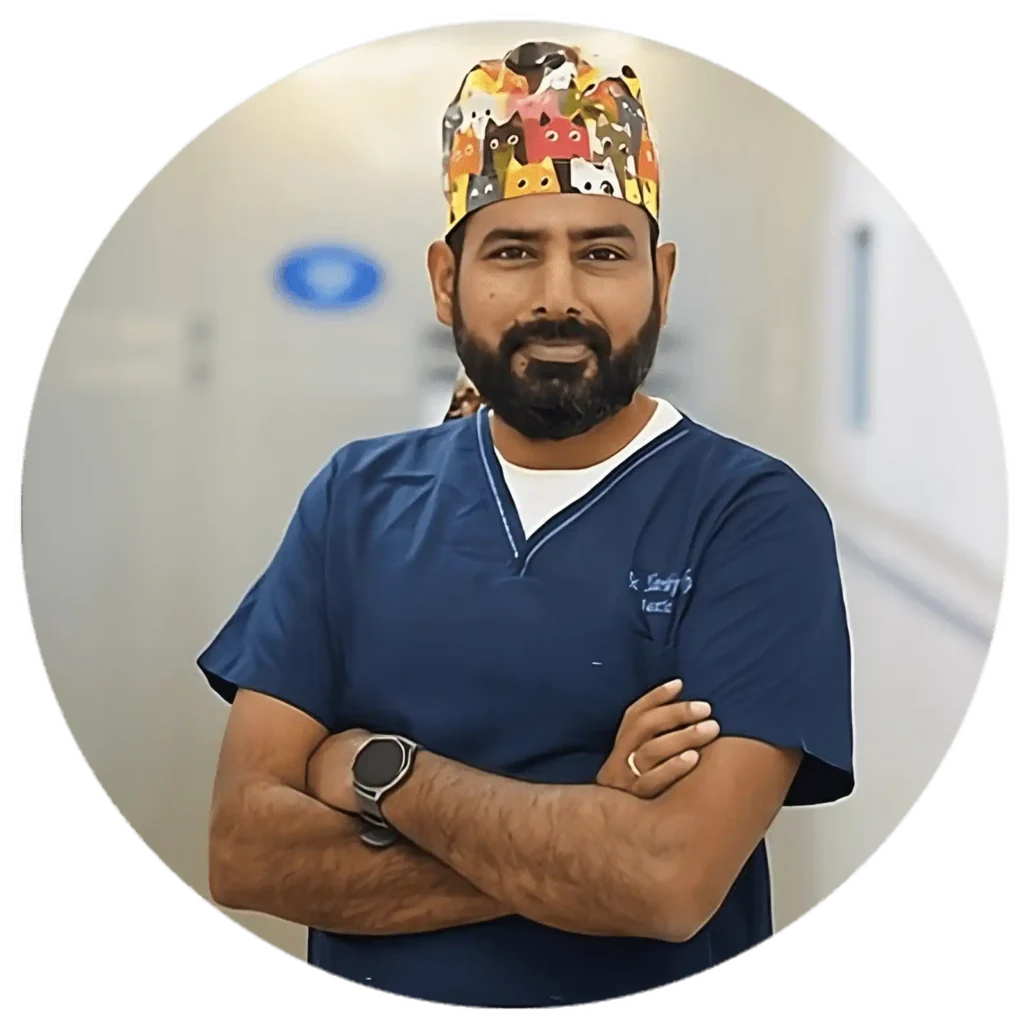
According to Dr Harikiran Chekuri, one of India’s pioneering plastic surgeon, “The Norwood scale tells us where a patient sits today. What it does not tell us is where their pattern is heading or whether their donor zone can support what the recipient area needs. Both questions have to be answered before a surgical plan is confirmed.“
Which Norwood Grades Qualify for Hair Transplant Surgery?
Each grade on the Norwood scale presents a different surgical picture. Understanding what each stage means for candidacy stops patients from either rushing into surgery too early or assuming they have missed the window entirely.
- Grade 1: No surgical indication. The hairline is intact and there is no visible recession worth treating. Surgery at this stage produces an artificially low hairline that the patient’s natural progression will outpace within a few years.
- Grade 2: Mild bitemporal recession with a defined hairline shape. A strong surgical candidate when loss is stable, donor density is adequate, and the age profile supports a plan that accounts for where the pattern is heading over the next decade.
- Grade 3 and 3 Vertex: Moderate frontal recession with possible early crown thinning. Clear surgical candidate with well-defined recipient zones and typically good donor yield. This is where most patients see the best ratio of graft investment to visible outcome.
- Grade 4 and 5: Significant frontal and crown loss with a narrowing donor zone. Surgery is appropriate but graft planning becomes more conservative and the surgical plan must account for future native hair progression across remaining non-transplanted areas.
- Grade 6 and 7: Extensive loss with a significantly reduced donor zone. Grade 6 is operable with realistic density expectations. Grade 7 is the most challenging grade with very limited donor supply and results depend heavily on beard or body hair supplementation where available.
Grade alone does not confirm candidacy. Donor density, hair loss stability, age, and scalp condition all factor into whether surgery is the right decision at that specific point in a patient’s hair loss timeline. Patients who get a proper assessment at Redefine Hair Transplant and Plastic Surgery Center walk out knowing their grade, their candidacy status, and the clinical reasoning behind both.
What Else Determines Whether a Norwood Grade Qualifies for Surgery?
The grade classifies the pattern. Clinical candidacy depends on what sits behind the grade. These are the factors that determine whether surgery is appropriate at any Norwood stage.
- Hair loss stability: A hairline that is still actively receding needs medical stabilisation before surgery. Operating during active progression places grafts at a hairline the patient’s own hair loss will keep moving back, producing results that look incomplete within a few years.
- Donor zone density: Adequate follicle density at the back and sides of the scalp is non-negotiable. Thin donor zones reduce the available graft count and limit what density can be achieved in the recipient area regardless of how high the Norwood grade is.
- Patient age: Younger patients present a planning challenge because the full extent of their eventual Norwood progression is unknown. Surgery in the early twenties frequently requires revision as the underlying pattern advances around the transplanted grafts.
- Hairline design realism: The surgical hairline needs to look natural not just at the time of surgery but at fifty. Aggressive low hairlines designed to replicate a teenage position rarely age well as the face and surrounding native hair both change over time.
- Scalp condition: Scarring, active inflammation, or scalp conditions that affect follicle health are assessed clinically before surgery. These findings can delay the procedure date or change the surgical approach regardless of what the Norwood grade indicates.
Most patients who ask about surgery at early Norwood stages benefit from medical therapy first with a surgical consultation once stability is confirmed over twelve months. Read about balding at 25 to understand how age, Norwood grade, and progression interact when planning hair restoration for younger patients.
Your Norwood grade is the starting point. Your full clinical assessment is what determines the plan.
Why Choose Redefine for Hair Transplant Candidacy Assessment?
Dr. Harikiran Chekuri is one of India’s pioneering surgeons in hair transplant and every candidacy assessment at Redefine covers Norwood grading, donor density mapping, progression evaluation, and long-term planning as a single clinical conversation rather than a graft count quoted against a grade.
Patients who come to Redefine Hair Transplant and Plastic Surgery Center leave knowing exactly where they sit on the Norwood scale, whether they are surgically ready, and what needs to happen before they are if the timing is not yet right.
Frequently Asked Questions
Which Norwood grade qualifies for hair transplant?
Norwood Grade 2 through Grade 6 generally qualifies for surgical restoration when hair loss is stable, donor density is adequate, and the patient’s age supports a realistic long-term plan.
Can Grade 7 baldness get a hair transplant?
Grade 7 is the most challenging grade due to severely limited donor supply. Surgery is possible in select cases using beard or body hair supplementation but density expectations must reflect what the donor supply can realistically deliver.
Does Norwood Grade alone determine hair transplant candidacy?
No. Hair loss stability, donor zone density, patient age, hairline design realism, and scalp condition all factor into candidacy alongside the Norwood grade classification.
What happens if I get a hair transplant too early in my Norwood progression?
Surgery during active progression places grafts at a hairline the patient’s own hair loss will keep moving back, producing results that look incomplete or unnatural within a few years and often require correction.
REFERENCE LINKS
- International Society of Hair Restoration Surgery: https://www.ishrs.org
- American Academy of Dermatology — Hair Loss: https://www.aad.org/public/diseases/hair-loss
- PubMed Central — Norwood Scale and Hair Transplant Outcomes: https://www.ncbi.nlm.nih.gov/pmc
Disclaimer: Reference links are provided solely for academic and clinical context and do not imply endorsement or accountability for third-party medical content.