
Transplanted hair grafts are permanent because they carry the genetic characteristics of the donor zone and remain resistant to DHT. At ten years, the transplanted hair itself is still producing. What changes is the native hair around it. Patients who managed ongoing hair loss medically after surgery look largely the same at ten years. Those who did not see the native hair thinning around intact grafts, producing a result that looks increasingly uneven over time.
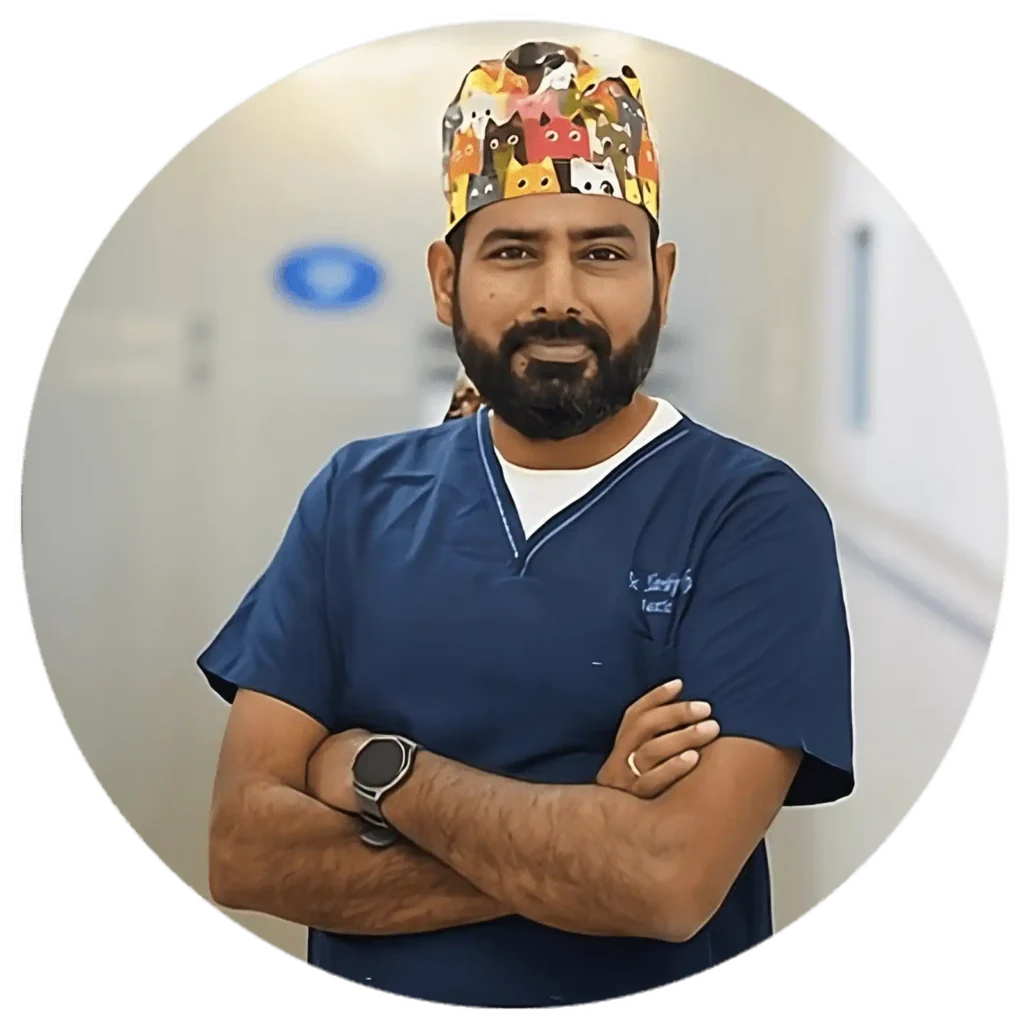
According to Dr Harikiran Chekuri, one of India’s pioneering plastic surgeon, “The transplanted grafts do not fail at ten years. What fails is the plan around them. A result that looks natural a decade later is built from a surgical plan that accounted for where the patient’s hair loss was heading, not just where it was on the day of surgery.“
Why Do Some Hair Transplant Results Look Different at 10 Years?
Transplanted follicles retain their DHT resistance permanently. The variation in ten-year outcomes comes from what was and was not planned for at the time of surgery.
- Native hair continues thinning: Transplanted grafts do not protect the surrounding native hair from androgenetic alopecia. Without medical management post-surgery, native hair keeps miniaturising around the transplanted zone and the density contrast becomes visible over time.
- Hairline design for the future: A hairline placed at an aggressive low position in a twenty-five-year-old looks natural at the time but unnatural at forty when the surrounding native hair has receded further. Ten-year results reflect the surgical planning decisions made a decade earlier.
- Graft survival quality: Clinics that rush extraction or handle grafts poorly produce lower survival rates. Some grafts that appeared to take initially may have been partially damaged, and their reduced output becomes more visible as the overall hair picture changes around them.
- Donor zone management: Overharvesting the donor zone at the first procedure reduces what is available for future sessions and can leave the donor area visibly thinner at ten years in patients who required additional coverage.
- Medical therapy after surgery: Patients on finasteride or minoxidil after surgery consistently show better ten-year outcomes because native hair loss in non-transplanted areas is slowed, keeping the overall density picture more balanced.
Ten-year results are largely determined by how well the surgical plan anticipated future progression, not by whether grafts survive. For patients in Hyderabad, Redefine Hair Transplant and Plastic Surgery Center builds every surgical plan around where the patient’s hair loss is heading rather than just what the scalp looks like at the consultation.
What Should You Do to Protect Hair Transplant Results Over 10 Years?
The transplanted hair holds. Protecting the overall result long term is about managing the native hair around it and maintaining the conditions that keep the scalp healthy.
- Medical therapy for native hair: Finasteride and minoxidil slow androgenetic alopecia in non-transplanted areas. Starting these after surgery and continuing consistently is what keeps the density balance between transplanted and native hair looking natural over a decade.
- PRP maintenance: Regular PRP sessions after surgery strengthen native follicles, improve scalp circulation, and extend the productive life of miniaturising follicles around the transplanted zone. Most patients benefit from sessions every six to twelve months.
- Sun protection: Prolonged UV exposure damages the scalp and weakens follicle function over time. Patients who spend significant time outdoors without scalp protection consistently show more variable long-term outcomes than those who protect it.
- Avoiding overharvesting in revision: Patients who need a second session should ensure donor zone density is properly assessed before any additional extraction. Overharvesting in a second procedure reduces what is available for future needs and affects the donor area appearance permanently.
- Ongoing clinical review: A scalp assessment every few years tracks native hair progression, identifies areas where intervention is needed early, and allows the treatment plan to be adjusted before problems become visually significant.
The ten-year picture is built from decisions made in the first year after surgery. Patients who treat post-surgical care as part of the procedure consistently hold their results far better than those who consider the surgery the endpoint. Read about hair transplant permanence to understand exactly what permanent means and what ongoing management is needed to protect it.
Your transplant lasts. What you do after surgery determines how good it looks at ten years.
Why Choose Redefine for Hair Transplant and Long-Term Results?
Dr. Harikiran Chekuri is one of India’s pioneering surgeons in hair transplant and designs every surgical plan with the ten-year picture in mind, covering hairline positioning, donor zone management, graft count, and post-surgical medical therapy as part of a single clinical strategy rather than a standalone procedure.
Patients who come to Redefine Hair Transplant and Plastic Surgery Center receive a surgical plan built around where their hair loss is heading, not just where it stands today, with post-surgical follow-up structured to protect the result over the long term.
Frequently Asked Questions
Do hair transplant results last 10 years?
Transplanted grafts are permanent and DHT-resistant. The ten-year picture depends on how well native hair loss was managed after surgery and how the surgical plan accounted for future progression.
Why does a hair transplant look different after 10 years?
Native hair around the transplanted zone continues thinning without medical management. The contrast between permanent transplanted hair and thinning native hair changes how the overall result looks over time.
Does transplanted hair thin or fall out over time?
Transplanted follicles retain their DHT resistance permanently and do not follow the same thinning pattern as native hair. Their output at ten years reflects the original graft survival quality from surgery.
What can I do to keep hair transplant results looking good long term?
Medical therapy for native hair, regular PRP sessions, scalp protection, and periodic clinical review together protect the density balance between transplanted and native hair over a decade.
REFERENCE LINKS
- International Society of Hair Restoration Surgery: https://www.ishrs.org
- American Academy of Dermatology — Hair Transplant: https://www.aad.org/public/diseases/hair-loss
- PubMed Central — Long-Term Hair Transplant Outcomes: https://www.ncbi.nlm.nih.gov/pmc
Disclaimer: Reference links are provided solely for academic and clinical context and do not imply endorsement or accountability for third-party medical content.