
Patchy beard growth comes from three distinct causes that look similar on the surface but require completely different responses. This post covers how genetics, alopecia barbae, and scarring each behave at the follicle level, how dermatoscopy separates them clinically, and what treatment options exist for each cause.
Patchy beard growth comes down to three causes: genetics, alopecia barbae, or scarring. With genetics, some areas naturally have fewer active hair follicles or produce less facial hair. DHT sensitivity affects thickness, not patchiness. Alopecia barbae is autoimmune, creating smooth circular patches that can appear within weeks. Scarring from acne, burns, or injury means the follicular tissue is gone, not dormant. Which of the three it is changes everything about treatment. The wrong diagnosis either fails or delays the right intervention.
According to Dr. Harikiran Chekuri, beard hair transplant in Hyderabad, “A patchy beard in a young patient needs a proper clinical assessment before any treatment is considered. The cause drives everything, including whether intervention is even appropriate at that stage.”
Is a Patchy Beard Caused by Genetics, Alopecia, or Scarring?
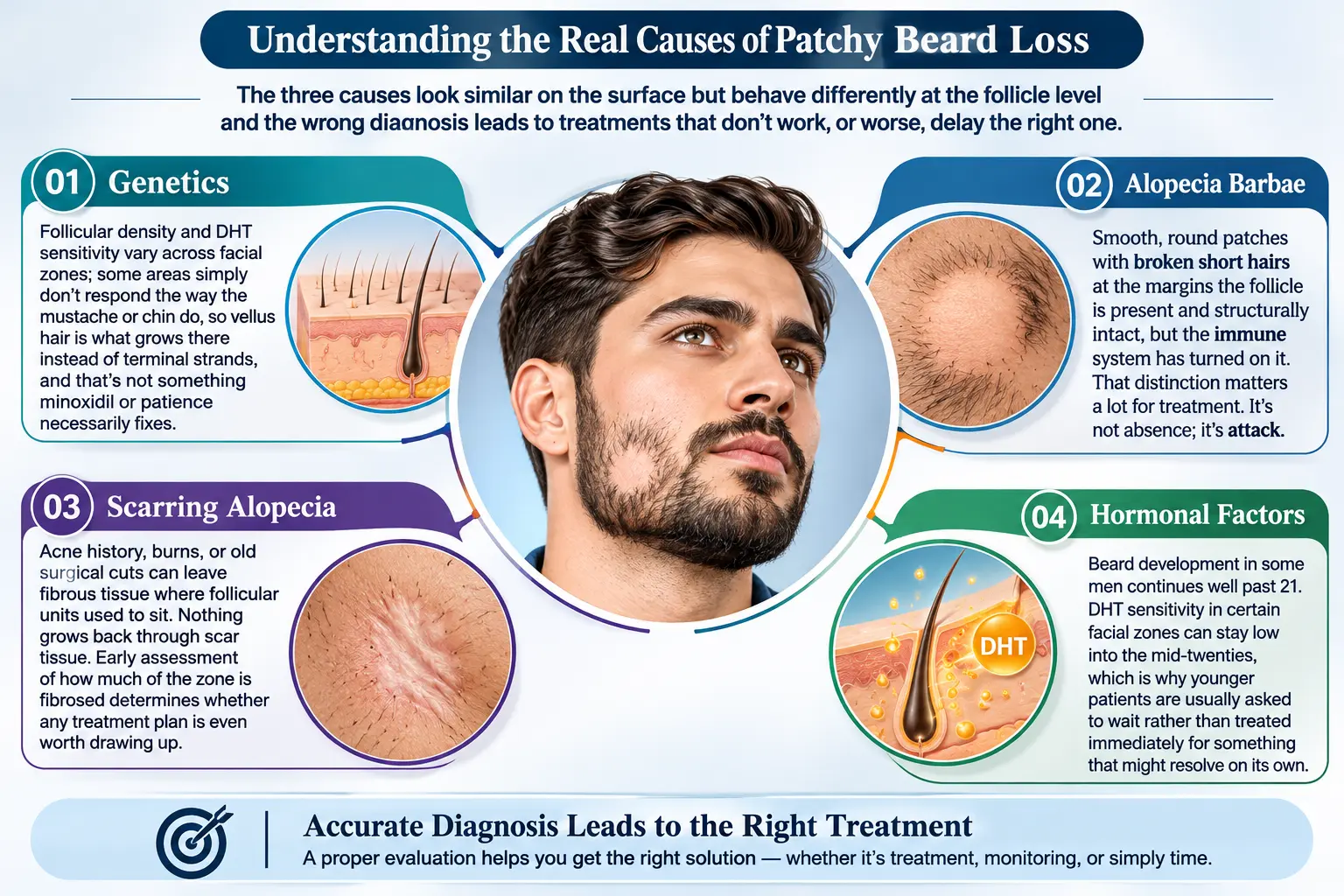
Dermatoscopy separates these three clearly. Without it you’re guessing, and in this case guessing costs the patient time and sometimes the chance at a non-surgical fix before beard hair transplant becomes the only option left.
What Treatments Work for a Patchy Beard?
What can be done depends on follicle status present but weak, under immune attack, or destroyed entirely. Those three situations don’t share a treatment path.
Minoxidil: Works on follicles that exist but underperform extends the anagen phase and can push vellus hair toward terminal growth in genetically sparse zones. Doesn’t do anything useful in scarred tissue or where active autoimmune activity is ongoing. Patient selection matters here more than the drug itself.
Corticosteroid injections: For alopecia barbae specifically, intralesional steroids into the patch suppress local immune activity and can trigger a follicle. Recovery response is reasonable in early cases. The longer it’s been active, the less reliable the outcome.
What determines the right treatment approach? Hair loss treatment protocols using PRP and growth factor therapy can support follicle health in sparse zones, particularly where nutritional or circulatory factors are compounding the genetic picture and often serve as a first step before surgical options come into the conversation.
Beard hair transplant: Once the pattern is confirmed as genetic and the developmental window has closed, FUE grafts from the occipital scalp can fill sparse zones permanently. Angle matching and density calibration to existing beard growth is what separates a natural result from one that reads as transplanted.
Scarring cases sit outside all of this. Fibrosis doesn’t respond to injections or topicals graft viability assessment in the affected zone is where that conversation starts, rather than relying on treatments meant for existing, healthy follicles.
What Determines the Right Treatment Approach?
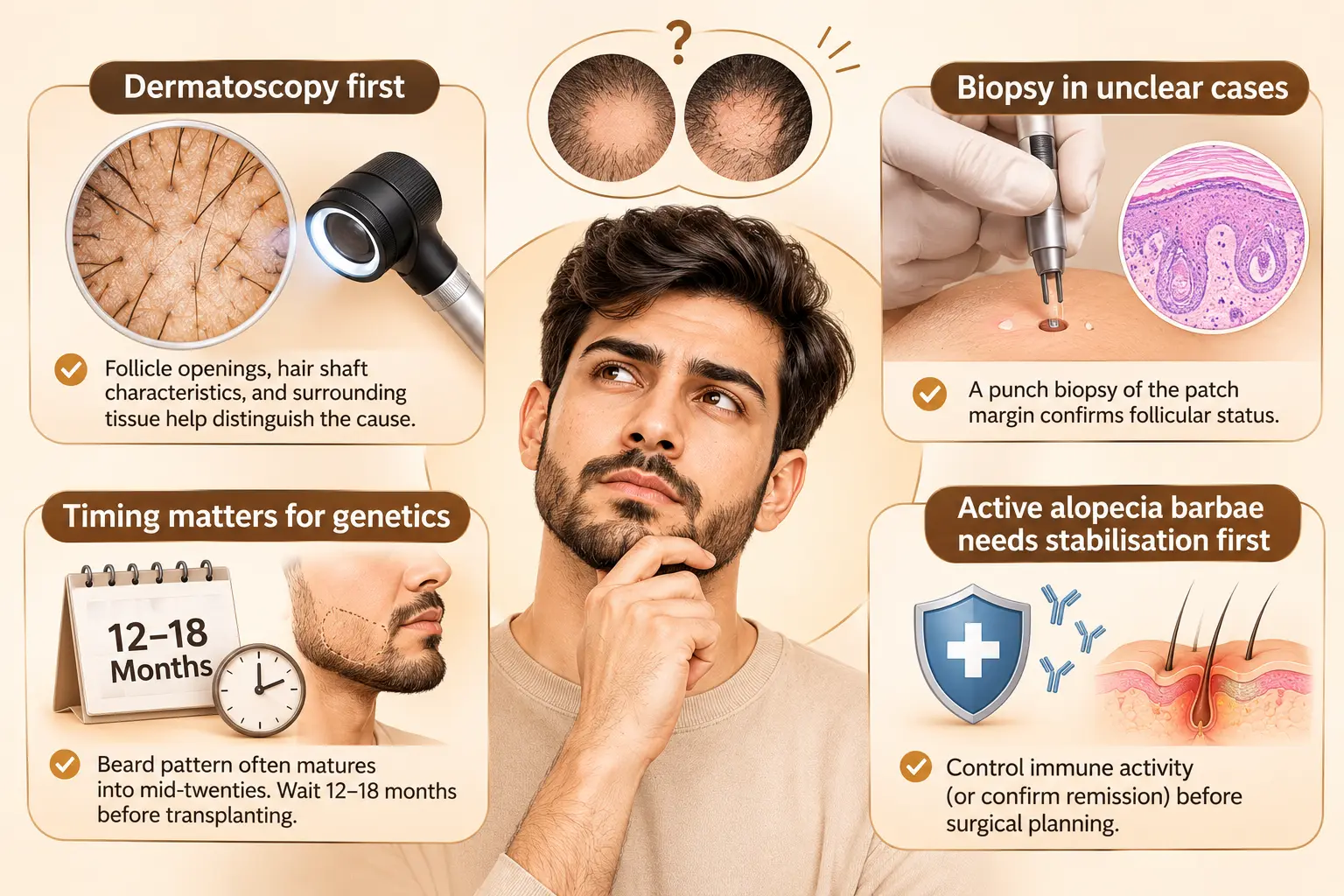
Same surface complaint. Completely different clinical paths underneath, and the examination is what decides which one applies.
Frequently Asked Questions
Can a patchy beard fill in on its own with age?
Genetic sparseness sometimes improves into mid-twenties alopecia barbae, and scarring doesn’t resolve without treatment.
Is alopecia barbae permanent?
Early-stage cases treated with steroids often recover partially; chronic, long-standing cases are harder to predict.
Does stress cause patchy beard growth?
Stress can trigger alopecia barbae flares in susceptible individuals but won’t produce genetic patchiness or scar tissue.
At what age should I consider a beard transplant?
The pattern needs to be stable first; most surgeons won’t plan surgery before 25 to 27 for that reason.
Reference
- Genetics and DHT sensitivity in beard growth
How to Grow a Beard on the Cheeks Healthline - Alopecia areata of the beard (alopecia barbae) clinical review
Alopecia Areata of the Beard: A Review of the Literature PubMed - Dermoscopic patterns in beard alopecia areata
Clinico-Dermoscopic Pattern of Beard Alopecia Areata PMC