Fat transfer breast augmentation uses your own fat to add volume without implants. But it only works for a specific type of patient. This blog covers who qualifies, who does not, and what determines whether the result holds over time.
Not everyone. And the honest answer matters more than a long list of benefits.
Fat transfer breast augmentation uses liposuction to harvest fat from the abdomen, flanks, or thighs, then injects it into the breast. The result is natural, uses no foreign material, and improves the donor site at the same time. But the procedure has real limits, and the single biggest factor determining whether it is right for you is whether your body can supply enough fat to produce a result worth having.
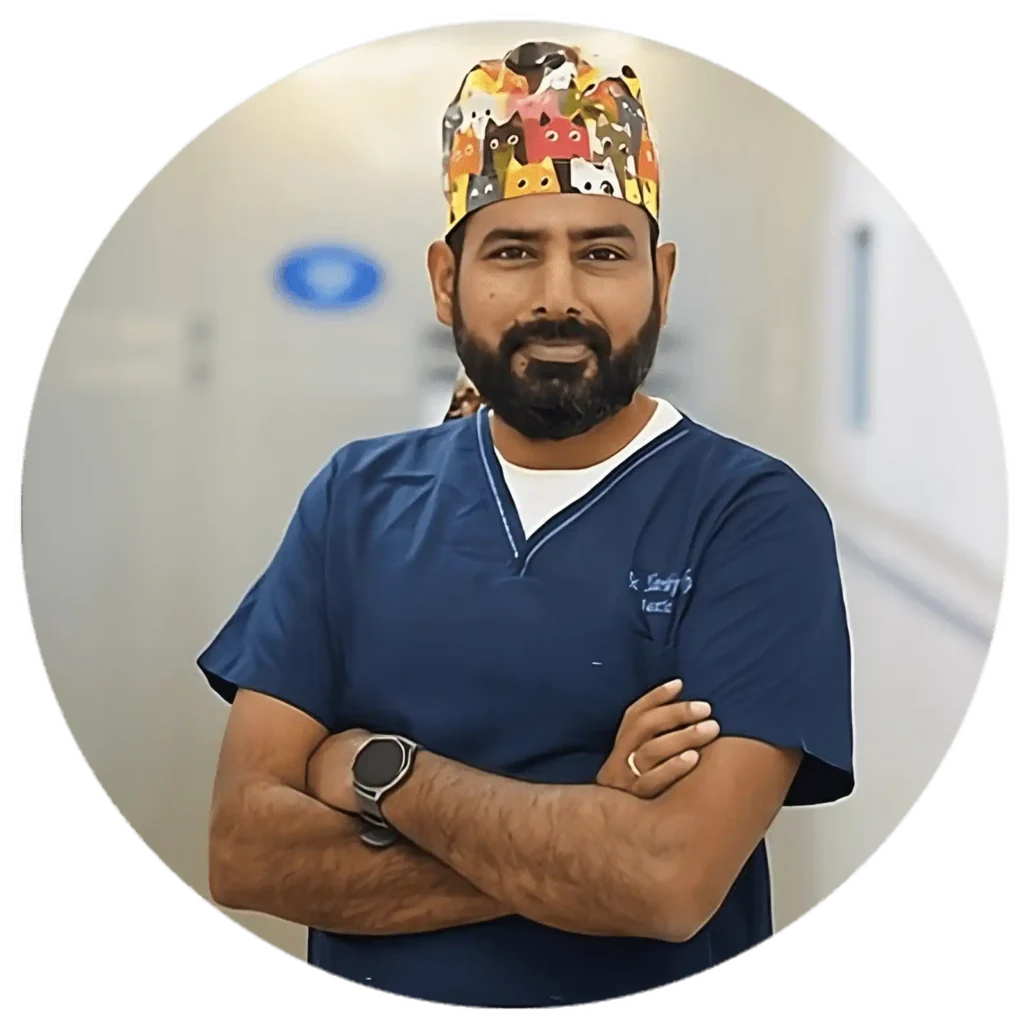
According to Dr Harikiran Chekuri, one of India’s pioneering plastic surgeons, “Fat transfer breast augmentation is one of the most satisfying procedures when the patient is right for it. The result looks and feels completely natural. Patients who are too lean, want too much volume, or have significant sagging are not the right candidates for fat transfer breast augmentation. Identifying this early at consultation prevents the wrong procedure from being chosen.
Who Is a Good Candidate for Fat Transfer Breast Augmentation?
Candidacy comes down to four things. All four need to be present.
- Sufficient donor fat: This is the primary requirement. You need harvestable fat in the abdomen, flanks, thighs, or back. Patients with a BMI of approximately 22 or above typically have enough. Very lean patients do not, and the procedure cannot be performed safely or effectively without adequate donor volume
- Modest size goals: Fat transfer reliably delivers half to one full cup size of increase per session. If you want more than one cup size, implants are a more predictable option. Expecting a dramatic size change from fat transfer produces disappointment, not results
- Good skin elasticity: Fat transfer adds volume but does not lift. Patients with good skin tone and minimal sagging see the best outcomes. Significant ptosis requires a breast lift surgery to address position before or alongside augmentation
- Stable weight: Transferred fat behaves like fat elsewhere in the body. Weight loss after surgery reduces the volume retained in the breast. Studies confirm that patients who lost even one BMI unit after surgery retained as little as 22% of grafted fat. Stable weight before and after surgery is not optional, it is a clinical requirement for a lasting result
Who Is Not a Good Candidate?
This is the conversation most clinics skip. It should not be skipped.
- Very lean patients: If you do not have enough harvestable fat, the procedure cannot be performed. Patients with a BMI below approximately 22 typically fall into this category. Attempting it without adequate donor volume produces a poor liposuction result without achieving any breast enhancement implants are the more appropriate path
- Patients wanting significant enlargement: Fat transfer reliably delivers half to one full cup size per session. If you want more than one cup size, implants are a more predictable option. Multiple sessions can add volume, but each carries the same retention rate and the same donor site requirement
- Patients with significant sagging: Fat adds volume it does not correct position. A breast that has lost projection and shape due to pregnancy, weight loss, or age requires a breast augmentation surgery plan that addresses both volume and lift, not fat transfer alone
- Smokers: Smoking significantly reduces fat graft survival. Nicotine impairs blood supply to the grafted fat cells during the critical integration period. Smoking cessation for a minimum of six weeks before and after surgery is required
- Patients with active breast conditions: Any unresolved breast lump, cyst, or family history requiring active monitoring needs to be assessed before fat transfer is planned. Imaging is reviewed at consultation as standard. Patients considering fat transfer alongside implants can readBreast Implants: Over or Under the Muscle? which covers placement options when both volume and coverage need to be addressed.
Wondering if you’re a good candidate for fat transfer breast augmentation? Book a consultation to find out.
Why Choose Redefine for Fat Transfer Breast Augmentation in Hyderabad?
At Redefine Hair Transplant and Plastic Surgery Centre, Dr Harikiran Chekuri brings over 20 years and more than 20,000 surgeries to every treatment decision. He is a Gold Medallist in Plastic Surgery from NTR University of Health Sciences, Paul Harris Fellow, and Vaidya Siromani awardee 2015. Redefine has been ranked No.1 Plastic Surgery Centre in the Twin States by the Times of India Health Survey for three consecutive years, 2019, 2020, and 2021.
Every fat transfer breast augmentation at Redefine begins with a physical assessment of donor fat availability, breast tissue, skin quality, and the patient’s volume goals. If fat transfer will not deliver the result a patient expects, that is confirmed at consultation, not after surgery.
Frequently Asked Questions
How much can fat transfer increase breast size?
Most patients achieve half to one full cup size per session. More than one cup size in a single procedure is not reliably achievable with fat transfer alone.
Do I need enough body fat to qualify for fat transfer breast augmentation?
Yes. Sufficient donor fat in the abdomen, flanks, or thighs is the primary requirement. Very lean patients without adequate donor volume are not suitable candidates.
Is fat transfer breast augmentation safe?
Yes, when performed by an experienced surgeon on an appropriately selected patient. The primary risks are fat reabsorption, small areas of fat necrosis, and donor site contour irregularity.
Will love handles come back after treatment?
The fat cells removed by liposuction or destroyed by fat freezing do not return. Significant weight gain after treatment can enlarge remaining fat cells and affect the result.
How long is recovery after fat transfer breast augmentation?
Most patients resume light activity within one to two weeks. Compression garments are worn at the donor sites for four to six weeks. Final results are assessed at six months.
References
- PMC Fat Grafting and Breast Augmentation: A Systematic Review of Primary Composite Augmentation
https://pmc.ncbi.nlm.nih.gov/articles/PMC6952123/ - PubMed Safety and Effectiveness of Single Session Mega Volume Fat Grafting for Breast Augmentation
https://pubmed.ncbi.nlm.nih.gov/35136938/ - PubMed Long-Term Evaluation After Autologous Fat Transplantation for Breast Augmentation
https://pubmed.ncbi.nlm.nih.gov/32777824/