Carboxytherapy does not erase stretch marks. It significantly improves them by triggering collagen remodelling at the dermal level. This blog covers how CO2 injections work on stretch marks, what the clinical evidence shows, who the treatment suits, how many sessions are needed, and what results actually look like.
Carboxytherapy does not remove stretch marks the way a laser cuts or a surgical procedure excises. What it does is trigger the skin’s own repair mechanism at the exact site where the damage is.Stretch marks are dermal scars. The collagen and elastin fibres in the dermis have broken down and the skin has lost its structural integrity in those areas. Carboxytherapy addresses that directly by injecting medical-grade CO2 gas into the dermis, which stimulates new collagen production, improves blood supply, and gradually remodels the scar tissue from within.
The result is not a blank slate. It is a meaningful, visible improvement in texture, colour, and depth that multiple clinical studies confirm as significant, with minimal downtime and no surgical risk.
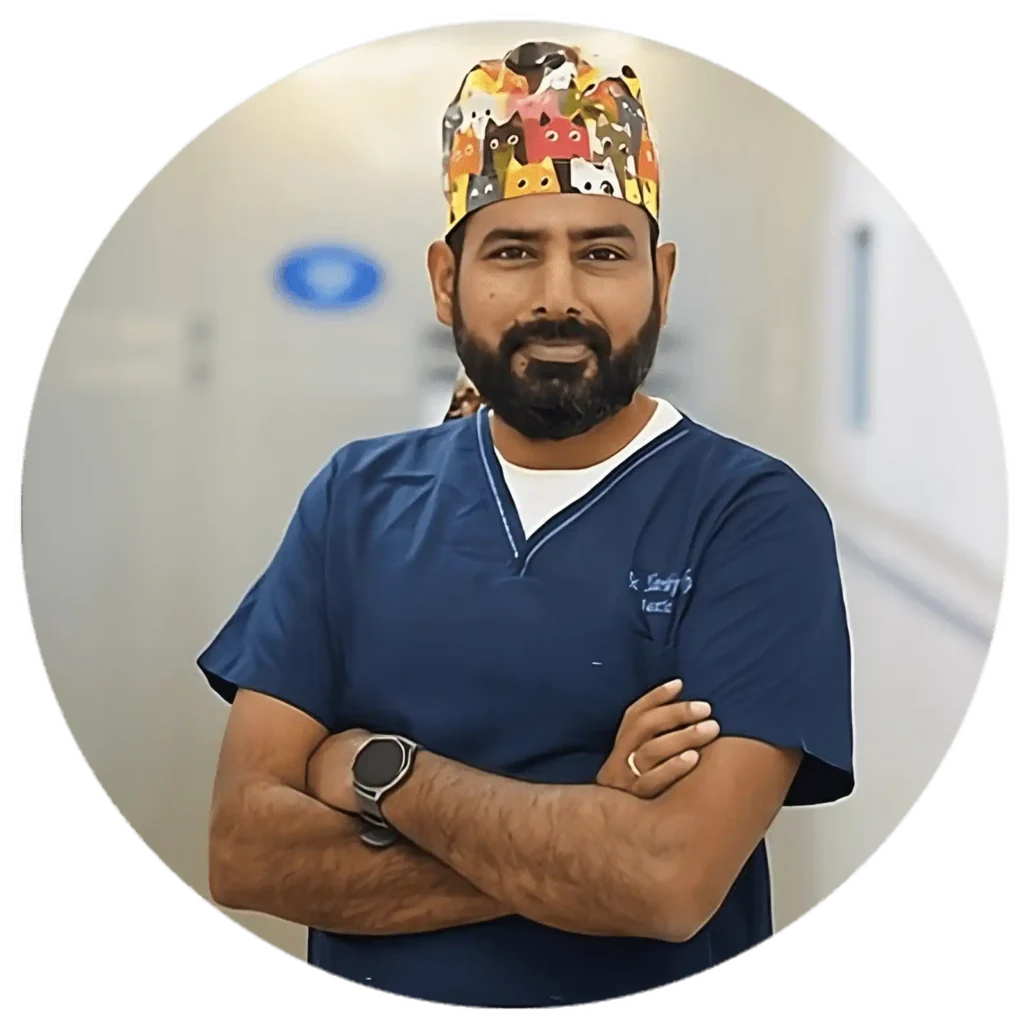
According to Dr Harikiran Chekuri, one of India’s pioneering plastic surgeons, “Patients come in expecting carboxytherapy to erase their stretch marks and leave disappointed when I explain that is not how it works. When I show them what it actually does, which is real structural improvement in how the skin looks and feels, most of them are satisfied with that outcome. Managing the expectation honestly is the first step.”
How Does Carboxytherapy Actually Work on Stretch Marks?
The mechanism is straightforward once you understand what stretch marks are at the tissue level.
Stretch marks (striae distensae) form when the dermis tears under mechanical stress. Rapid growth, pregnancy, weight gain, or hormonal changes cause the middle layer of skin to break down faster than it can rebuild. The result is an atrophic linear scar with disorganised collagen bundles, reduced elastin, and poor blood supply.
Carboxytherapy works through two simultaneous mechanisms:
- The Bohr effect: When CO2 is injected into the tissue, the surrounding oxygen concentration drops locally. The body responds by increasing blood flow to the area, delivering more oxygen and nutrients to the tissue. This improved microcirculation is what begins the repair process
- Fibroblast stimulation: The controlled inflammatory response triggered by CO2 injection activates fibroblasts to produce new collagen and elastin. Histological studies confirm that after carboxytherapy, collagen bundles become more compact, organised, and structurally sound compared to pre-treatment biopsies
A 2024 comparative study in Dermatologic Therapy confirmed carboxytherapy induced significant collagen remodelling and better organisation of elastic fibres in stretch marks with minimal side effects and no downtime. A 2023 systematic review of patients across eight studies confirmed improved skin texture, reduced stretch mark severity, increased skin thickness, and higher patient satisfaction across all treated groups.
The improvement is gradual and cumulative. It does not happen in one session. Each session builds on the last as new collagen matures over four to six weeks.
Patients considering carboxytherapy alongside other skin treatments can read more about the full range of Skin Treatments at Redefine and how treatment plans are built around skin type and concern.
Who Is It For, What to Expect, and What It Cannot Do?
- Best suited for: Striae alba (white or silver stretch marks) and striae rubra (red or purple, newer stretch marks). Striae alba responds more slowly but still improves measurably. Striae rubra responds faster because the area still has active vascularity
- Areas treated: Abdomen, thighs, buttocks, arms, breasts, and lower back. Any area where stretch marks are present is treatable
- Sessions needed: Three to eight sessions spaced three to four weeks apart for a full course. Most patients see noticeable improvement from session three to four. Final results are assessed three months after the last session as collagen continues to mature
- What the session feels like: A mild stinging or pressure sensation during injection followed by a temporary buzzing or crackling feeling under the skin as the gas disperses. This lasts a few minutes and resolves. No anaesthesia required for most patients
- Downtime: Minimal. Mild redness and swelling for 24 to 48 hours. Normal activity resumes the same day
- What it cannot do: Completely erase deep or very old stretch marks. Produce results in one session. Replace surgical skin removal where there is significant excess skin. Patients with extensive post-pregnancy or post-weight loss skin changes may need a combination approach
- Combining treatments: Carboxytherapy combined with fractional CO2 laser produces superior results to either alone, as confirmed in a 2024 right-to-left comparative study. At Redefine, MNRF Treatment is used alongside carboxytherapy for patients where deeper collagen remodelling is the clinical goal, producing more complete improvement than either treatment alone.
Why Choose Redefine for Carboxytherapy in Hyderabad?
At Redefine Hair Transplant and Plastic Surgery Centre, carboxytherapy for stretch marks is delivered by Dr Harikiran Chekuri, who brings over 20 years and more than 20,000 procedures to every consultation. He is a Gold Medallist in Plastic Surgery from NTR University of Health Sciences, Paul Harris Fellow, and Vaidya Siromani awardee 2015. Redefine has been ranked No.1 Plastic Surgery Centre in the Twin States by the Times of India Health Survey for three consecutive years, 2019, 2020, and 2021.
Every carboxytherapy plan at Redefine begins with an assessment of stretch mark type, depth, skin tone, and treatment history before session frequency, CO2 flow rate, and combination protocol are confirmed. The plan follows what the skin needs, not a standard template.
Frequently Asked Questions
Does carboxytherapy remove stretch marks completely?
No. It significantly improves them. Texture, colour, and depth all improve measurably over a course of sessions. Complete removal is not possible with any non-surgical treatment, but the improvement carboxytherapy produces is clinically confirmed and visible.
How many sessions does carboxytherapy need for stretch marks?
Three to eight sessions spaced three to four weeks apart. Most patients notice visible improvement from session three to four. Final results are assessed three months after the last session.
Is carboxytherapy painful?
Mild. A stinging sensation during injection and a temporary buzzing feeling under the skin as the gas disperses. Most patients find it manageable without anaesthesia. Both resolve within a few minutes.
Which is better for stretch marks: carboxytherapy or PRP?
Both improve stretch marks through different mechanisms. A clinical study comparing carboxytherapy versus PRP found significant improvement in both groups. Combining them or combining carboxytherapy with MNRF or laser produces superior results to either alone.
Can carboxytherapy be done on all skin types?
Yes. CO2 gas does not interact with skin pigment, making it safe across all skin tones including darker Indian skin types without hyperpigmentation risk.
Reference
- Hodeib AA, et al. Clinical and Immunohistochemical Comparative Study of the Efficacy of Carboxytherapy vs PRP in Treatment of Stretch Marks. Journal of Cosmetic Dermatology. 2018.
https://pubmed.ncbi.nlm.nih.gov/29316152/ - El-Taweel A, et al. Carboxytherapy versus its Combination with Fractional CO2 Laser for the Treatment of Striae Distensae. Dermatologic Therapy. 2024.
https://pubmed.ncbi.nlm.nih.gov/39445320/ - Carboxytherapy in the Management of Selected Skin Conditions. Applied Sciences. 2025.
https://doi.org/10.3390/app15179236