
A tummy tuck after pregnancy isn’t just about waiting six months. Weight stability, breastfeeding status, diastasis recti severity, and future pregnancy plans all determine when surgery is actually appropriate. This post covers what the procedure corrects, what the assessment involves, and why lifestyle readiness matters more than calendar timing.
Six to 12 months after delivery is where the conversation usually starts not where it ends. That window assumes breastfeeding has stopped, weight has settled, and the body isn’t still hormonally adjusting. A lot of women at 6 months postpartum don’t meet all three. The more useful question isn’t how long it’s been. It’s whether the weight is stable, the hormones have levelled out, and the patient isn’t planning another pregnancy. That last one matters more than most people expect going into the consultation.
According to Dr Harikiran Chekuri, a plastic surgeon in Hyderabad, “Undergoing tummy tuck surgery before postpartum weight stabilises or while hormonal recovery is incomplete increases complication risk. The timing of abdominoplasty is a clinical decision, not just a waiting game.
What Determines the Right Time for a Tummy Tuck After Pregnancy?
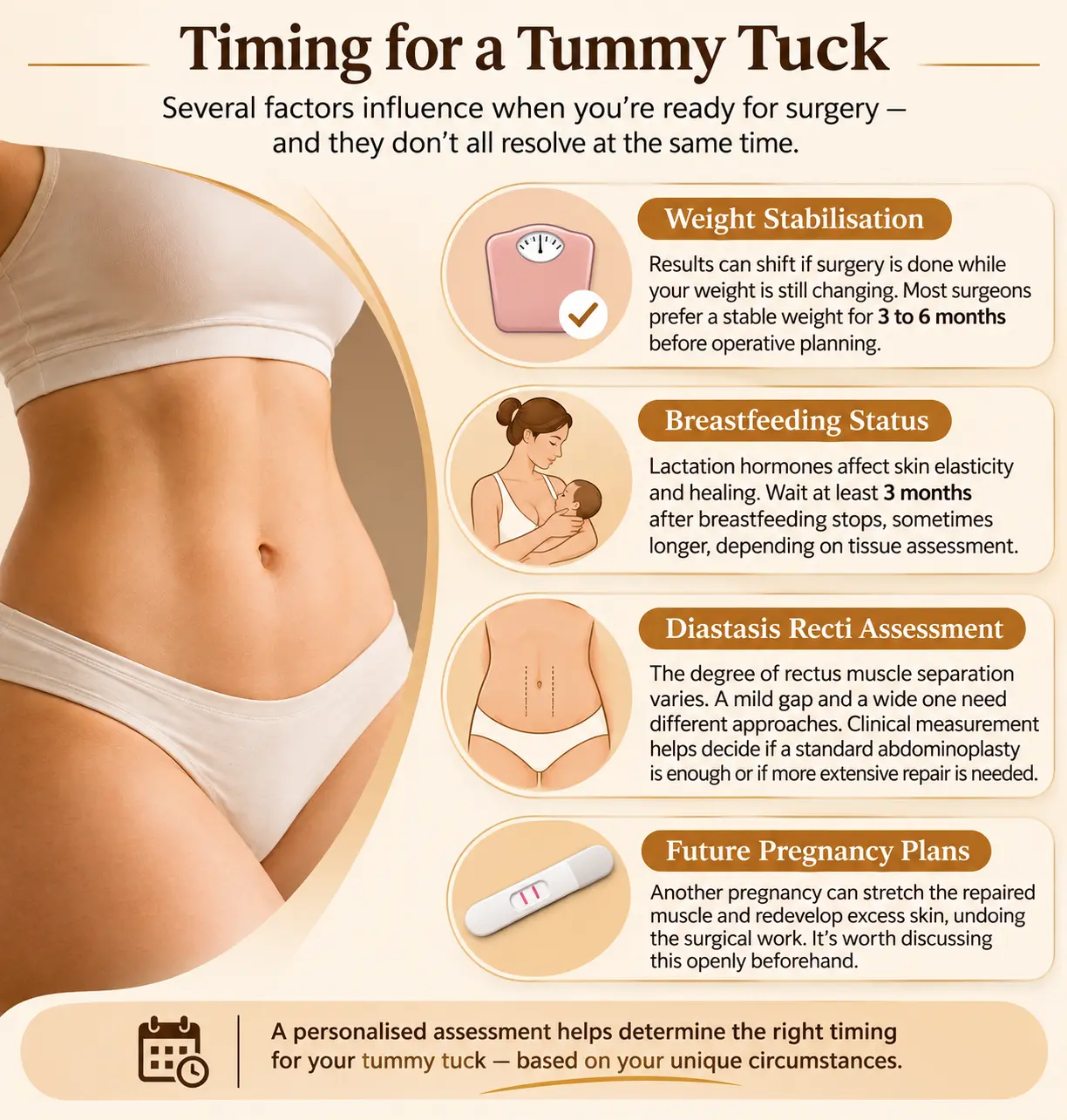
Physical readiness and surgical readiness don’t always arrive together. Some patients are weight-stable but still breastfeeding. Others have stopped feeding but the weight is still moving. The assessment sorts it out and for those who are ready, tummy tuck surgery addresses what diet and exercise alone cannot reverse.
What Does a Tummy Tuck After Pregnancy Actually Correct?
Pregnancy creates changes that exercise doesn’t fix and being clear about what surgery addresses versus what it doesn’t shapes the whole conversation about whether it’s appropriate.
- Loose abdominal skin: Once skin elasticity is exhausted from sustained stretching, it doesn’t retract regardless of weight loss or training. The lower abdominal skin excess that many postpartum patients describe is a structural issue, and abdominoplasty removes it surgically.
- Diastasis recti repair: The midline muscle gap that produces the characteristic postpartum abdominal bulge can’t be closed through exercise alone once it exceeds a functional threshold; tummy tuck surgery sutures the rectus muscles internally, which is a repair exercise simply can’t replicate.
- What determines the right treatment approach? When postpartum changes extend beyond the central abdomen, liposuction is sometimes planned alongside abdominoplasty, and it is worth discussing at the consultation rather than assuming the procedures are always separate.
- C-section scar integration: The tummy tuck incision in patients with a lower transverse caesarean scar is usually positioned to incorporate and remove the existing scar line in one incision instead of two, which most patients only realise is possible once someone tells them.
What surgery doesn’t do is worth stating plainly. It’s not a weight loss procedure. Patients still carrying significant postpartum weight aren’t candidates, and waiting longer doesn’t change that if the weight isn’t moving; this is covered in detail in tummy tuck for obese patients.
What Determines the Right Treatment Approach?
Twelve months postpartum and two patients sitting in the same consultation room can be in completely different clinical positions. Same timeline, different bodies. The calendar clears the minimum bar; nothing else.
- Full physical assessment: BMI, skin quality, degree of muscle separation, prior delivery history, and current weight direction all shape the operative plan a photograph at a remote consultation doesn’t give enough of this, and decisions made without a proper examination tend to show up as problems later.
- Imaging for diastasis: Ultrasound or hands-on clinical measurement of the inter-recti distance tells you what you’re actually repairing. A narrow gap and a wide one don’t require the same procedure, and the difference affects operative time, recovery, and what the abdomen looks like at 12 months post-surgery.
- Staged planning in some cases: Where significant skin laxity, muscle repair, and fat removal are all needed at once, some surgeons stage the procedures across two sessions rather than combining everything. Patient recovery tends to be more predictable that way, though it isn’t always necessary.
- Psychological readiness: Surgery undertaken before a patient has a settled sense of what they want from it creates expectations the procedure can’t reliably meet. This part of the consultation isn’t a formality; it’s where half the problems get caught before they happen.
Right timing means stable weight, breastfeeding finished, family complete, and realistic expectations about what gets corrected; factors covered in detail in tummy tuck vs liposuction. Most patients need more than 12 months to get all four of those in place.
Frequently Asked Questions
Can I get a tummy tuck 3 months after delivery?
Too early for most patients; weight, hormones, and tissue quality are still settling at that point.
Does a tummy tuck remove the C-section shelf?
Yes, the incision is typically planned to incorporate and remove the caesarean scar line entirely.
Can a tummy tuck be combined with other procedures?
Liposuction of the flanks or waist is commonly planned alongside it when postpartum changes extend beyond the abdomen.
Will I need a tummy tuck if I exercise after pregnancy?
Exercise rebuilds muscle tone but won’t close a significant diastasis or remove stretched skin those need surgery.
Reference
- Timing and candidacy for post-pregnancy abdominoplasty ASPS
Finding the Right Time for a Mommy Makeover American Society of Plastic Surgeons - Diastasis recti: diagnosis and surgical management with abdominoplasty PMC
Diastasis Recti: Etiology, Diagnosis, and Management PMC - Abdominoplasty with diastasis correction outcomes in postpartum women PubMed
Impact of Abdominoplasty with Diastasis Recti Correction on Female Sexual Function PubMed