
Neither season is categorically better. Summer brings heat, sweat, and UV risk. Monsoon brings humidity and infection risk if hygiene isn’t maintained. This post covers how each season affects the recovery window, what most Hyderabad patients actually choose and why, and how occupation, commute, and leave availability determine timing more reliably than weather.
The season does not determine the outcome of a hair transplant surgical technique and post-operative compliance do. Summer adds UV exposure and sweat risk. Monsoon adds humidity and infection risk. Neither is categorically safer. What matters is whether the patient can follow post-op protocols within the context of their daily life. An office worker in air conditioning and an outdoor labourer face different recovery challenges in the same month. The season changes which precautions need more attention, not whether the procedure succeeds.
According to Dr. Harikiran Chekuri, hair transplant in Hyderabad, “Season is a secondary factor. Surgical technique, graft handling, and post-operative compliance drive outcomes far more than temperature or humidity patients who manage scalp hygiene well recover smoothly in both.”
How Does Each Season Affect Hair Transplant Recovery?
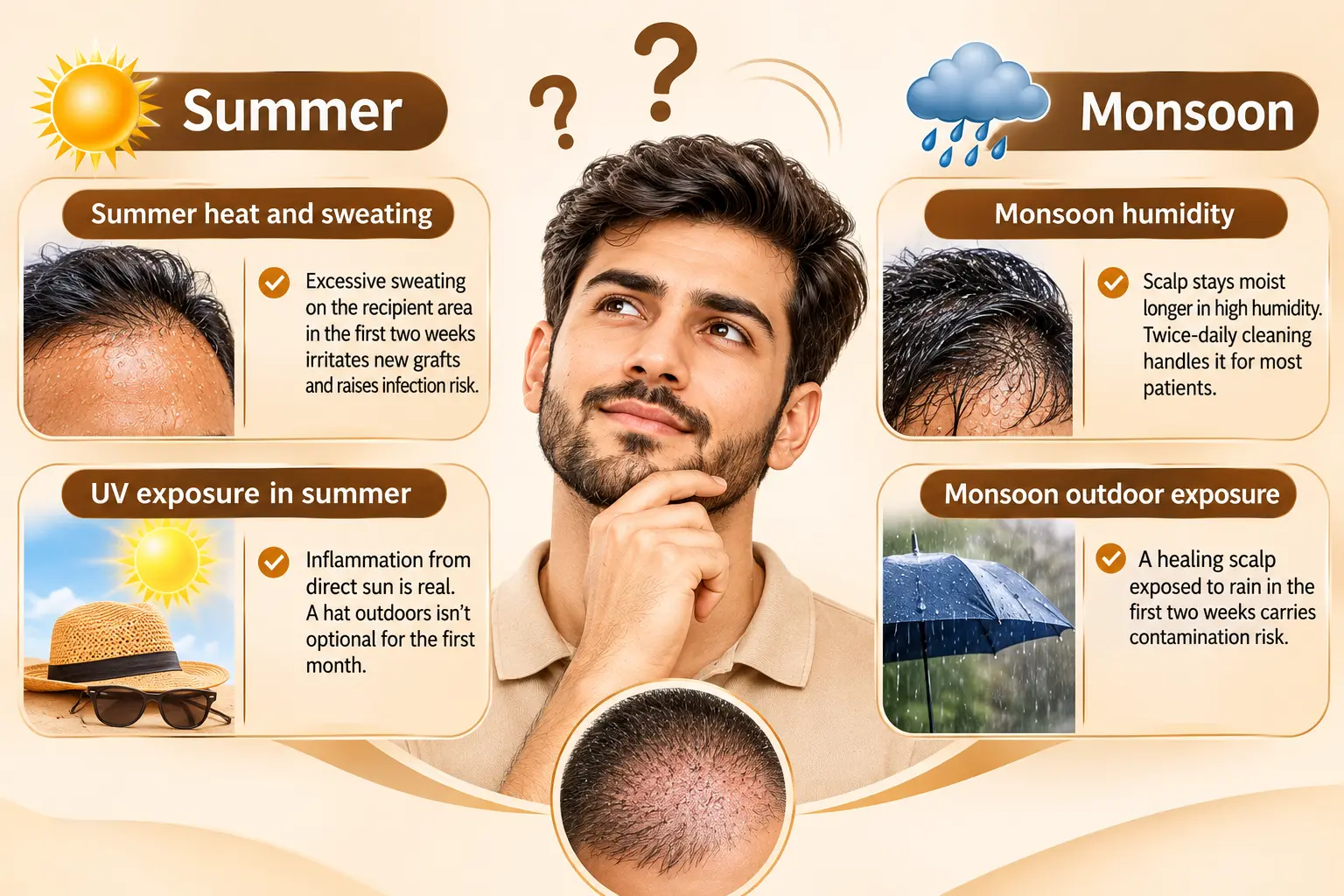
The first 14 days are when both seasons create the most pressure. After that, the risk profile drops significantly for both, which is why pre-operative counselling on FUE hair transplant recovery expectations matters as much as the season itself.
What Season Do Most Patients Actually Choose and Why?
Preference patterns at Redefine are consistent, and the reasoning behind them is practical rather than medical.
Winter and early spring preference: October through February is when most patients book. Heat is gone, sweating drops to almost nothing, and UV isn’t a daily management problem. The two seasonal challenges that complicate recovery largely disappear, which is why the preference is so consistent.
Monsoon practical advantages: Temperatures are lower than summer, which matters for sweat management. Most patients naturally spend more time indoors during monsoon anyway. Humidity is the one real risk, and twice-daily saline rinses handle it well enough for most patients who actually follow the routine.
What determines the right treatment approach? Hair loss treatment planning at Redefine factors in occupation, commute pattern, and home support before any timing recommendation gets made. A desk-based patient in a Hyderabad IT office and a construction site worker aren’t having the same conversation about summer surgery.
Summer advantages for some patients: Leave availability is the real driver here. Seven to ten days off work during the critical recovery window changes the calculus completely. Patients who can genuinely rest indoors in summer often do better than monsoon patients who go back to a commute after three days.
No season gets ruled out at the consultation. What gets assessed is the patient’s daily environment, work setting, heat exposure, sweat risk and whether they can protect the scalp through the first two weeks. A desk job clears that bar in any month. Outdoor work needs an honest conversation regardless of season. The calendar is never the deciding variable.
What Determines the Right Treatment Approach?
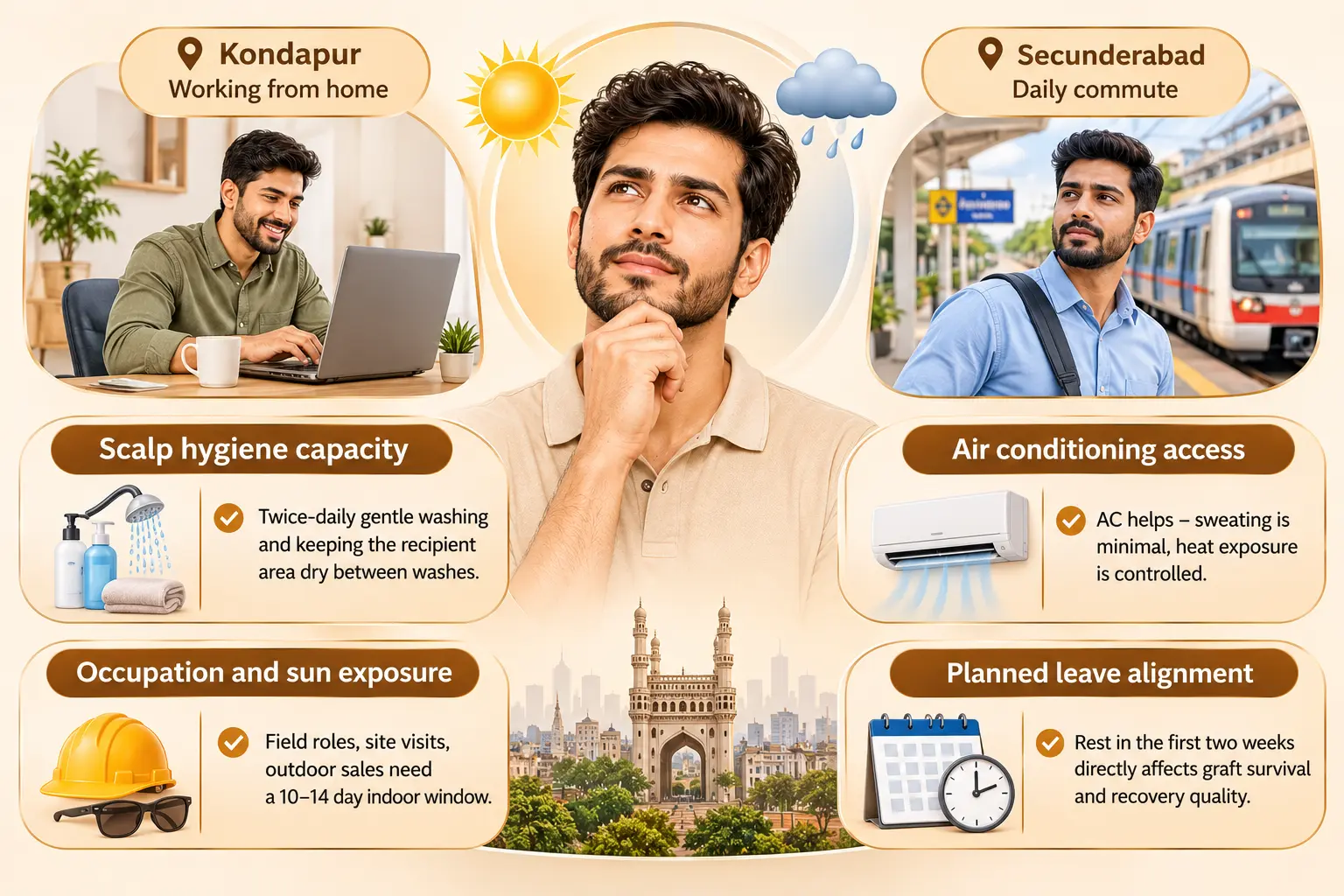
Same surface complaint. Completely different clinical paths underneath, and the examination is what decides which one applies.
Frequently Asked Questions
Is monsoon a bad time for a hair transplant?
Not if hygiene is maintained the humidity risk is real but manageable for patients who follow the post-op routine properly.
Can sweat damage hair transplant grafts?
Yes in the first two weeks excessive sweat on the recipient area increases infection risk and needs active management during that window.
How long should I avoid sun after a hair transplant?
Avoid direct sun exposure on the recipient area for at least four weeks. Wear a loose-fitting hat outdoors once permitted by your surgeon, especially in Hyderabad’s climate.
When is the best time of year for a hair transplant in Hyderabad?
October through February for most patients the seasonal conditions that complicate recovery in summer and monsoon are largely absent.
Reference
- For the monsoon/humidity + wound healing section:
Wound microenvironment: role of humidity, temperature and infection on healing - For the postoperative care/aftercare section:
Factors affecting wound healing oxygenation, infection, and skin repair - For the graft survival / scalp exposure section:
Postoperative care protocols and graft anchoring after hair transplantation