

The hairline is the most visible part of a hair transplant and the hardest to correct if it is wrong. This blog explains what a natural hairline looks like, why single-hair grafts, angle, and direction matter, and how age and facial structure should shape the design. It also covers how hairline planning has to match the donor supply so the result still looks right years later.
Hairline design is arguably the most important decision in the entire procedure. A technically perfect transplant with a poorly designed hairline still looks operated on and that’s exactly what most patients are trying to avoid. A natural hairline is irregular, low-density at the leading edge, and age-appropriate in placement. Too low, too straight, too dense at the front, or planned without accounting for future loss any of these makes the result immediately identifiable as surgical. Correcting a bad design is significantly harder than getting it right the first time, which is why the design conversation matters as much as the surgery itself.
According to Dr. Harikiran Chekuri, hair transplant surgeon in Hyderabad, “Hairline design is where the aesthetic judgment in hair transplantation lives. The surgical technique can be executed well and the result can still look unnatural if the design doesn’t account for facial proportions, age, donor capacity, and what the patient’s hair loss pattern is likely to do over the next decade.”
What Makes a Transplanted Hairline Look Natural?
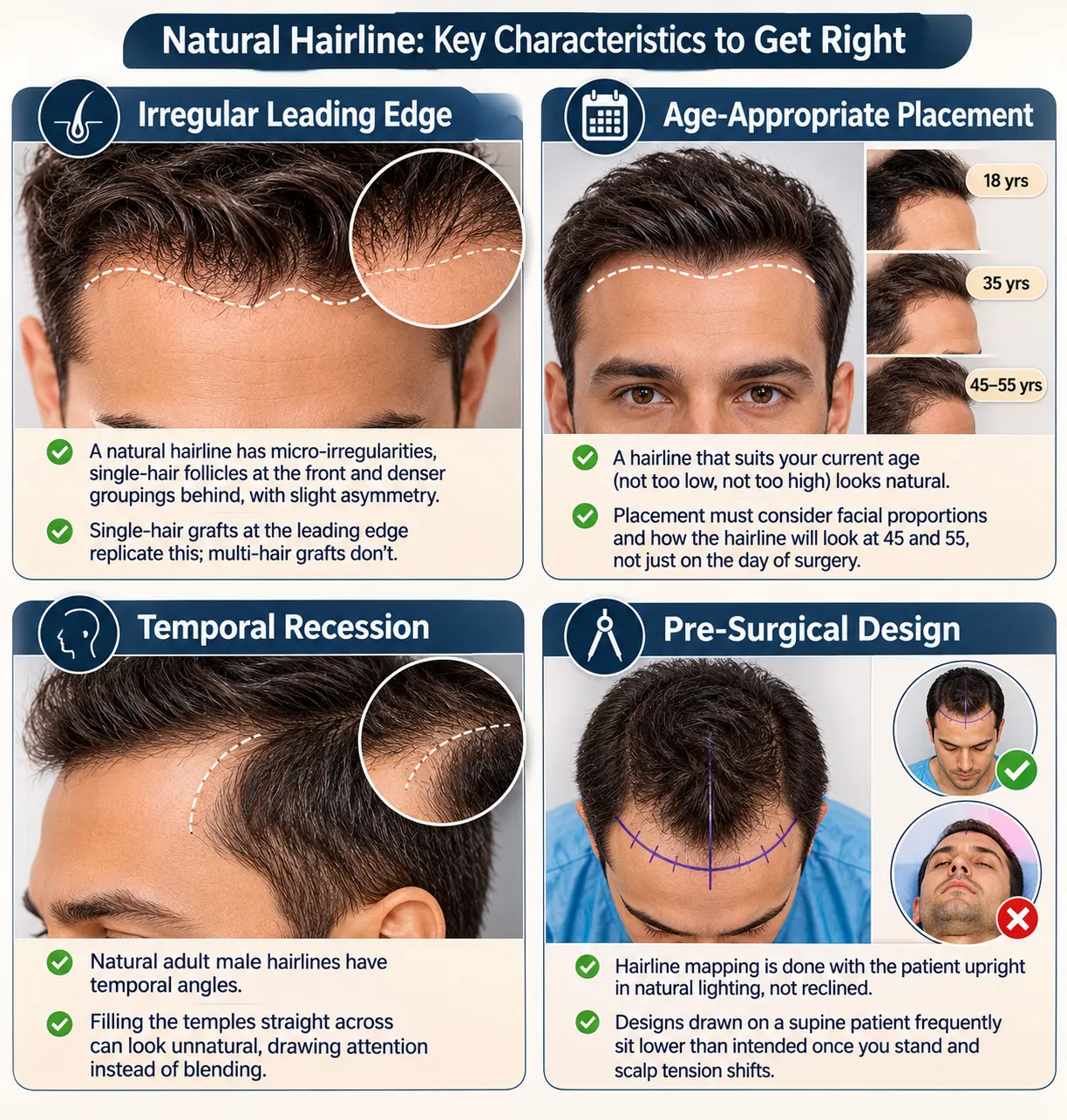
Hairline naturalness is a combination of position, density gradient, and graft composition at the leading edge; getting one right while getting the others wrong still produces a result that looks transplanted. That’s why FUE hair transplant planning is as important as the procedure itself.
What Goes Wrong With Hairline Design and How Is It Avoided?
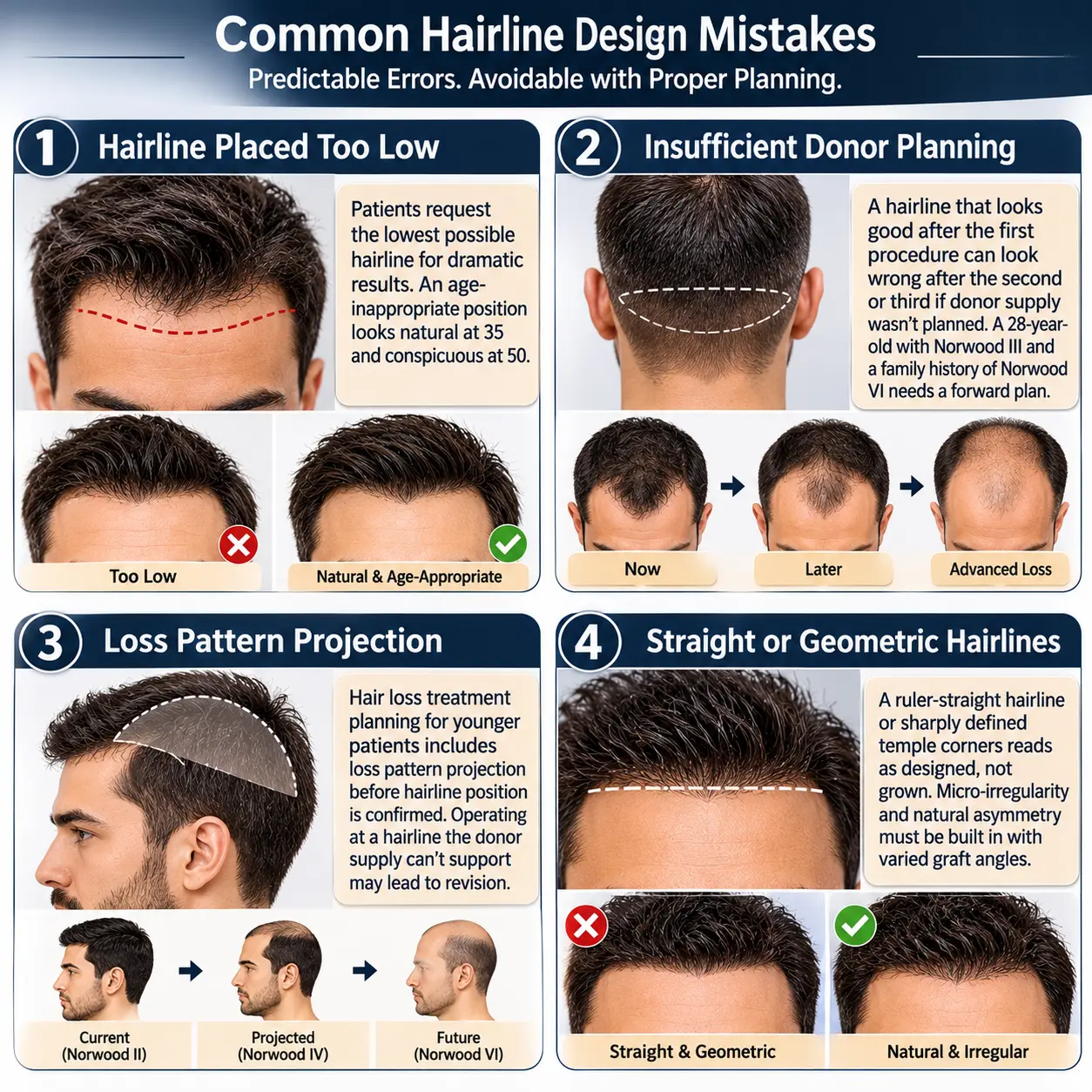
A poorly designed hairline isn’t always fixable; some errors can be partially corrected, some require camouflage, some are permanent. The design conversation is worth getting right before the first session, not after. How surgeons design a natural hairline starts well before the procedure itself.
What Determines the Right Treatment Approach?
Two patients with identical Norwood classifications and donor density can walk away with completely different results because surgery is only as effective as the plan behind it.
Facial proportion assessment: Hairline position is informed by brow distance, forehead width, and facial shape oval, square, heart. A design that works on one facial structure can look wrong on another at the exact same scalp position.
Graft composition at the leading edge: Single-hair grafts at the front create the transitional zone that reads as natural. Multi-hair grafts at the leading edge placed for faster-looking density produce the pluggy, dense-fronted result patients are specifically trying to avoid.
Patient involvement in design: Hairline design is a conversation, not a unilateral decision. Patients should see the design drawn on their scalp, understand the rationale, and know what it will look like in ten years before the first graft is placed.
Documentation before surgery: Photographs of the agreed design before the patient moves to the surgical area protect both sides. Design can shift with positioning changes between consultation and operating table; documented agreement prevents post-operative disputes.
For most patients, hairline design isn’t just a preliminary step before the real work begins; it is the most important part of the process. Everything else is execution. That’s true whether it’s a first procedure or a receding hairline being addressed by grade.
Frequently Asked Questions
Can a hairline be changed after a hair transplant?
Partially, a hairline that is too low or too straight can sometimes be revised, but correction is limited by available donor supply and may not fully resolve the original design problem.
Should I choose my own hairline position before surgery?
The position should be agreed between patient and surgeon patient input on preference is essential, but final position should be guided by facial proportions, age, and donor capacity, not preference alone.
Does hairline design differ for women?
Yes, female hairlines are typically lower, rounder, and without temporal recession, and the design principles differ significantly from male hairline reconstruction in both position and shape.
How long does the hairline design process take before surgery?
The design and marking process typically takes 30 to 60 minutes rushed design is one of the more common contributors to hairline problems, and the time spent before the first incision directly affects the quality of the result.
Reference
- Shapiro R. Natural hairline design in follicular unit hair transplantation. Dermatologic Surgery. 2005.
- Konior RJ. Hairline design and frontal zone planning. Facial Plastic Surgery Clinics of North America. 2013.
- Hairline Correction by Hair Transplantation for Reducing Apparent Face Length in Long-Face Women