
Beard hair is the most clinically viable body hair source for scalp transplant when the scalp donor zone cannot provide enough grafts alone. The follicles are thick, produce single and double units suitable for mid-scalp density, and integrate into scalp tissue reliably when handled correctly. It is not a first-line option and it is not suitable for every patient. When scalp donor supply is genuinely limited and beard density is adequate, it becomes a serious surgical consideration rather than a last resort.
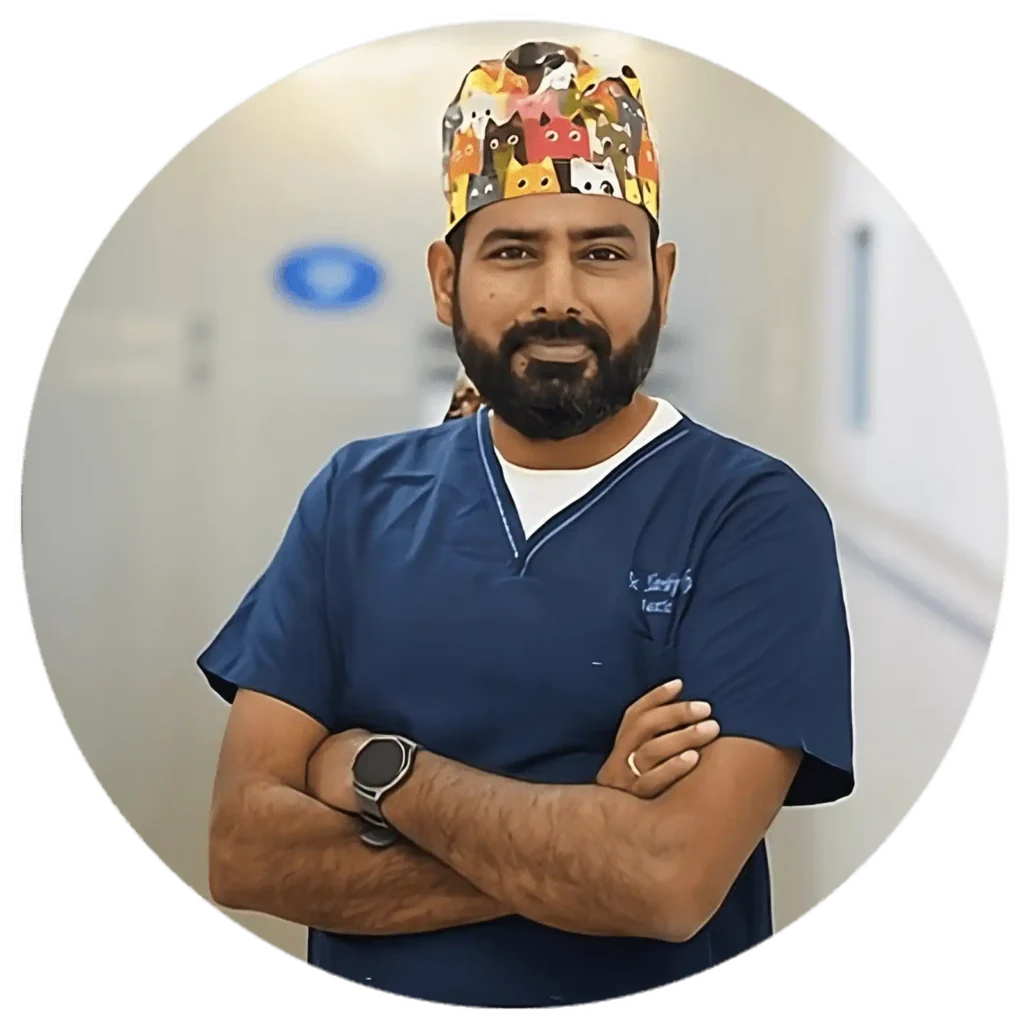
According to Dr Harikiran Chekuri, one of India’s pioneering plastic surgeon, “Beard hair gives us a genuinely useful option when scalp donor supply is exhausted. It is thick, it integrates well, and when placed strategically in the mid-scalp it adds density that blends convincingly with existing scalp hair. The assessment has to be thorough because not every patient with a beard is a suitable candidate and not every scalp area benefits equally from beard grafts.“
How Does Beard to Scalp Hair Transplant Work and Who Is It For?
Beard to scalp transplant uses the same FUE extraction technique as standard scalp donor procedures. The clinical differences come from beard hair’s biological characteristics and the assessment required before the surgeon commits to using it.
- The extraction process: Individual follicular units are extracted from the beard zone using a fine punch tool, kept in a preservation solution, and implanted into the recipient area on the scalp using the same technique as scalp-to-scalp transplant. The procedure is performed under local anaesthesia across both sites.
- Why beard hair works: Beard follicles are among the thickest and most robust body hair sources. They produce predominantly single and double unit grafts that add density without looking coarser than surrounding scalp hair when placed correctly in the right scalp zones.
- Best placement zones: Beard grafts work best in the mid-scalp and crown where hair characteristics are less visible than at the hairline. Placing beard hair at the frontal hairline produces a coarser appearance because the texture contrast with fine frontal hair is more noticeable there.
- Who it suits: Patients who have had previous transplants and depleted their scalp donor zone, those with congenitally thin donor areas, and patients needing high graft counts for comprehensive coverage who cannot achieve the target from scalp donor alone.
- Who it does not suit: Patients with sparse or patchy beard coverage do not have adequate donor density to contribute meaningfully to scalp restoration. A proper beard density assessment is the first clinical step before beard to scalp transplant is recommended.
For patients in Hyderabad, Redefine Hair Transplant and Plastic Surgery Center assesses both scalp donor availability and beard donor viability before any combined procedure is planned, because using beard hair without proper assessment consistently produces results that require correction.
What Are the Key Differences Between Beard and Scalp Donor Hair for Transplant?
Beard hair and scalp hair behave differently after transplantation. Understanding what changes is what allows the surgeon to plan around the differences rather than be surprised by them after surgery.
- Growth cycle difference: Beard hair has a shorter anagen phase than scalp hair, which means the transplanted beard follicles may produce shorter hair shafts than the surrounding native scalp hair during the first growth cycle. Most patients see the hair length normalise progressively over twelve to eighteen months.
- Texture and calibre: Beard hair is generally thicker in calibre than scalp hair. Placed in the mid-scalp or crown where hair is already coarser, this blends well. Placed at the hairline where fine hair is expected, the contrast becomes visible and looks unnatural.
- Graft survival rates: Beard grafts survive at rates comparable to scalp grafts when extraction technique and handling are correct. The critical variables are the same as scalp donor procedures. Extraction depth, time outside the body, and implantation quality determine take rates regardless of donor source.
- Recovery at the donor site: The beard donor zone heals with tiny circular marks at each extraction point, similar to scalp FUE donor sites. These are generally not visible once beard hair regrows around them within a few weeks of the procedure.
- Combined session planning: Surgeons using beard and scalp donor in the same session need to plan the graft distribution carefully before starting, allocating scalp grafts to the hairline and beard grafts to the mid-scalp and crown based on where each hair type produces the most natural result.
Beard to scalp transplant produces genuinely good outcomes when the clinical planning is done properly and the technique is in the right hands. Read about body hair transplant to understand how beard hair sits within the broader context of body hair options and what the full assessment process covers before any combined procedure is confirmed.
Why Choose Redefine for Beard to Scalp Hair Transplant?
Why Choose Redefine for Permanent Hair Transplant Results?
Dr. Harikiran Chekuri is one of India’s pioneering surgeons in hair transplant and approaches beard to scalp procedures with separate assessment of each donor zone, zone-specific graft allocation during planning, and surgical execution that accounts for the texture and growth cycle differences between beard and scalp hair rather than treating them as interchangeable sources.
Patients who come to Redefine Hair Transplant and Plastic Surgery Center for beard to scalp procedures receive a full pre-surgical assessment covering scalp donor depletion status, beard density, recipient zone mapping, and realistic density expectations before any procedure date is confirmed.
Frequently Asked Questions
Can beard hair be transplanted to the scalp?
Beard hair is the most viable body hair source for scalp transplant and integrates well in mid-scalp and crown zones when extracted and handled correctly using FUE technique.
Who is a suitable candidate for beard to scalp hair transplant?
Patients with depleted scalp donor zones, congenitally thin donor areas, or high graft count requirements who have adequate beard density are the primary candidates for this procedure.
Does beard hair look different from scalp hair after transplant?
Beard hair is coarser and has a shorter anagen phase initially. Placed in the mid-scalp and crown it blends well. Placed at the hairline the texture contrast is noticeable, which is why zone allocation matters in surgical planning.
Is beard to scalp hair transplant permanent?
Beard follicles carry the same permanent properties as scalp donor follicles after successful integration. The transplanted beard hair continues growing for life in the recipient scalp area.
REFERENCE LINKS
- International Society of Hair Restoration Surgery: https://www.ishrs.org
- American Academy of Dermatology — Hair Transplant: https://www.aad.org/public/diseases/hair-loss
- PubMed Central — Body Hair Transplant Outcomes: https://www.ncbi.nlm.nih.gov/pmc
Disclaimer: Reference links are provided solely for academic and clinical context and do not imply endorsement or accountability for third-party medical content.