Patients over 50 are eligible for hair transplant surgery when donor density is adequate, hair loss has stabilised, and overall health supports the procedure. There is no upper age limit in clinical guidelines. The assessment criteria are identical to younger patients with one significant advantage: by fifty, the hair loss pattern is largely complete, which makes long-term surgical planning more predictable than it is for patients in their twenties.
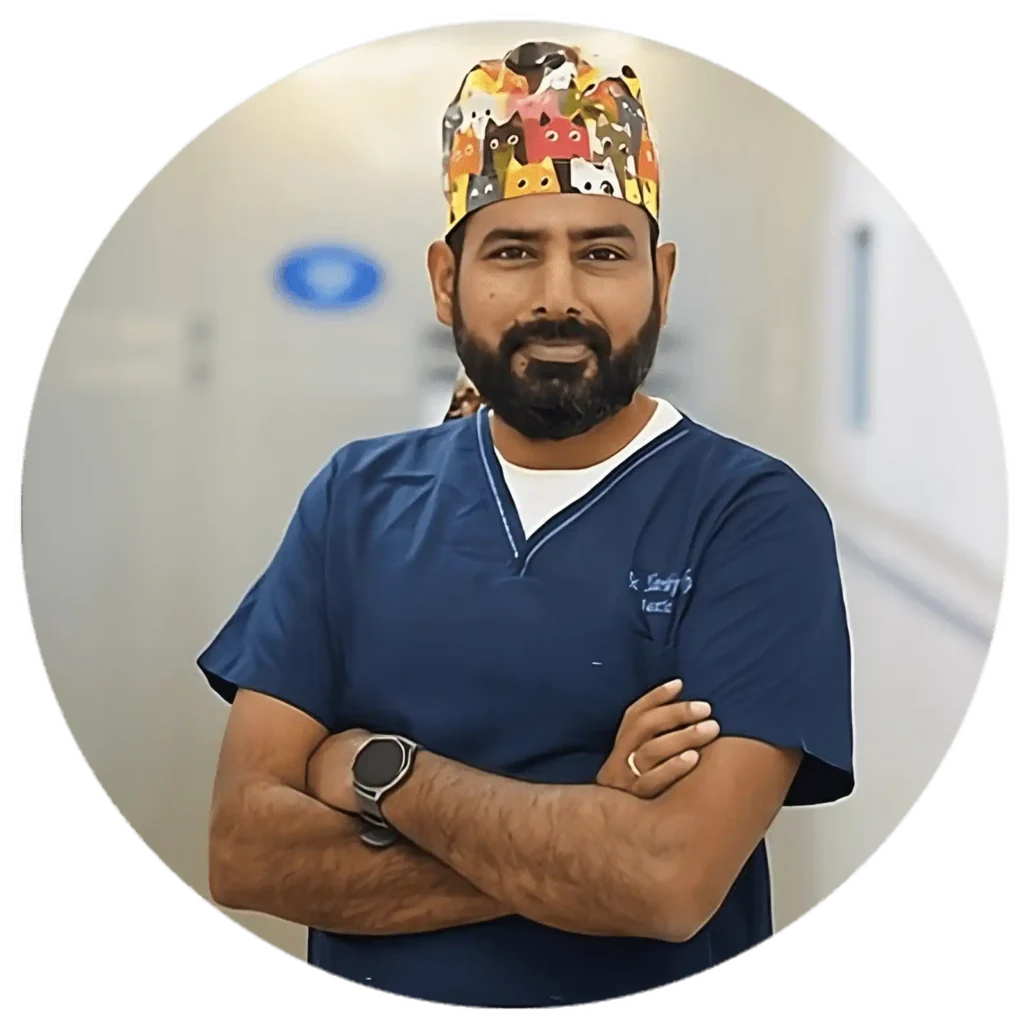
According to Dr Harikiran Chekuri, one of India’s pioneering plastic surgeon, “Patients in their fifties often make better surgical candidates than younger patients in one important way. The pattern is settled. We know what we are working with and where it is heading. That clarity changes the surgical plan significantly and often for the better. Age fifty is not a barrier. It is frequently an advantage.“
What Makes a Patient Over 50 Eligible for Hair Transplant Surgery?
The candidacy criteria for patients over fifty are the same as for younger patients with additional attention to health factors that become more relevant with age. Understanding what the assessment covers helps patients over fifty know exactly what determines whether surgery is appropriate for them.
- Stable hair loss pattern: By fifty, most patients have a settled androgenetic alopecia pattern that has not changed significantly in years. This stability is a clinical advantage because the surgical plan can be designed around a final picture rather than an evolving one, reducing the risk of transplanted grafts being surrounded by future recession.
- Adequate donor density: Trichoscopy assessment of the donor zone confirms whether sufficient follicular units are available for extraction. Donor density does not automatically deteriorate with age but needs to be measured rather than assumed. Patients over fifty with good donor density are strong surgical candidates.
- General health assessment: Conditions including hypertension, diabetes, blood thinning medications, and cardiac history all need to be reviewed before surgery. A medical clearance from the patient’s physician is required for older patients with any managed systemic condition, not because surgery is inherently unsafe but because the clinical preparation changes.
- Healing timeline expectations: Wound healing progresses slightly slower with age and the post-surgical recovery timeline reflects this. Most patients over fifty heal without complications but the recovery plan accounts for a slightly longer wound closure phase compared to younger patients.
- Realistic density expectations: Hair calibre and density in the donor zone can be marginally reduced in older patients compared to their peak. The graft count and density outcome projections are built around what the trichoscopy assessment confirms rather than what was achievable twenty years earlier.
Patients over fifty who present with stable loss and adequate donor supply consistently produce excellent results with surgeon-led FUE. Age is one variable in the assessment at Redefine Hair Transplant and Plastic Surgery Center, not the deciding one, and it is reviewed alongside every other clinical factor before any recommendation is made.
What Changes About Hair Transplant Planning Specifically for Patients Over 50?
Several aspects of surgical planning are approached differently for patients over fifty. None of these changes disqualify surgery. They refine how it is done to produce results that hold up naturally as the patient continues to age.
- Hairline design for age appropriateness: A hairline designed for a fifty-year-old face is different from one designed for a thirty-year-old. Aggressive low hairlines that looked natural at thirty look inconsistent at fifty and beyond. The surgical design accounts for the patient’s age, facial structure, and how the result will continue to look over the next two decades.
- Finasteride considerations: The DHT-driven progression of androgenetic alopecia typically slows significantly by fifty. Many patients in this age group do not require finasteride after surgery because the progression driver has already quieted. The decision is made case by case rather than applied uniformly.
- Medical optimisation before surgery: Any managed health condition needs to be clinically optimised before the procedure date is confirmed. This includes blood sugar control for diabetic patients, blood pressure stability, and medication review for anyone on anticoagulants or anti-inflammatory drugs.
- Graft count and session planning: Patients over fifty with larger areas of loss and adequate donor supply are sometimes better served by two staged sessions rather than one large session. This approach protects donor zone density and gives the surgeon more control over natural-looking distribution across a wider recipient area.
- No aggressive DHT therapy needed post-surgery: Unlike younger patients whose ongoing progression requires active medical management after surgery, patients over fifty often maintain their result without the same level of post-surgical medication because the pattern has already reached its endpoint.
Patients over fifty who approach surgery with a proper assessment in place consistently see outcomes that look natural and hold long term. Read about best age for hair transplant to understand how age at different stages affects surgical planning and what the clinical assessment covers at each point in the hair loss timeline.
Age fifty is not too late. For many patients it is exactly the right time.
Why Redefine Is the Right Choice for Hair Transplant After 50?
Dr. Harikiran Chekuri is one of India’s pioneering surgeons in hair transplant and approaches patients over fifty with a surgical plan that reflects the clinical advantages of a settled pattern alongside a thorough health review, age-appropriate hairline design, and realistic density expectations built around what the assessment confirms rather than what younger patients typically achieve.
Patients who come to Redefine Hair Transplant and Plastic Surgery Center after fifty receive a full clinical evaluation covering donor density, health factors, progression stability, and post-surgical plan before any procedure date is discussed, because the assessment is what makes surgery safe and results predictable at any age.
To speak with the team directly about your eligibility, call +91 92371 23456 or book a consultation below.
Frequently Asked Questions
Can patients over 50 get a hair transplant?
Patients over 50 are eligible for hair transplant surgery when donor density is adequate, hair loss is stable, and overall health supports the procedure. There is no upper age limit in clinical guidelines.
What are the advantages of getting a hair transplant after 50?
By fifty, the hair loss pattern is largely settled, which makes long-term surgical planning more predictable. The surgeon can design a result around a final picture rather than an evolving pattern.
Does healing take longer for hair transplant patients over 50?
Wound healing progresses slightly slower with age but most patients over fifty heal without complications. The recovery plan accounts for this with a slightly extended wound closure timeline compared to younger patients.
Do patients over 50 need finasteride after hair transplant?
DHT-driven progression typically slows significantly by fifty. Many patients in this age group do not require finasteride after surgery because the progression driver has already quieted, though this is assessed individually.
REFERENCE LINKS
- International Society of Hair Restoration Surgery: https://www.ishrs.org
- American Academy of Dermatology — Hair Loss: https://www.aad.org/public/diseases/hair-loss
- PubMed Central — Diffuse Alopecia and Hair Transplant: https://www.ncbi.nlm.nih.gov/pmc
Disclaimer: Reference links are provided solely for academic and clinical context and do not imply endorsement or accountability for third-party medical content.