The clinical minimum for hair transplant candidacy is a donor density of 40 to 60 follicular units per square centimetre at the back and sides of the scalp. Below 40 FU/cm², safe extraction becomes difficult without leaving the donor zone visibly depleted. The usable graft count, the achievable density in the recipient area, and the long-term appearance of the donor zone are all directly determined by what the trichoscopy assessment finds at this stage.
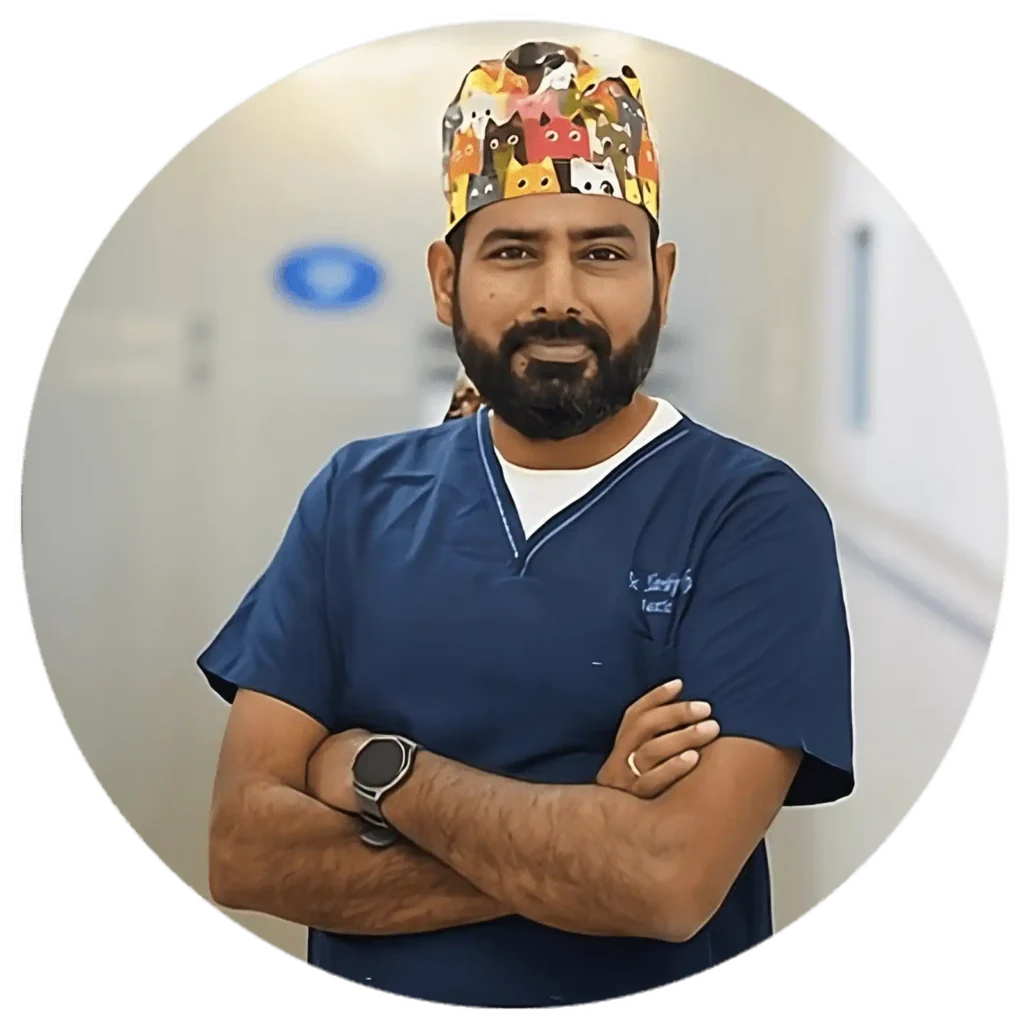
According to Dr Harikiran Chekuri, one of India’s pioneering plastic surgeon, “Donor density is the most important number in any hair transplant assessment. It tells us what is actually available, what can be safely extracted, and what the recipient area can realistically receive. A patient with a high Norwood grade but poor donor density needs a very different conversation than one with good donor supply.“
What Is the Minimum Donor Density Required for Hair Transplant Surgery?
Donor density is measured in follicular units per square centimetre during trichoscopy assessment. The number determines whether surgery is viable, what graft count is safely achievable, and what the donor zone will look like after extraction.
- The clinical threshold: A donor density of 40 FU/cm² is the widely accepted lower boundary for hair transplant candidacy. At this level, careful extraction is possible while keeping the donor zone looking natural after surgery. Below this threshold, the risk of visible donor depletion rises significantly with each graft extracted.
- The optimal range: Donor density between 60 and 80 FU/cm² gives the surgeon meaningful flexibility in graft count and extraction pattern. Patients in this range can support larger sessions without compromising donor appearance or limiting options for future procedures.
- What low donor density means clinically: A patient with 35 to 40 FU/cm² is not automatically disqualified but the surgical plan has to reflect the limitation. Fewer grafts, more conservative distribution, and a frank discussion about density expectations in the recipient area are all part of that conversation.
- How trichoscopy measures it: Trichoscopy uses a dermatoscope to map follicle units per cm² across the donor zone, identifying both density and miniaturisation. A visual assessment of the back of the scalp does not provide this information reliably. The number has to come from the instrument.
- Donor density versus donor area: High density in a small donor zone and adequate density across a wider zone can produce very different available graft counts. Total extractable grafts depend on both the density per cm² and the total safe donor area, which is why the full scalp needs to be mapped rather than a single zone spot-checked.
Knowing the donor density number before any graft count or procedure cost is discussed is what makes the rest of the planning process meaningful. At Redefine Hair Transplant and Plastic Surgery Center, trichoscopy assessment of the donor zone is the first step in every surgical consultation before any numbers enter the conversation.
What Happens When Donor Density Is Too Low for a Standard Hair Transplant?
Low donor density does not automatically close the door on surgery but it changes what surgery can responsibly offer. Understanding the options available when scalp donor supply is limited protects patients from committing to outcomes that cannot be delivered.
- Reduced graft count and density targets: When donor density is borderline, the surgical plan prioritises the frontal hairline and most visible zones over comprehensive coverage. Spreading a limited graft count too thinly across a large recipient area produces results that look inadequate everywhere rather than natural in the areas that matter most.
- Staged procedures: Patients with lower donor density sometimes benefit from two smaller sessions spaced twelve to eighteen months apart rather than one large session. This approach protects the donor zone and allows each session’s results to guide the planning of the next one.
- Beard and body hair supplementation: When scalp donor density is genuinely insufficient for the planned graft count, beard follicles are the most viable supplemental source. They integrate reliably in mid-scalp and crown zones and add density that the scalp donor zone alone cannot provide.
- Medical therapy before surgery: Patients with borderline donor density showing signs of miniaturisation in the donor zone are sometimes better served by a period of finasteride and minoxidil therapy before surgery. Stabilising the donor zone first protects the follicles available for extraction.
- Realistic expectation setting: A patient with 40 FU/cm² donor density pursuing the same density outcome as a patient with 75 FU/cm² will be disappointed. The surgical plan has to reflect what the biology can actually deliver, not what the patient wants to hear at consultation.
Donor density assessment is where every responsible surgical plan starts. Patients who skip this step and commit to a graft count and cost before it happens are making decisions based on a number that has no clinical foundation. Read about hair transplant cost in Hyderabad to understand how donor density assessment connects to graft count confirmation and what a transparent cost discussion actually looks like.
Donor density determines everything. Get it assessed before anything else is decided.
Why Choose Redefine for Donor Density Assessment and Hair Transplant?
Dr. Harikiran Chekuri is one of India’s pioneering surgeons in hair transplant and every surgical plan at Redefine starts with trichoscopy-based donor density mapping because a graft count confirmed before that assessment is a guess rather than a clinical recommendation.
Patients who come to Redefine Hair Transplant and Plastic Surgery Center leave with a confirmed donor density figure, a realistic extractable graft count, and a surgical plan built around what the scalp can actually support rather than what the patient hoped to hear.
Frequently Asked Questions
What is the minimum donor density for hair transplant?
The clinical minimum is 40 follicular units per square centimetre. Below this threshold, extraction risks visible donor depletion and the available graft count may not support a meaningful result.
How is donor density measured before hair transplant?
Donor density is measured using trichoscopy, which maps follicular units per cm² across the donor zone. A visual assessment alone does not provide this information with the accuracy needed for surgical planning.
What happens if donor density is ignored in hair transplant planning?
Overharvesting a donor zone with insufficient density causes visible thinning at the back of the scalp that cannot be corrected without further surgery, and reduces what is available for future sessions.
How long does a 3000 graft hair transplant take?
A 3000-graft session typically takes eight to ten hours depending on the technique and the speed at which grafts are handled. Rushed sessions compromise graft viability and take rates.
REFERENCE LINKS
- International Society of Hair Restoration Surgery: https://www.ishrs.org
- American Academy of Dermatology — Hair Transplant: https://www.aad.org/public/diseases/hair-loss
- PubMed Central — Donor Density and FUE Outcomes: https://www.ncbi.nlm.nih.gov/pmc
Disclaimer: Reference links are provided solely for academic and clinical context and do not imply endorsement or accountability for third-party medical content.