
A technician-run hair transplant and a surgeon-led procedure are not the same surgery at different prices. The difference is who holds the punch during extraction, who places the grafts during implantation, and who is clinically accountable when the result does not hold up. Both clinics may show the same before and after photos. What happens in the room between those two images is what separates them.
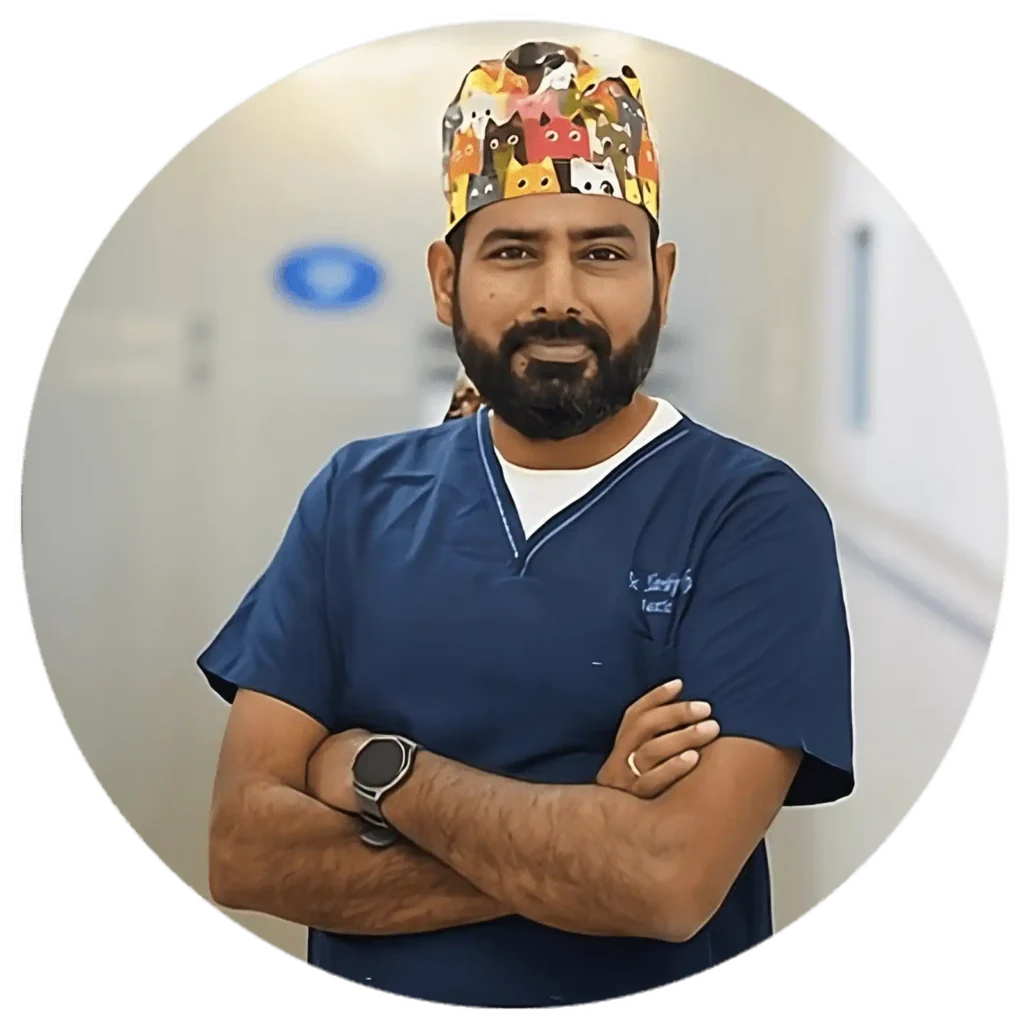
According to Dr Harikiran Chekuri, one of India’s pioneering plastic surgeon, “A technician can be trained to extract and implant hair. That is not the same as a surgeon who understands the biology behind every decision being made in real time. Graft angle, extraction depth, implantation spacing these require surgical judgment, not learned motor skill. The difference shows up in the result.“
What Actually Happens Differently in a Technician-Run vs Surgeon-Led Procedure?
The distinction between these two setups is not about clinic aesthetics or marketing language. It is about who makes the clinical decisions that determine graft survival and result quality at every stage of the procedure.
- Who performs extraction: In technician-run setups, trained non-medical staff extract follicles while the surgeon is elsewhere in the clinic or available only nominally. In surgeon-led procedures, the qualified surgeon performs extraction directly with full clinical judgment applied at each graft.
- Who performs implantation: Implantation depth, angle, and spacing determine whether the result looks natural or artificial. Technicians follow trained patterns. Surgeons make real-time judgments based on scalp anatomy, hair direction, and density distribution specific to that patient.
- Graft handling between stages: The window between extraction and implantation is critical for follicle viability. High-volume technician setups that process patients quickly compromise this window in ways that reduce the percentage of grafts that survive to produce permanent hair.
- Clinical accountability: When a result fails or needs correction, a surgeon-led clinic has a qualified medical professional who can assess what went wrong, take clinical responsibility, and plan a correction. Technician-run setups rarely offer the same level of accountability.
- Hairline design judgment: Natural hairline design requires clinical understanding of facial structure, age-appropriate positioning, and long-term progression. This is a medical decision, not a technical one, and it is made by whoever is leading the procedure.
Most patients discover which setup they were in only after the result appears at twelve months. For patients in Hyderabad, Redefine Hair Transplant and Plastic Surgery Center is surgeon-led from first incision to last placement at every procedure with no technician delegation of extraction or implantation.
How Do You Identify Whether a Clinic Is Surgeon-Led or Technician-Run?
Clinics rarely advertise that technicians perform the actual surgery. The information is available if you know what to ask and what to look for before you book.
- Ask directly who performs extraction and implantation: The question is simple and the answer should be immediate. If the response is vague, mentions the surgical team, or avoids naming the surgeon specifically, that tells you everything you need to know.
- Check whether the surgeon is present throughout: Some clinics have the surgeon mark the hairline and then leave. Ask explicitly whether the surgeon will be present and actively performing the procedure from start to finish.
- Surgeon qualifications: A qualified plastic surgeon with board certification and a documented surgical background is a different professional from a doctor who runs a hair transplant clinic. Credentials should be verifiable and specific to surgical training.
- Volume per day: Clinics that advertise very high daily procedure volumes make surgeon-led surgery practically impossible. A single surgeon performing quality extraction and implantation throughout an entire procedure has a realistic daily limit.
- Correction cases: Ask whether the clinic has experience handling correction cases from other clinics. Surgeon-led clinics that do correction work have direct visibility into what technician-run procedures produce, and they are willing to discuss it honestly.
The single most protective question a patient can ask before booking any hair transplant is who specifically will be holding the extraction device and who will be placing the grafts. Read about hair transplant cost in Hyderabad to understand why price differences between clinics exist and what the gap actually reflects in clinical terms.
Know who is in the room before you say yes to any procedure.
Why Choose Redefine for Surgeon Led Hair Transplant?
Dr. Harikiran Chekuri is one of India’s pioneering surgeons in hair transplant and performs extraction and implantation directly at every procedure rather than delegating the surgical work to trained technicians, with over 20,000 procedures as direct clinical evidence of what surgeon-led outcomes consistently produce.
Patients who come to Redefine Hair Transplant and Plastic Surgery Center have a qualified plastic surgeon involved from the first incision to the last graft placement, with clinical accountability for the result that continues through the full twelve-month growth cycle.
Frequently Asked Questions
What is a technician-run hair transplant?
A technician-run hair transplant is one where trained non-medical staff perform extraction and implantation while the doctor’s name appears on the clinic without direct surgical involvement in the procedure.
How do I know if my hair transplant will be surgeon-led?
Ask directly who performs extraction and implantation. If the answer does not name the surgeon specifically or involves the surgical team, technicians are doing the actual surgical work.
Does it matter if a technician does my hair transplant?
Yes. Surgical judgment during extraction, implantation angle, depth, and spacing decisions affect graft survival and result quality in ways that trained technicians cannot replicate.
Can technician-run hair transplant results be corrected?
Yes, but correction surgery is more complex and expensive than a well-executed first procedure, and accountability for the original outcome is harder to establish without a named surgeon responsible.
REFERENCE LINKS
- International Society of Hair Restoration Surgery: https://www.ishrs.org
- American Academy of Dermatology — Hair Transplant: https://www.aad.org/public/diseases/hair-loss
- PubMed Central — Hair Transplant Outcomes: https://www.ncbi.nlm.nih.gov/pmc
Disclaimer: Reference links are provided solely for academic and clinical context and do not imply endorsement or accountability for third-party medical content.