
Minoxidil and finasteride are the two most clinically validated treatments for androgenetic alopecia. Both have decades of research behind them. But they work through entirely different mechanisms, suit different patient profiles, and come with very different risk considerations. Choosing between them, or combining them, depends on understanding what each one actually does at a biological level.
Before comparing results, you need to understand why they’re not even competing in the same category.
How Minoxidil and Finasteride Work Differently
These two treatments address hair loss from completely different angles. One works on the scalp directly. The other works on a hormone circulating through your entire body.
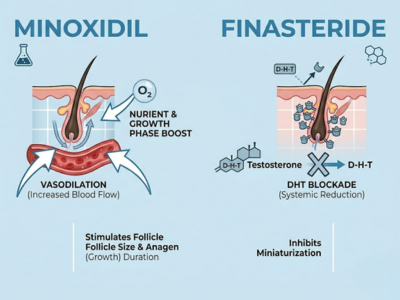
- Minoxidil mechanism: Originally developed as an oral blood pressure medication, minoxidil was found to cause hypertrichosis (excess hair growth) as a side effect. Applied topically, it dilates blood vessels in the scalp, improving oxygen and nutrient delivery to hair follicles. It also prolongs the anagen (growth) phase of the hair cycle
- Finasteride mechanism: Finasteride is a 5-alpha reductase inhibitor. It blocks the conversion of testosterone into dihydrotestosterone (DHT), the androgen directly responsible for follicle miniaturisation in genetically susceptible individuals. Lower DHT means slower follicle shrinkage
- Where they act: Minoxidil acts locally at the scalp level. Finasteride acts systemically, affecting DHT levels throughout the body
- What they treat: Minoxidil stimulates growth. Finasteride slows or halts further loss. They target different parts of the same problem
Patients consulting a hair transplant specialist in Hyderabad or a plastic surgeon in Hyderabad are almost always asked about their history with both medications before any surgical recommendation is made.
Not sure which treatment is appropriate for your stage of hair loss? A dermatologist or hair specialist can assess your pattern and recommend the right starting point.
Side Effects of Minoxidil vs Finasteride: The Honest Comparison
Both medications carry side effect profiles. Finasteride’s are more discussed and more concerning for certain patients.
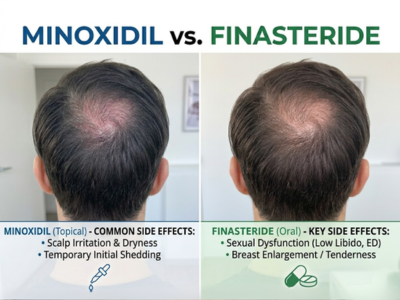
- Minoxidil topical side effects: Scalp irritation, dryness, and contact dermatitis in some users. Rarely, unwanted facial hair growth if the product spreads. Initial shedding in the first 4 to 8 weeks as follicles reset their growth cycles is common and temporary
- Oral minoxidil side effects: Fluid retention, mild facial hair growth, and in rare cases pericardial effusion at higher doses. Low-dose protocols (0.25mg to 2.5mg) are generally well tolerated
- Finasteride side effects: The most discussed concern is post-finasteride syndrome, including decreased libido, erectile dysfunction, and mood changes. These occur in approximately 2 to 4% of users according to clinical data, though patient communities report higher incidence. Most resolve on discontinuation
- Finasteride and fertility: Finasteride lowers semen volume and sperm count in some men. Men actively trying to conceive should discuss this with their doctor before starting
Any qualified plastic surgeon in Hyderabad or hair restoration specialist will go through this side effect profile in detail before prescribing finasteride, particularly for patients under 30.
Which Treatment Is Right for You: Minoxidil or Finasteride
There’s no universal answer. The right choice depends on your gender, age, loss pattern, and how far your hair loss has progressed.
- For men with early to mid-stage androgenetic alopecia: Finasteride is typically the first-line recommendation because halting DHT-driven loss is more valuable at this stage than stimulating growth on already-healthy follicles
- For men who want to avoid systemic hormonal intervention: Topical minoxidil or low-dose oral minoxidil offers meaningful results without touching your hormone levels
- For women: Finasteride is not approved for premenopausal women due to teratogenic risk. Minoxidil, both topical and low-dose oral, is the primary pharmacological option for female pattern hair loss
- For patients post-hair transplant: Both are often recommended post-surgery to maintain existing native hair and support transplanted follicle growth. A hair transplant in Hyderabad or anywhere else doesn’t stop underlying DHT-driven loss in untreated areas
Most dermatologists and hair restoration surgeons recommend combination therapy, minoxidil plus finasteride, for men with moderate to significant loss. The synergistic effect is well documented.
Can You Use Minoxidil and Finasteride Together
The combination approach is the most commonly recommended protocol for men with moderate androgenetic alopecia, and the evidence supports it.
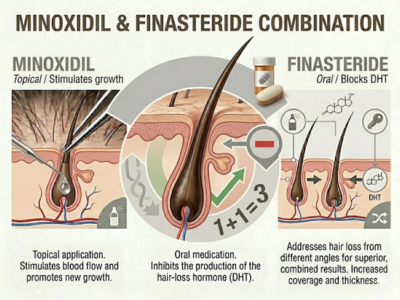
- Complementary mechanisms: Finasteride addresses the hormonal cause of follicle miniaturisation while minoxidil stimulates growth and prolongs the active growth phase. They don’t interfere with each other
- Clinical evidence for combination: A 2021 study published in Dermatology and Therapy found that combination therapy produced significantly better hair count improvements than either drug used alone over 12 months
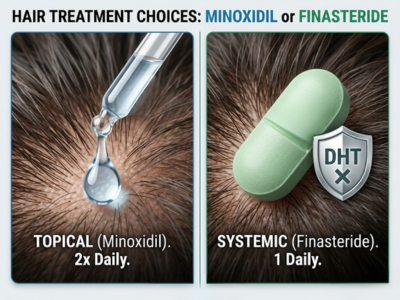
- Practical protocol: Most protocols involve once-daily oral finasteride (1mg) combined with twice-daily topical minoxidil (5%) or once-daily low-dose oral minoxidil
- Monitoring: Combination therapy, particularly with oral minoxidil, benefits from periodic blood pressure checks and a baseline hormonal panel before starting finasteride
For patients consulting a plastic surgeon in Hyderabad or a dermatologist about hair loss, the combination approach is usually what evidence-based practitioners recommend for men who are eligible and comfortable with both medications.
Want to know if combination therapy is appropriate for your hair loss stage? Get a structured consultation before starting any pharmacological protocol.
Frequently Asked Questions
1. Which is more effective, minoxidil or finasteride, for crown hair loss?
Finasteride is generally more effective for crown hair loss by addressing the hormonal cause directly.
2. Can women use finasteride for hair loss?
Not recommended for premenopausal women. Minoxidil is the standard treatment for female pattern loss.
3. How long before I see results from minoxidil?
Most users see visible regrowth between month 3 and month 6 with consistent daily use.
4. Does finasteride regrow hair or just stop further loss?
Primarily it halts progression. Some regrowth is possible, especially at the crown, over 12 months.
5. What happens if I stop using minoxidil?
Hair loss resumes within 3 to 6 months of stopping. Results are not permanent without continued use.
6. What happens if I stop finasteride?
DHT levels return to baseline within weeks and hair loss progression resumes.