

By three years, a tummy tuck scar has usually finished maturing, so what you see is close to what you can expect long term. This blog explains what a normal scar looks like at that stage, what is not normal, and what can still be done to improve it. It also covers the mistakes patients make when judging their scar over time.
Three years is long enough for the scar to have settled. The redness, firmness, and early swelling are behind you, and the line you see now is close to the one you will live with.For most people that line is thin, pale, and flat, sitting low enough to be hidden by underwear or a bikini. It does not vanish. That was never on offer.What matters at this point is whether your scar looks like a mature one, or whether something about it is still off.
According to Dr. Harikiran Chekuri, a plastic surgeon in Hyderabad, “By three years the scar has usually reached maturity. If it is thin, pale, and low, it is generally healing well. If it is still red, raised, or itchy, it is not a case of waiting longer. That is the point to have it looked at.”
What Does a Tummy Tuck Scar Look Like After 3 Years?
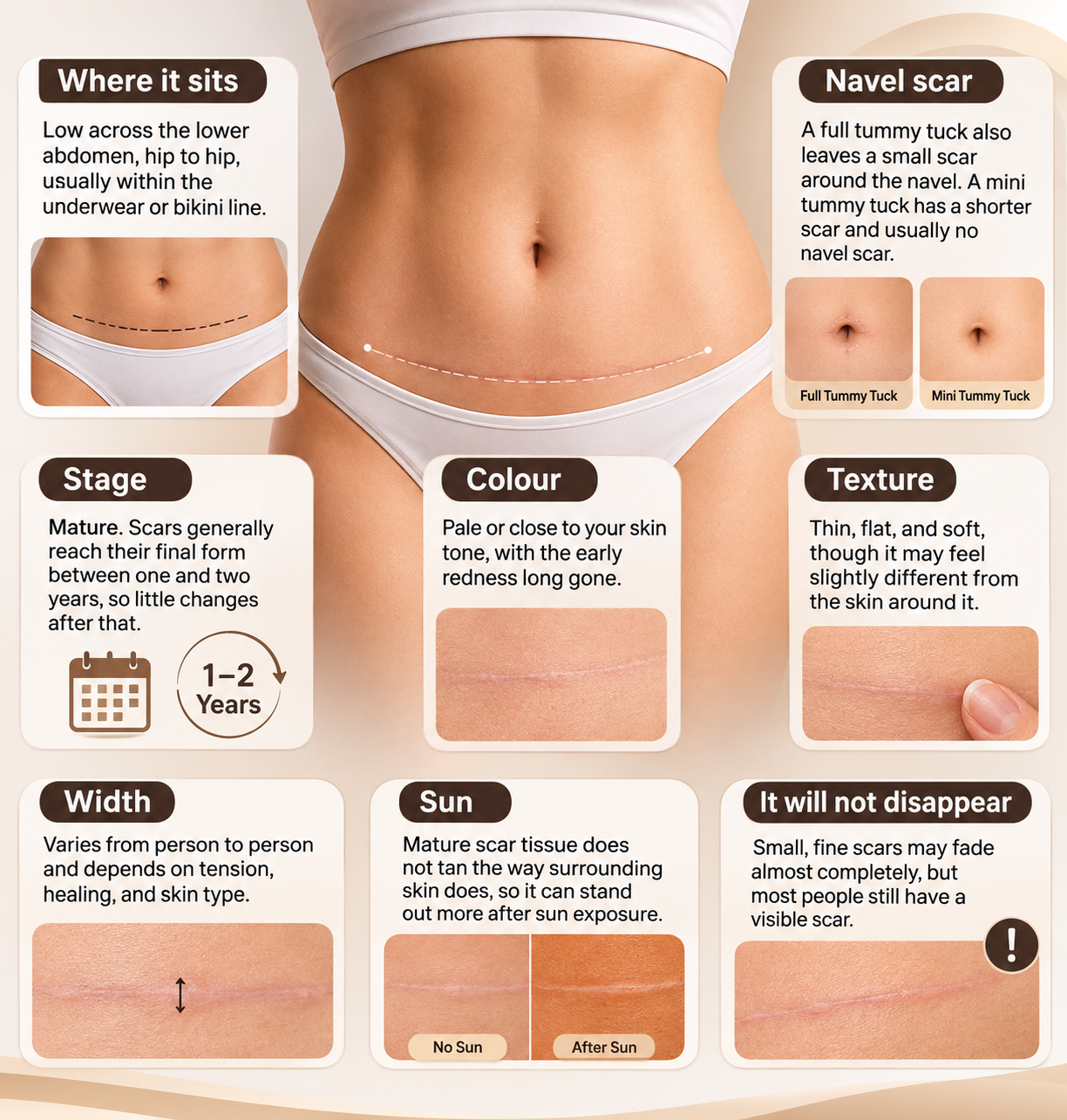
“A low, well-placed scar comes from decisions made during Tummy Tuck Surgery planning, long before the first incision. At three years you are seeing the result of that planning.”
What Is Not Normal at 3 Years, and What Can Still Be Improved?
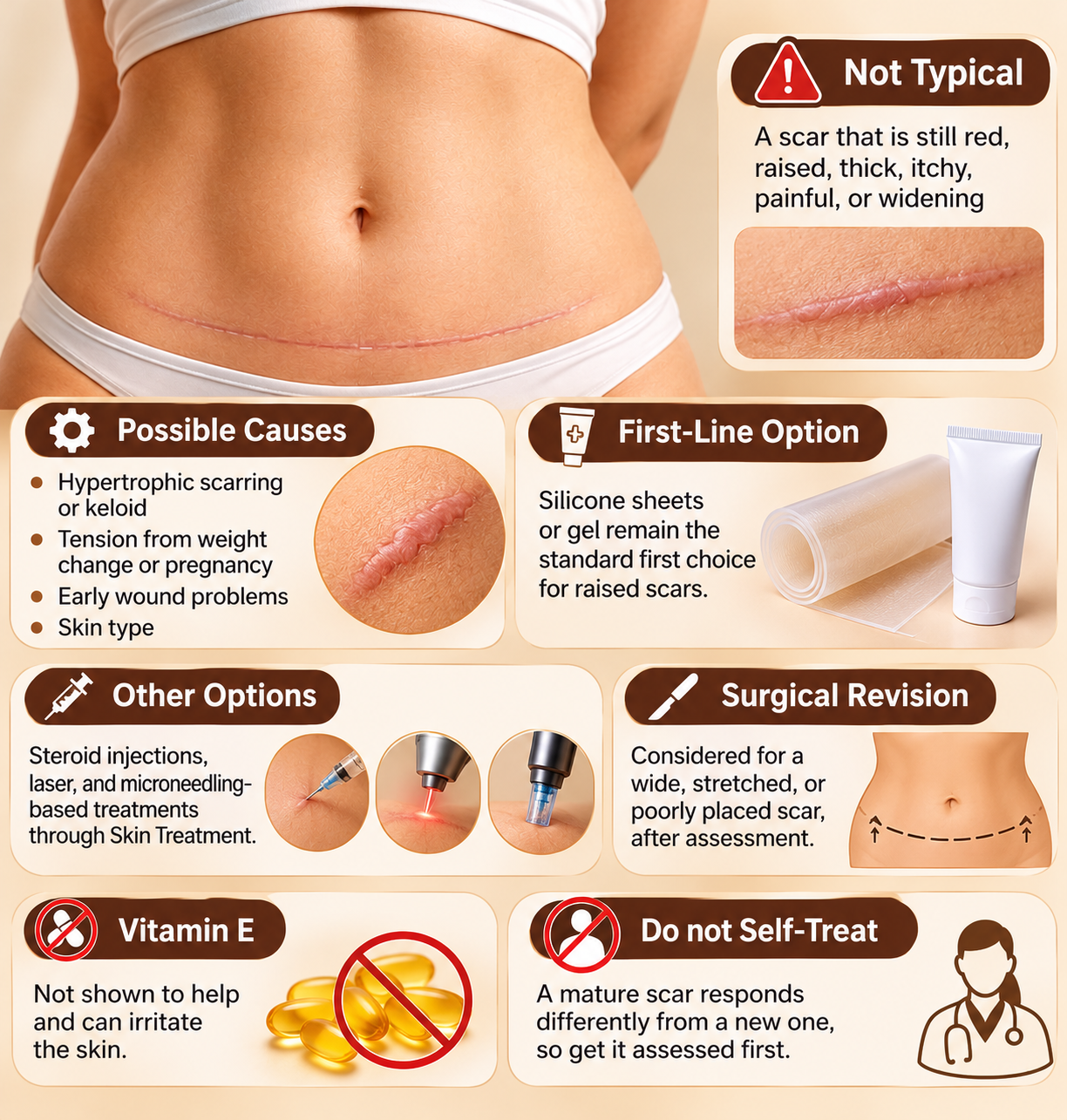
“For scars that are pale but slightly textured or indented, treatments that stimulate collagen production may help improve their appearance. What Is MNRF (Microneedling Radiofrequency) Treatment? explains how this treatment works.
What Determines the Right Treatment Approach?
- A thin, pale, flat line needs nothing beyond sun protection. A raised, red, itchy, or widening scar needs an assessment.
- Scar type guides the plan. Hypertrophic scarring responds to silicone first. A wide, flat scar is often a tension issue and may need revision. An indented or uneven texture responds better to laser or microneedling.
- Skin tone and scar history matter. Deeper skin tones are more prone to thickened or darkened scars, and treatments are chosen to avoid making pigmentation worse.
- The order is simple: gentlest option first, if silicone and sun protection fail then consider injections or laser, with surgical revision being the last option.
- A three-year-old scar is mature and unlikely to change on its own. An assessment is a better next step than more waiting.
Photograph your scar in natural light once relaxed, once stretched and note any itch, pain, or recent change. For comparison on how abdominal scars mature, a tummy tuck scar after 6 months shows how the same principles apply at an earlier stage.
Frequently Asked Questions
Does a tummy tuck scar fade completely after 3 years?
Not completely. At three years it is usually a thin, pale, flat line, and most people still have a visible scar.
Should a tummy tuck scar still be red at 3 years?
No. Redness usually fades within the first year or two. A scar that is red, raised, or itchy at three years should be assessed.
Can a 3-year-old tummy tuck scar still be improved?
Yes. Silicone for raised scars, injections, laser, microneedling-based treatments, or surgical revision may help, depending on the assessment.
Does sun affect an old tummy tuck scar?
Yes. Scar tissue does not tan like the surrounding skin, so it can stand out more after sun exposure. Use sunscreen on it.
Can weight gain or pregnancy change my scar?
Yes. Both can stretch the scar and make it wider.
Reference
- Updated Scar Management Practical Guidelines: Non-Invasive and Invasive Measures. J Plast Reconstr Aesthet Surg. 2014;67(8):1017-1025.
https://pubmed.ncbi.nlm.nih.gov/24888226/ - Basson R, Bayat A. Skin Scarring: Latest Update on Objective Assessment and Optimal Management. Front Med. 2022.
https://www.ncbi.nlm.nih.gov/pmc/articles/PMC9580067/ - Cleveland Clinic. Tummy Tuck Scar. Cleveland Clinic Health Library.
https://my.clevelandclinic.org/health/articles/24004-tummy-tuck-scar