

Bilateral Breast Reduction for Macromastia
She was 30, and the weight she carried on her chest had stopped feeling like a physical problem alone. A confirmed diagnosis of bilateral macromastia, documented physical discomfort, and a thorough pre-operative workup later, she underwent bilateral breast reduction surgery. Dr. Harikiran Chekuri at Redefine Clinic completed the procedure in two hours. The postoperative period was uneventful.
PROCEDURE PHOTOGRAPHS
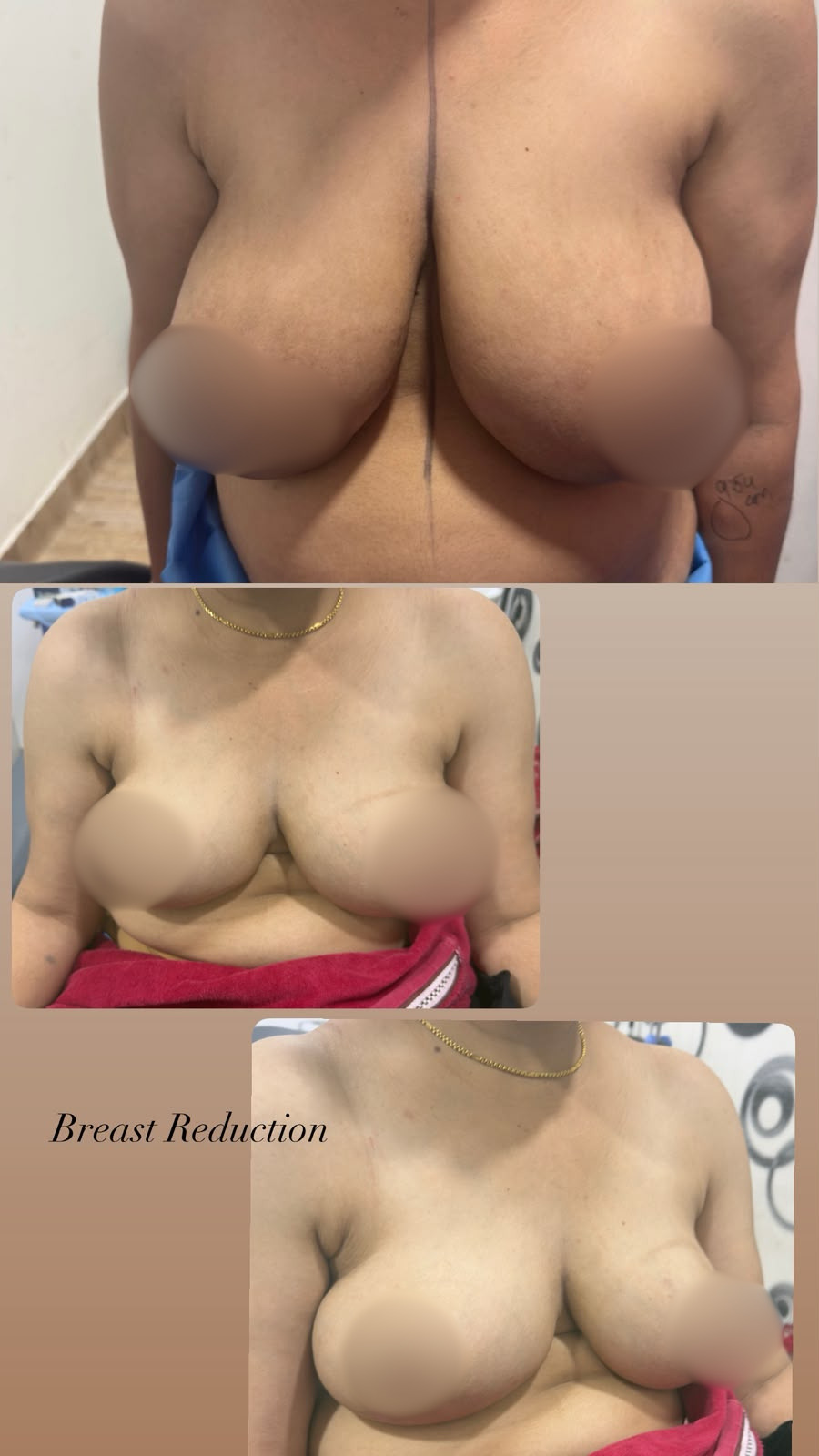
Photographs document the pre-operative breast volume, the degree of bilateral macromastia, and the immediate post-operative result following reduction mammaplasty.
PATIENT PROFILE
| PARAMETER | DETAIL |
| Age | 30 years |
| Gender | Female |
| Diagnosis | Bilateral Macromastia (Breast Hypertrophy) |
| Presenting Complaint | Bilateral enlarged breasts causing physical discomfort |
| Pre-operative Workup | Full blood investigations and anaesthetic assessment completed |
| Procedure | Bilateral Breast Reduction (Reduction Mammaplasty) |
| Anaesthesia | General anaesthesia |
| Duration | 2 hours |
| Hospital Stay | Inpatient, discharged post-recovery |
| Intraoperative Complications | None |
| Postoperative Period | Uneventful. Procedure well tolerated. |
THE PROBLEM
Macromastia is the medical term for abnormally enlarged breasts disproportionate to the rest of the body. For this patient, the volume had become a source of persistent physical burden: pressure across the shoulders and upper back, postural strain, skin irritation beneath the breast fold, and difficulty with daily movement and clothing. Heavy breasts of this degree rarely improve with conservative measures. The weight is structural, and only surgical reduction addresses it directly.
She was 30. The problem had not developed overnight, and she had not come in impulsively. She arrived with a clear account of her symptoms, a realistic understanding of what surgery could offer, and the desire to resolve a condition that had been limiting her life. The evaluation confirmed bilateral macromastia, and the decision to proceed was supported by a full blood investigation panel and a thorough anaesthetic workup.
CONSULTATION & TREATMENT PLAN
What Was Assessed During the Consultation
- Degree and symmetry of bilateral breast enlargement documented
- Skin integrity beneath the inframammary fold assessed
- Shoulder grooving and posture evaluated
- Patient’s physical symptom burden and functional limitations recorded
- Nipple-areola complex position mapped for surgical planning
- General health, BMI, and weight stability confirmed
- Blood investigations reviewed; anaesthetic fitness confirmed
- Patient’s expectations discussed and aligned with surgical outcomes
Why Breast Reduction Was Recommended
- Bilateral macromastia of this degree does not respond to non-surgical approaches. Breast reduction surgery directly removes excess glandular tissue, fat, and skin, reducing breast volume and weight while reshaping the breast to a proportionate contour. For patients with confirmed physical symptoms, it is the definitive intervention.
- Removes excess glandular tissue, fat, and skin in a single procedure
- Alleviates chronic musculoskeletal symptoms caused by breast weight
- Repositions and resizes the nipple-areola complex as part of the procedure
- Produces lasting volume reduction with improved breast shape and symmetry
- Improves posture and restores functional daily mobility
- May be combined with breast lift (mastopexy) where significant ptosis is present alongside volume excess
PROCEDURE DETAILS
| PARAMETER | DETAIL |
| Procedure | Bilateral Reduction Mammaplasty (Breast Reduction Surgery) |
| Laterality | Bilateral |
| Anaesthesia | General anaesthesia |
| Duration | 2 hours |
| Surgical Goal | Reduction of breast volume, reshaping, nipple-areola repositioning |
| Hospital Stay | Inpatient |
| Intraoperative Complications | None |
| Postoperative Period | Uneventful |
Surgical Approach
- Pre-operative markings confirmed with patient in standing position prior to anaesthesia
- General anaesthesia administered; patient positioned supine
- Incision pattern selected based on breast volume and degree of ptosis
- Excess glandular tissue, fat, and skin resected from both breasts
- Nipple-areola complex repositioned to the correct anatomical height on the new breast mound
- Breast mound shaped and closed in layers to achieve symmetry
- Drains placed bilaterally; compression dressing and supportive bra applied
- Procedure completed in 2 hours without intraoperative complications
POST-OPERATIVE CARE AND RECOVERY
Recovery from bilateral breast reduction follows a structured progression. Swelling and bruising are expected in the first two weeks and resolve progressively. The reduction in breast weight is immediately apparent, and most patients report significant relief from musculoskeletal symptoms within the first few days. Final breast shape and scar maturation develop over twelve months.
Recovery Timeline
| TIMEFRAME | WHAT TO EXPECT |
| Day 1 to 3 | Swelling, bruising, and mild discomfort. Drains in place. Rest recommended. |
| Day 3 to 7 | Drains removed if output is acceptable. Wound review. Most patients notice immediate reduction in shoulder and back pressure. |
| Week 2 to 4 | Swelling reduces progressively. Light activity resumes. Supportive bra worn continuously. |
| Month 1 to 3 | Incision lines maturing. Shape settling. Most return to full activity. |
| Month 3 to 6 | Scars flattening and fading. Final breast contour becoming apparent. |
| Month 6 to 12 | Scar maturation continues. Final result visible by 12 months. |
Post-Operative Care Instructions
- Wear the surgical support bra continuously for the first 6 weeks as instructed
- Sleep on the back with the upper body slightly elevated for the first 2 weeks
- Avoid lifting anything above shoulder height for 4 weeks
- No strenuous exercise or heavy physical activity for 6 weeks
- Keep incision lines dry and clean; follow wound care instructions provided at discharge
- Avoid direct sunlight on scars for 6 months; use SPF 50 if exposure is unavoidable
- Attend follow-up appointments at one week, one month, three months, and six months
- Contact the clinic immediately if there is unexpected swelling, warmth, or discharge
CLINICAL OUTCOME
The patient tolerated the procedure well under general anaesthesia. The surgery was completed in two hours with no intraoperative complications. The postoperative period was uneventful. Bilateral breast volume was reduced, and breast shape was restored to proportionate contour.
Progressive scar maturation and final breast shape refinement are expected over the twelve-month post-operative window, consistent with standard outcomes for bilateral reduction mammaplasty. Relief from musculoskeletal symptoms associated with macromastia is expected to be apparent early in the recovery period.
Dr. Harikiran Chekuri
MBBS, MD, MCh (Plastic Surgery)
Redefine Hair Transplant & Plastic Surgery Centre, Hyderabad
redefineu.in | +91 92371 23456