

Skin grafting is one of the few treatments that can restore pigment in stable vitiligo, but it does not work for everyone. This blog covers how the procedure works, who qualifies, the main techniques used, and what results to realistically expect giving readers a clear picture before they consider a consultation.
Skin grafting can restore pigment in vitiligo but only in the right patient. It works for stable vitiligo, where patches haven’t expanded for at least one to two years. Melanocyte-containing tissue from a pigmented donor site is transferred to the depigmented area, repopulating it with functioning cells. Results in well-selected patients are genuinely good. The key is disease stability operating on active vitiligo produces poor outcomes and risks triggering new patches through the Koebner phenomenon.
According to Dr. Harikiran Chekuri, a plastic surgeon in Hyderabad, “Skin grafting for vitiligo produces its best results when the disease has been stable for a minimum of one year, the patient has realistic expectations about the colour match and coverage timeline, and the surgical plan accounts for both the recipient and donor site; the donor site leaves its own mark and that’s part of the informed consent conversation.”
What Types of Skin Grafting Are Used for Vitiligo?
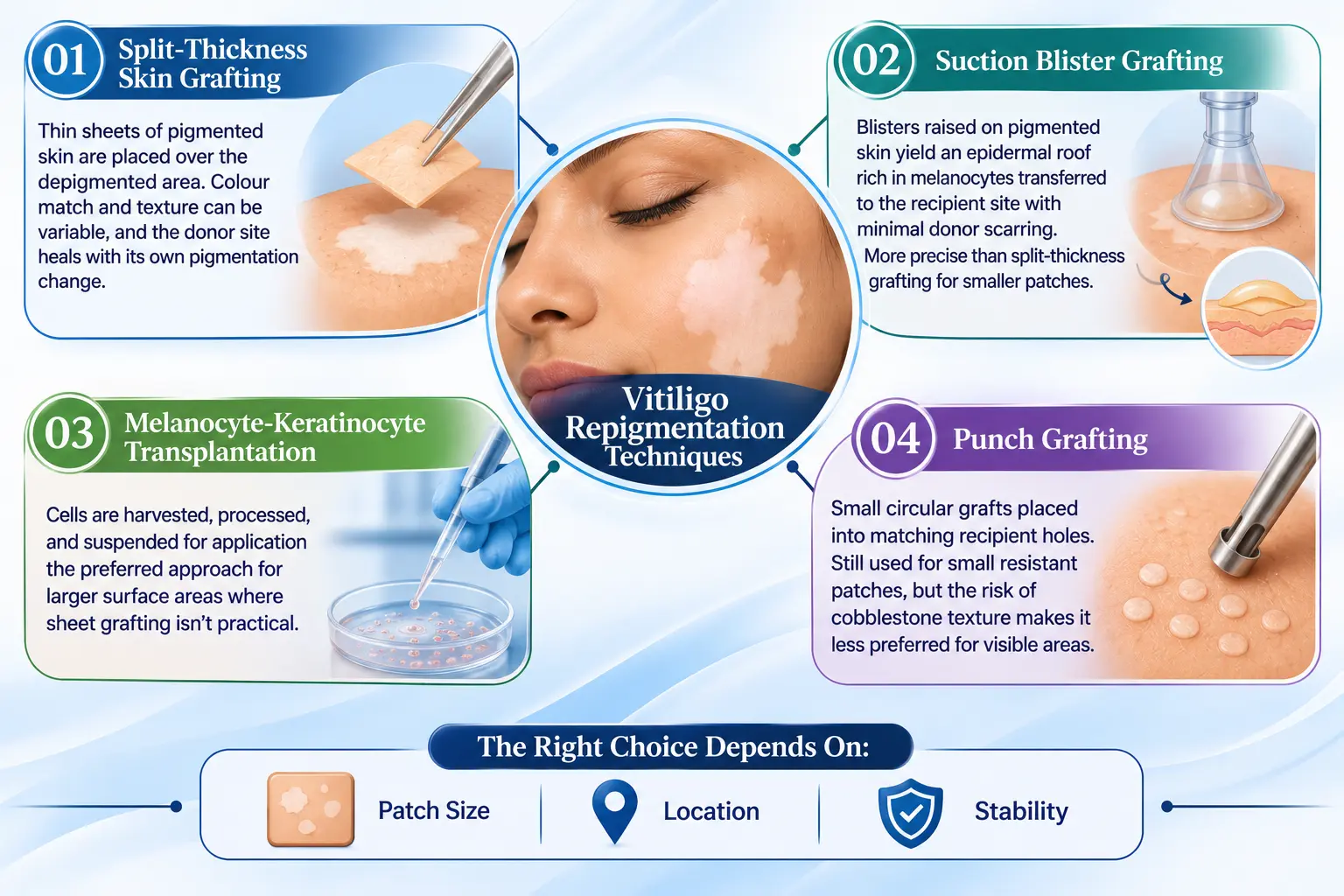
Technique selection matters more than most patients expect and that difference is permanent. The approach is chosen after assessing patch size, location, and stability, not by default. Learn more about vitiligo treatment in Hyderabad.
Who Is a Good Candidate for Vitiligo Skin Grafting?
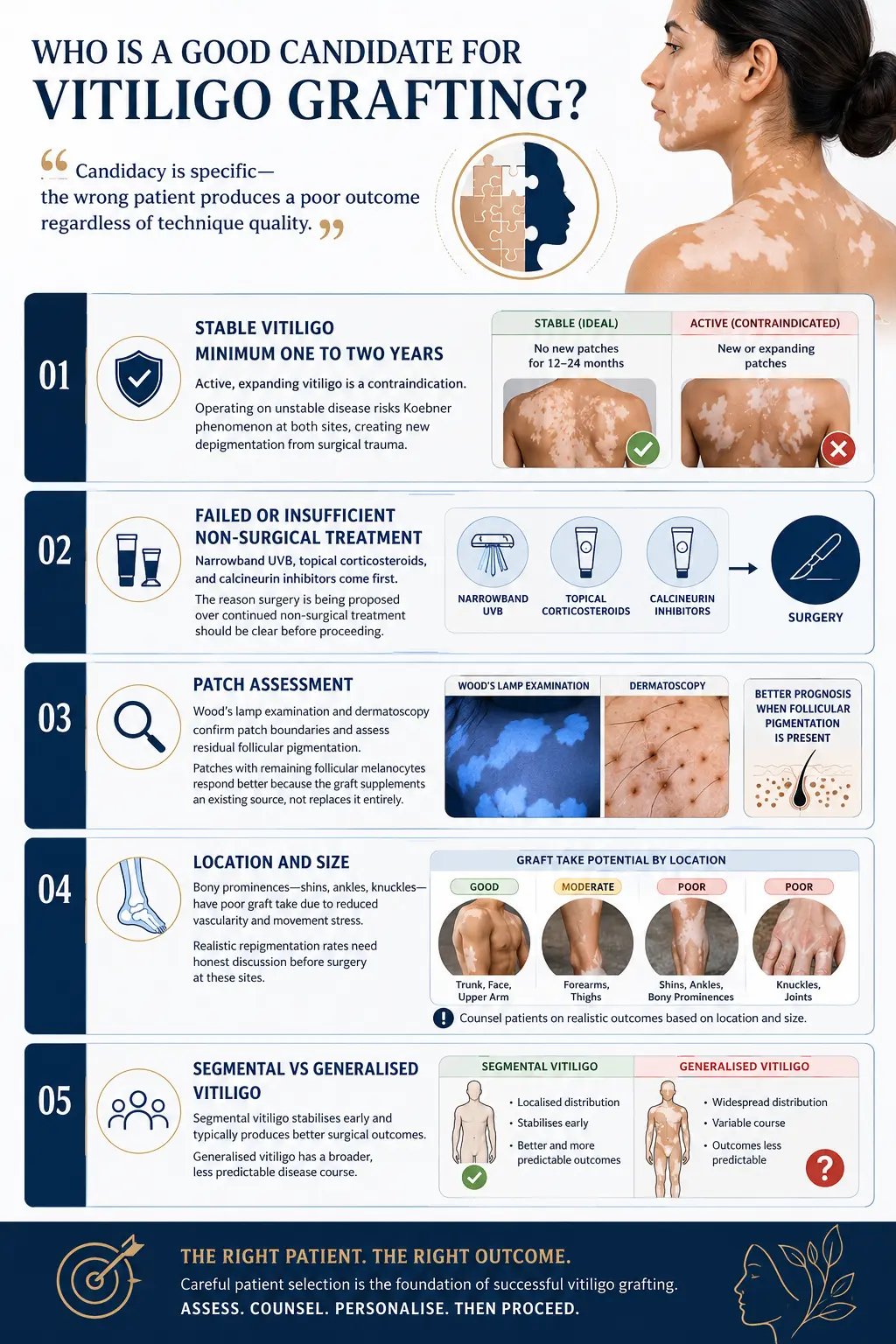
Patient selection is what makes vitiligo grafting work technique alone doesn’t. Understanding how vitiligo is treated is the first step before any grafting decision is made.
What Determines the Right Treatment Approach?
Same diagnosis, different clinical picture: patient selection is where the surgical result is actually determined.
Disease stability confirmation: Clinical history, patient-reported progression, and Wood’s lamp examination across two visits spaced three to six months apart is the standard. A single consultation isn’t sufficient to confirm the disease has truly become stable
Colour match assessment: Donor site selection affects shade match at the recipient site grafts from sun-exposed sites on darker skin can produce a slightly different tone. This is discussed before surgery, not at the three-month review.
Post-operative phototherapy: Narrowband UVB after grafting stimulates transferred melanocytes to spread beyond graft margins. Patients who commit to post-operative sessions typically achieve better coverage than those relying on the graft alone.
Koebner risk management: Patients with known Koebner phenomenon need explicit discussion about donor site risk before consent the donor scar carries the same trigger potential as any other skin trauma.
Segmental vs generalised vitiligo: A stable focal patch for three years is a different surgical position from recently stabilised generalised vitiligo across multiple areas. Disease pattern shapes the prognosis conversation as much as stability does.
Well-selected patients get good outcomes; poorly selected ones don’t. The result is determined before any incision is made starting with understanding what causes vitiligo.
Frequently Asked Questions
How long does it take to see results after vitiligo skin grafting?
Initial repigmentation is visible from six to eight weeks full colour spread and final assessment takes six to twelve months depending on technique and post-operative phototherapy compliance.
Can vitiligo come back after skin grafting?
In stable vitiligo, recurrence at the grafted site is uncommon but new patches can develop elsewhere if the underlying condition reactivates, and grafting doesn’t treat the autoimmune mechanism driving vitiligo.
Is skin grafting for vitiligo painful?
Both donor and recipient sites are managed under local or general anaesthesia during the procedure donor site discomfort during healing is the more common post-operative complaint, typically managed with standard analgesia.
Does vitiligo grafting work on the face?
Facial patches typically show good repigmentation rates the face has better vascularity than bony prominences and responds more predictably to grafting when the disease is confirmed stable.
Reference
- Surgical Techniques for Vitiligo PMC Review PubMed Central overview of autologous grafting principles, stability criteria, and technique comparison for vitiligo repigmentation.
- Split-Thickness Skin Grafting in Stable Vitiligo PMC Study Prospective study of 50 patients; covers outcomes, colour match, and technique considerations for split-thickness grafting.
- Melanocyte-Keratinocyte Transplantation Long-Term Outcomes News Medical Henry Ford Hospital study reporting five-year repigmentation data for MKTP across segmental and nonsegmental vitiligo.