
BBL’s risk comes down to one thing: where the fat is injected. Subcutaneous placement is safe; intramuscular is where fatalities originate. The article covers what makes the procedure risky, why technique determines safety more than any other factor, how to assess candidacy, and the key questions patients should ask before making a decision.
Buttock fat transfer (BBL) carries one of the highest mortality rates among elective cosmetic procedures. Not a reason to avoid it, but a reason to understand it. The risk has one source: where the fat is injected. Fat placed into the gluteal muscle can enter large venous channels and cause a pulmonary fat embolism. That’s the fatal complication. The subcutaneous layer above the muscle is safe. The muscle itself is not. This isn’t about anatomy or facility equipment. It’s entirely technique-specific, what the surgeon does with the cannula.
According to Dr Harikiran Chekuri, a plastic surgeon in Hyderabad, “The safety record for this procedure has improved as the field shifted toward subcutaneous-only injection; the risk drops substantially when fat is never placed into or below the gluteal muscle, and that is the standard we followed at Redefine.”
What Makes Buttock Fat Transfer Risky and What Doesn’t?
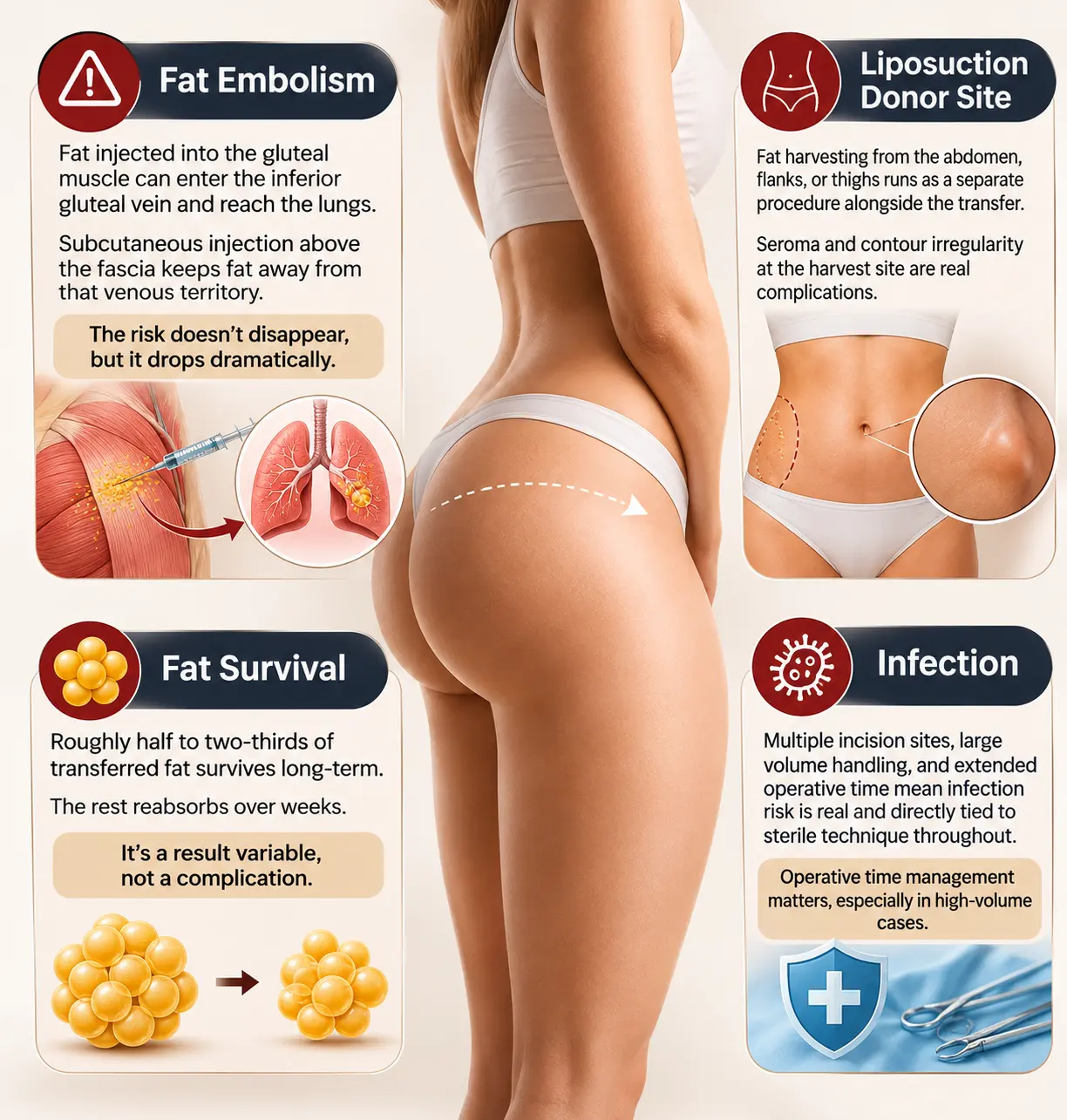
The mortality data that made BBL the most scrutinised cosmetic procedure globally traces almost entirely to intramuscular injection. Centres that have genuinely shifted to subcutaneous-only technique combined with precision liposuction for fat harvesting have changed that picture considerably.
Why Does Surgical Technique Specifically Determine Safety?
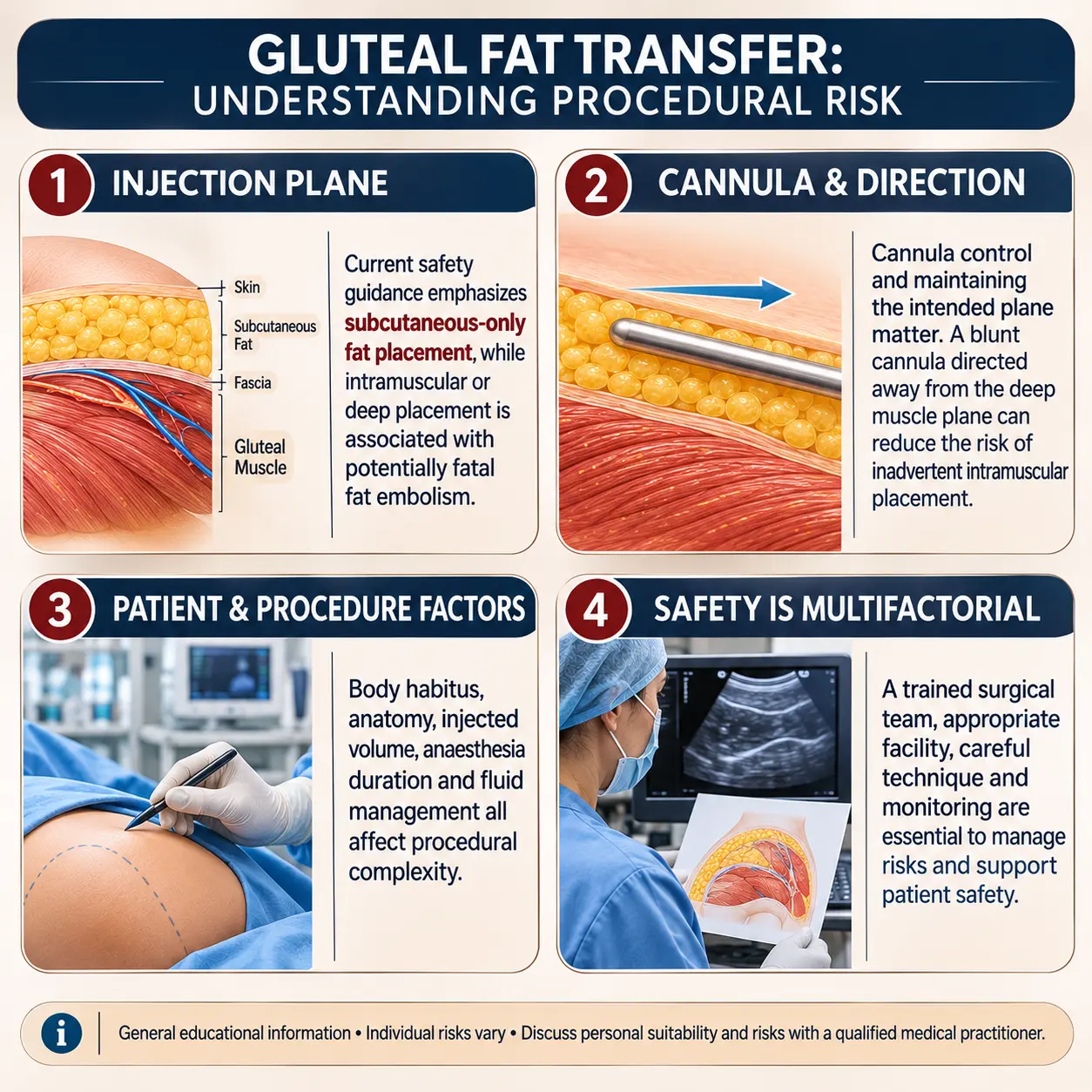
Technique isn’t a soft differentiator in BBL. It’s the primary safety variable and the gap between surgeons on this specific point is wider than in almost any other cosmetic operation. For anyone weighing this seriously, understanding how hip dip fat transfers actually work is a reasonable place to start before the surgical conversation.
What Determines the Right Treatment Approach?
Candidacy assessment: Adequate donor fat, stable weight for at least six months, no contraindications to general anaesthesia or large-volume liposuction these need to be confirmed before technique becomes relevant. Patients pushed toward surgery before meeting basic criteria are at higher risk regardless of surgeon quality.
Surgeon-specific questions: Which plane does the surgeon inject into? Blunt or sharp cannulas? What’s the intraoperative protocol if deep placement is suspected? A surgeon who can’t answer these directly is information in itself.
Facility standards: This procedure requires a fully equipped surgical facility with anaesthesia support and resuscitation capability. Not a clinic procedure room. Where the surgery happens carries its own risk contribution, independent of technique.
Post-operative positioning: Sitting directly on newly transferred fat compresses the grafts and reduces survival. Six to eight weeks of off-loading prone sleeping, side-lying, a BBL cushion when seated is standard protocol. Patients who travel long distances or work desk jobs need to think through compliance before booking, not after.
The right candidate, the right surgeon, the right facility. Miss one and the other two don’t fully compensate. The same principle applies when fat transfer is used elsewhere patients considering fat transfer for breast augmentation face the same three-variable equation, and the same questions apply.
Frequently Asked Questions
What is the safest technique for buttock fat transfer?
Subcutaneous-only injection above the gluteal fascia, fat away from the deep venous structures where the fatal complication originates.
How much of the transferred fat survives long-term?
Roughly half to two-thirds takes permanently. The rest reabsorbs over weeks and is a normal part of the process, not a complication.
Can buttock fat transfer be revised if results are unsatisfactory?
Additional sessions are possible after the first round stabilises, usually six months out once reabsorption is complete and final volume is readable.
How do I know if a surgeon is using safe technique?
Ask directly which plane they inject fat into, what cannula type they use, and whether the procedure is performed in a fully equipped facility. How they answer tells you as much as what they say.
Reference
- Rodrigues TS, et al. (2020).Improvement in BBL safety following subcutaneous-only technique recommendations. Aesthetic Surgery Journal, PubMed, National Library of Medicine.
- Marallo M, et al. (2023).Gluteal fat grafting complications, facility standards, and patient safety considerations. Plastic and Reconstructive Surgery Global Open, PubMed Central (PMC), National Institutes of Health.
- Pazmiño P, Garcia O. (2023).BBL-associated mortality and the role of surgical technique and setting. Aesthetic Surgery Journal, PubMed Central (PMC), National Institutes of Health.