FUE and DHI are not two different procedures. DHI is a modification of FUE that changes how grafts are implanted, not how they are extracted. The distinction matters for hairline precision, session length, cost, and which patients each technique suits best. This blog covers the mechanism of each, what the clinical evidence shows on graft survival, who each technique is right for, and what Redefine offers across both.
DHI is not a separate procedure from FUE. It is a modification of it.
Both techniques extract follicular units from the donor area using the same micro-punch method. What differs is what happens next. In standard FUE, the surgeon creates recipient channels in the scalp first, then places grafts into those channels. In DHI, a Choi implanter pen creates the channel and places the graft simultaneously in a single motion. That single mechanical difference is what produces all the clinical distinctions between the two.
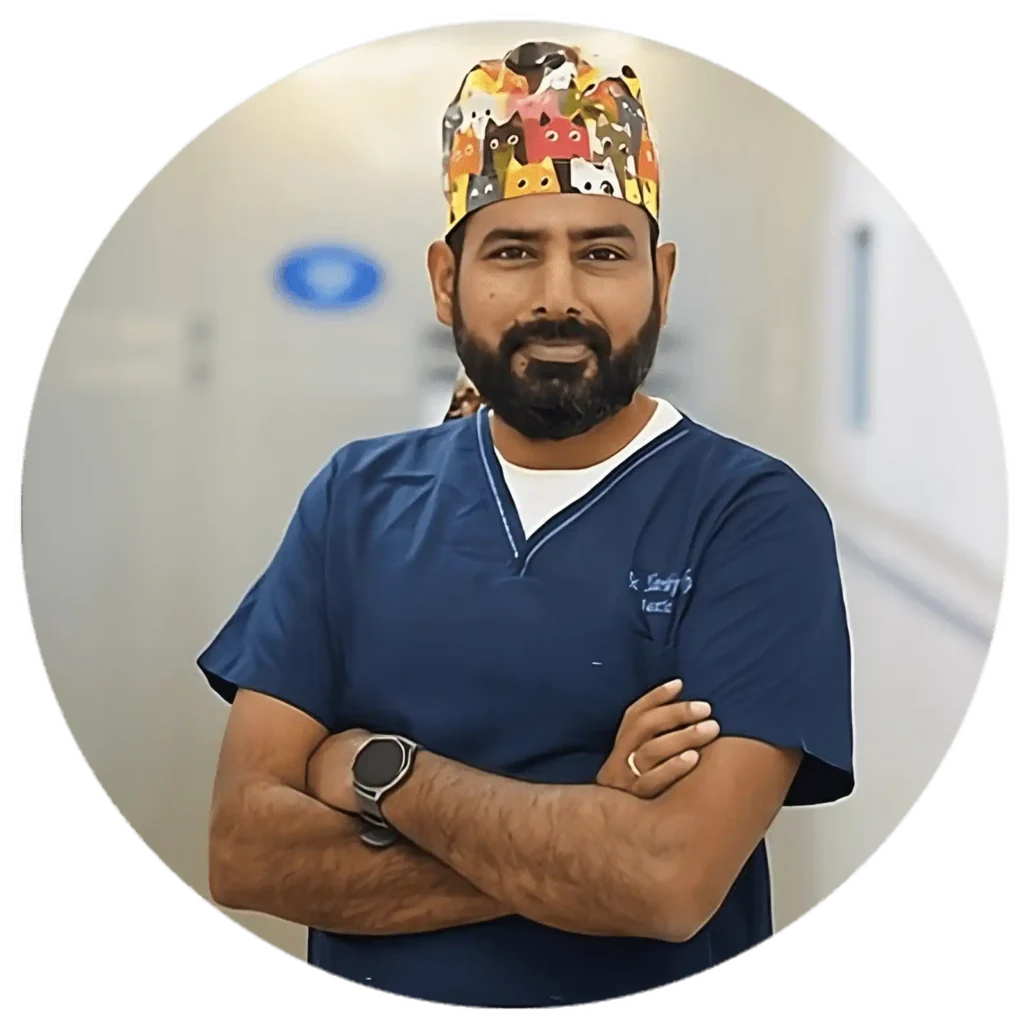
According to Dr Harikiran Chekuri, one of India’s pioneering plastic surgeons and hair transplant specialists, “The question is never which technique is better in the abstract. It is which one is better for this patient’s hair loss pattern, graft count, and result goal. FUE is more practical for larger sessions and significant coverage. DHI gives surgical control over angle and direction that makes a difference specifically at the hairline. The technique follows the clinical need, not the other way around.”
What Each Technique Actually Does and How They Differ?
The extraction stage is identical. The implantation stage is where they diverge.
| FUE | DHI | |
| Extraction method | Micro-punch, same as DHI | Micro-punch, same as FUE |
| Implantation method | Recipient channels created first, grafts placed with forceps | Choi implanter pen creates channel and places graft simultaneously |
| Graft handling | Grafts stored in solution between extraction and implantation | Loaded directly into pen, reduced time out of body |
| Angle and direction control | Good, surgeon-dependent | Superior mechanical control per graft |
| Density per session | Higher graft count achievable | Lower graft count per session, more time-intensive |
| Session length | Shorter for same graft count | Longer due to pen loading time |
| Shaving required | Full donor area shaved | Possible to perform with less shaving in recipient area |
| Best suited for | Larger areas, Norwood 3 to 6, high graft count sessions | Hairline precision, beard transplant, adding density to existing hair |
| Cost | Lower per graft | Higher per graft due to technique time and tool |
| Graft survival | 90 to 95 percent in well-performed cases | 90 to 97 percent, marginally higher due to reduced graft handling time |
- FUE is the most widely used technique, with 90%+ follicle survival at 12 months in a 2024 BMC Surgery study. It suits most patients and hair loss grades. Redefine performs standard FUE and Bio FUE, which adds growth factor preservation for improved survival and density.
- DHI reduces graft handling time through the Choi pen’s single-step load-and-implant process, with published survival rates of 90–97%. Its clearest clinical advantage is angle and direction precision — most relevant at the hairline.
- Surgeon skill matters more than technique. Peer-reviewed data shows both methods converge to 90–95% graft survival in experienced hands. Transection rate, handling protocol, time out of body, and implantation skill collectively outweigh the choice of tool.
Who Each Technique Is Right For and When to Combine Them?
- FUE suits: Larger hair-loss grades, high graft counts in one session, and coverage over a large area. More cost-effective per graft and more practical for significant baldness correction.
- DHI suits: Hairline design where precise angle and direction per graft is the clinical priority. Adding density into existing hair without shaving the recipient area. Beard and eyebrow transplant where single-hair directional precision is essential. Patients who want less visible shaving in the recipient zone
- Bio FUE at Redefine: FUE with growth factor-preserved graft solution, which improves graft viability during the period between extraction and implantation. Produces better density outcomes than standard FUE without the time and cost premium of DHI. The most commonly recommended approach at Redefine for patients who want enhanced outcomes from FUE. Patients can read more at Bio FUE Hair Transplant at Redefine
- Combining FUE and DHI in one session: Used when covering a large area with FUE while adding precise hairline work with DHI. The combination uses the efficiency of FUE for bulk coverage and the precision of DHI where it matters most
- What does not change between techniques: The donor area assessment, hair loss stability requirement, minimum donor density threshold, and post-operative washing and scab management protocol are identical across both. Neither technique changes the fundamental candidacy criteria.
Why Choose Redefine for Hair Transplant in Hyderabad?
At Redefine Hair Transplant and Plastic Surgery Centre, FUE, Bio FUE, and DHI are all performed by Dr Harikiran Chekuri, who brings over 20 years and more than 20,000 procedures to every case. He is a Gold Medallist in Plastic Surgery from NTR University of Health Sciences, Paul Harris Fellow, and Vaidya Siromani awardee 2015. Redefine has been ranked No.1 Plastic Surgery Centre in the Twin States by the Times of India Health Survey for three consecutive years, 2019, 2020, and 2021.
The technique recommended at Redefine is determined by the trichoscopy-based donor assessment, hair loss grade, graft count requirement, and desired result confirmed during consultation. Patients are not sold a technique. They are recommended the one their case supports.
Frequently Asked Questions
What is the main difference between FUE and DHI?
Both use the same extraction method. DHI uses a Choi implanter pen that creates the recipient channel and places the graft simultaneously, versus FUE where channels are created first and grafts placed separately. This gives DHI better angle and direction control per graft, particularly at the hairline.
Is DHI better than FUE?
Not universally. DHI offers precision advantages at the hairline and in density work into existing hair. FUE is more practical for larger sessions and significant baldness coverage. Graft survival rates are comparable between both techniques when performed by experienced teams.
What is Bio FUE?
Bio FUE is standard FUE with the addition of growth factor-enriched preservation solution for the grafts between extraction and implantation. It improves graft viability and density outcomes without the time and cost premium of DHI.
Does DHI require full head shaving?
Not necessarily. DHI can be performed with less shaving in the recipient area, which is one reason it suits patients who cannot shave their head for professional or personal reasons.
Which technique has better graft survival?
Both achieve 90 to 95 percent graft survival in well-performed cases. DHI shows marginally higher rates in some studies due to reduced graft handling time. Surgeon skill and graft handling protocol are more significant determinants than technique choice.
Reference
- Direct Hair Transplantation: A Modified Follicular Unit Extraction Technique
https://pmc.ncbi.nlm.nih.gov/articles/PMC3764754/ - StatPearls. Hair Transplantation. NCBI. 2024.
https://www.ncbi.nlm.nih.gov/books/NBK547740/ - Okhovat JP, et al. Hair Transplant: Patient Candidacy, Medical Optimization, and Surgical Considerations. International Journal of Dermatology. 2026.
https://pubmed.ncbi.nlm.nih.gov/40660483/