
PCOS affects 20 to 30 percent of women who develop female pattern hair loss. A hair transplant is a clinically recognised option for PCOS-related hair loss, but it is not the first step and not always the right one. This blog covers how PCOS causes hair loss, what makes a woman with PCOS a suitable candidate, what needs to be in place before surgery, and what the clinical evidence actually shows.
The question assumes you have to choose one. You might. You might not.
SMP creates the appearance of hair. A transplant grows actual hair. That single distinction determines almost everything about which one is appropriate for a given patient. Getting that wrong produces a result that looks off, costs money to fix, and does not address what actually needed correcting.
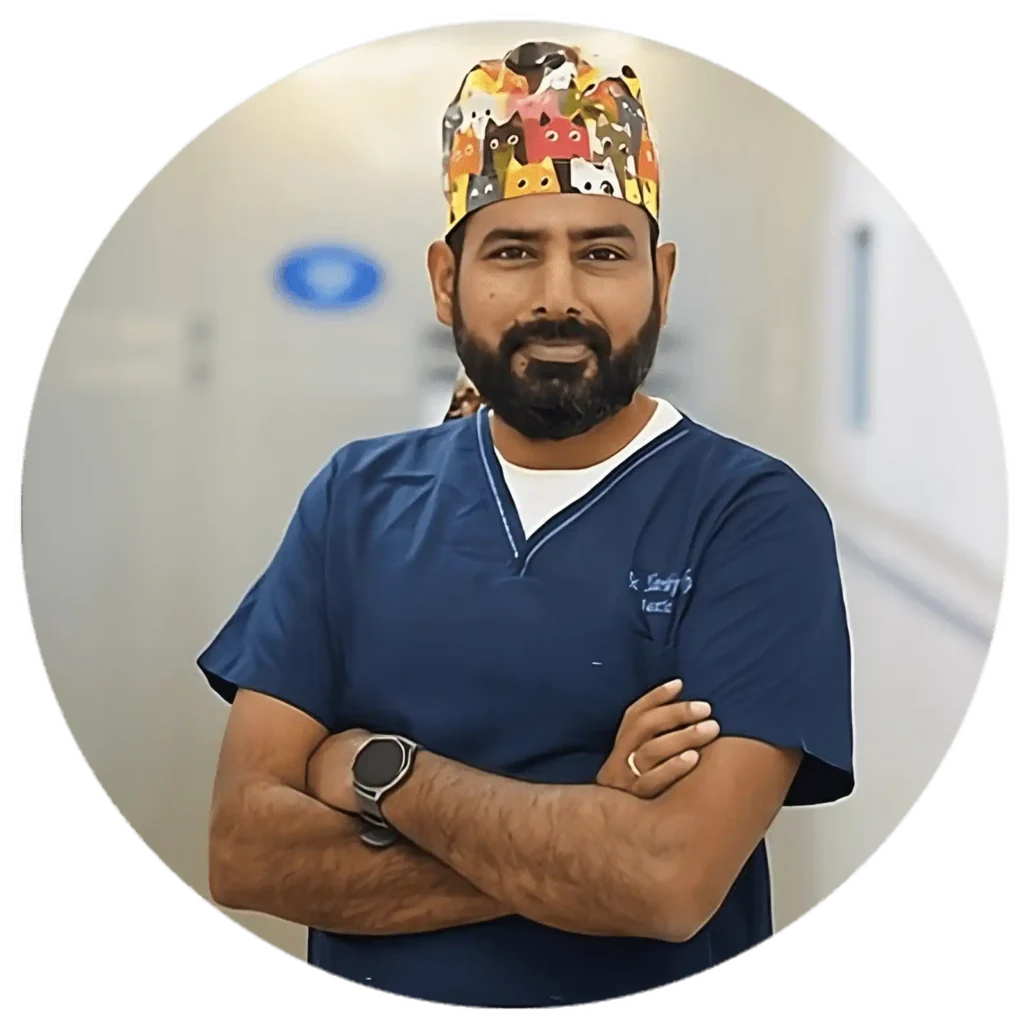
According to Dr Harikiran Chekuri, one of India’s pioneering plastic surgeons and hair transplant specialists, “Patients arrive having already decided between SMP and a transplant based on cost or what they saw online. The right answer comes from the scalp examination, not the internet. Donor density, loss pattern, and what the patient actually wants from the result are what determine the answer. Not the procedure’s popularity.”
What Does Each Procedure Actually Do?
The mechanism is entirely different. Understanding that is the starting point.
| Scalp Micropigmentation (SMP) | Hair Transplant (FUE) | |
| What it does | Deposits pigment into the scalp to mimic the appearance of hair follicles | Moves healthy, DHT-resistant follicles from donor to recipient area |
| Result | Appearance of a shaved head or added density between existing hair | Real hair that grows, can be cut and styled |
| Surgical | No | Yes |
| Downtime | Minimal, 2 to 3 days | 7 to 14 days |
| Permanence | Semi-permanent, fades over 3 to 5 years, requires touch-ups | Permanent for transplanted follicles |
| Donor hair required | No | Yes, adequate donor density essential |
| Styling flexibility | Limited, buzz cut or shaved look for full baldness coverage | Full styling flexibility as hair grows |
| Best for | Advanced baldness, insufficient donor hair, scar camouflage, density illusion | Early to mid-stage loss with adequate donor supply |
| Can be combined | Yes, SMP used to add density where transplant coverage is incomplete | Yes, transplant followed by SMP for fuller visual result |
Redefine offers both procedures. Patients can read more about what Scalp Micropigmentation at Redefine involves before their consultation, and what the procedure looks like on different scalp types.
Who Is Each One Right For and Where Does Each One Fall Short?
This is the question that determines the answer. A 2024 retrospective study in the Journal of Cosmetic Dermatology specifically compared treatment selection between SMP and hair transplant in female pattern hair loss patients and found no formal clinical criteria currently exist to guide the choice, making the in-person assessment the only reliable basis for a recommendation.
SMP is the right primary choice when:
- Hair loss is advanced, Norwood 6 to 7 in men or Ludwig III in women, where donor hair is insufficient for meaningful transplant coverage
- The patient wants the appearance of a closely shaved head with full visual coverage
- Donor density is too low or too diffuse for surgery to produce a satisfying result
- Scarring from a previous FUT strip procedure needs camouflage
- Active scalp conditions or health factors make surgery inappropriate
- The patient wants immediate visual improvement without surgical downtime
SMP falls short when:
- The patient wants to style, grow, or vary their hair length. SMP works at buzz-cut or shaved length. Longer styling exposes the pigmented scalp against growing hair
- The patient has early-stage loss with good donor density. Surgery delivers a superior long-term result in this scenario
- The pigment is not matched and applied precisely. Poorly performed SMP is visually obvious and psychologically distressing. A 2025 retrospective study found improperly performed SMP causes significant mental distress in patients
Hair transplant is the right primary choice when:
- Hair loss is early to mid-stage with a stable, well-defined pattern
- Donor density is adequate and confirmed by dermoscopy
- The patient wants natural growing hair they can style freely
- Hair loss has been stable for at least 12 months
- Medical therapy has been trialled and the loss is not actively progressing
Hair transplant falls short when:
- Donor supply is insufficient for the area needing coverage
- Hair loss is still actively progressing and the pattern is unstable
- Advanced Norwood 6 to 7 baldness means available grafts cannot realistically cover the recipient area
- The patient is not willing or able to commit to the recovery period
When combining both is the right answer:
SMP is used alongside a transplant to add visual density in areas where graft coverage is incomplete, to camouflage the linear FUT scar, or to create the appearance of a fuller result while transplanted hair is still growing in. Patients considering a combined approach can read more about Hair Transplant at Redefine and how the two procedures complement each other
Why Choose Redefine for Hair Restoration in Hyderabad?
At Redefine Hair Transplant and Plastic Surgery Centre, both scalp micropigmentation and hair transplant are performed by Dr Harikiran Chekuri, who brings over 20 years and more than 20,000 procedures to every consultation. He is a Gold Medallist in Plastic Surgery from NTR University of Health Sciences, Paul Harris Fellow, and Vaidya Siromani awardee 2015. Redefine has been ranked No.1 Plastic Surgery Centre in the Twin States by the Times of India Health Survey for three consecutive years, 2019, 2020, and 2021.
Because Redefine offers both procedures, the recommendation at consultation is based on what the scalp examination shows, not on which procedure the clinic happens to specialise in. Patients receive the option that fits their hair loss, not the option that fits the clinic’s preference.
Frequently Asked Questions
Is scalp micropigmentation better than a hair transplant?
Neither is universally better. SMP creates the appearance of hair without surgery. A hair transplant grows real hair permanently. The right choice depends on the stage of hair loss, donor density, and what result the patient wants.
Can SMP and hair transplant be done together?
Yes. SMP is frequently used alongside a transplant to add visual density where graft coverage is incomplete, camouflage FUT scarring, or enhance the appearance of the result while transplanted hair is still growing.
How long does scalp micropigmentation last?
SMP is semi-permanent. Pigment fades over three to five years depending on sun exposure, skin type, and aftercare. Touch-up sessions maintain the result.
Who is not suitable for a hair transplant?
Patients with insufficient donor density, actively progressing hair loss, Norwood 6 to 7 baldness where coverage would be incomplete, or health conditions that make surgery inappropriate. These patients are often better served by SMP as a primary option.
Does SMP look natural?
When performed correctly with matched pigment, appropriate follicle sizing, and a natural hairline design, SMP is not visually detectable at normal social distance. Results depend entirely on the skill and experience of the practitioner.
References
- Park JH, et al. Hair Transplantation Versus Scalp Micropigmentation: A Retrospective Study of Treatment Selection in Persons With Female Pattern Hair Loss. Journal of Cosmetic Dermatology. 2024.
https://onlinelibrary.wiley.com/doi/10.1111/jocd.16429 - PMC. Scalp Micropigmentation Is an Effective Treatment for Localized Alopecia: Technical Analysis and a Series of Ten Case Reports. 2025.
https://pubmed.ncbi.nlm.nih.gov/40899372/ - Scalp Micropigmentation Is an Effective Treatment for Localized Alopecia: Technical Analysis and a Series of Ten Case Reports.
https://pubmed.ncbi.nlm.nih.gov/40899372/