
Wearing a helmet after a hair transplant is safe from around four weeks post-surgery for most patients, provided grafts have anchored properly and scabbing has fully resolved. The first two weeks are the highest-risk window when grafts are most vulnerable to pressure and friction. Any headwear pressing directly on the scalp during this period risks dislodging grafts and compromising the surgical outcome.
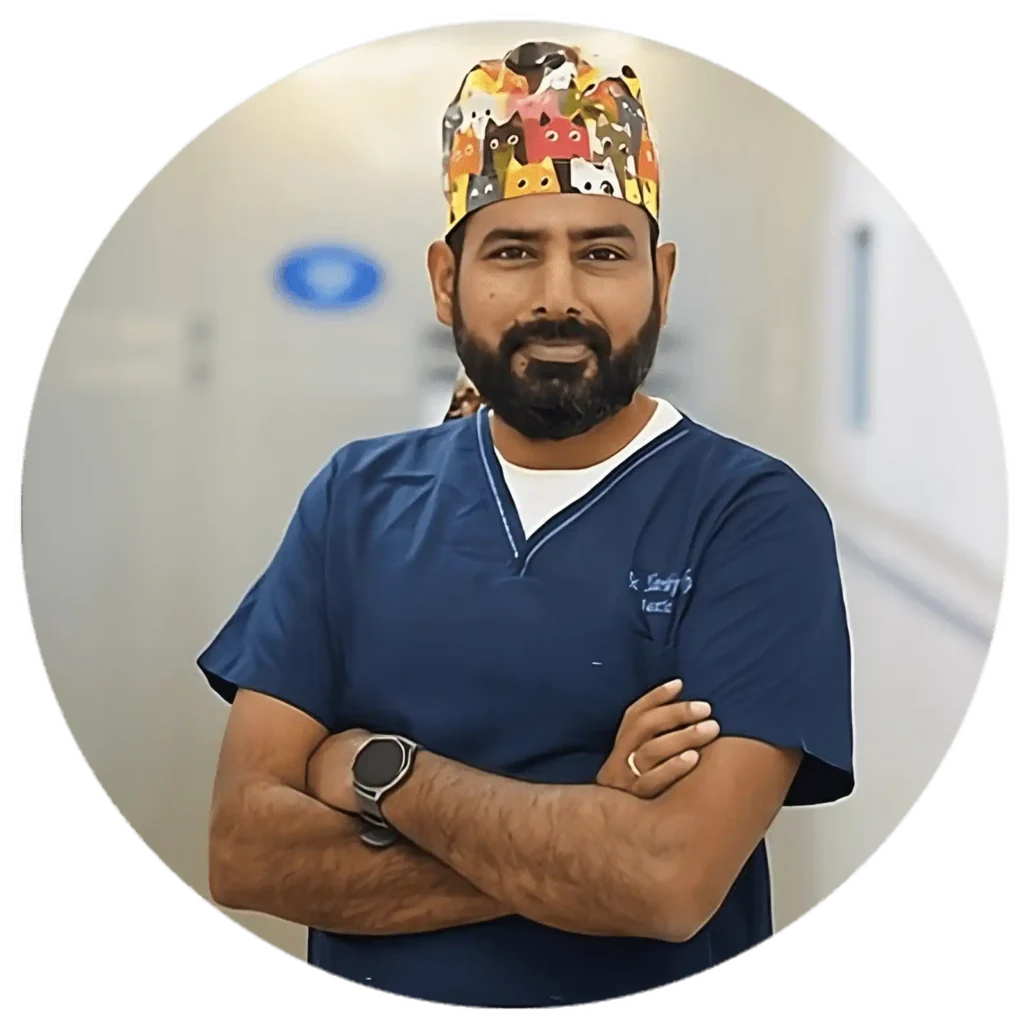
According to Dr Harikiran Chekuri, one of India’s pioneering plastic surgeon, “A helmet question is really a graft security question. The follicle anchors progressively in the first three to four weeks and any consistent pressure on the scalp during that window creates a real risk. Patients who need to wear a helmet for work or sport need a clear plan from their surgeon before surgery, not after.“
How Is Temple Hair Transplant Technically Different from Crown Treatment?
Temples and crown are two of the most surgically distinct zones on the scalp. The differences in anatomy, blood supply, and natural hair direction change how surgery is planned for each.
- Hairline design: Temple restoration requires precise design of a visible facial frame with grafts placed at very low acute angles to mimic natural temple recession. Crown treatment follows a spiral whorl pattern unique to each patient that demands angle mapping across a wider zone.
- Graft angle and direction: Temple grafts are placed at extremely flat angles, often below ten degrees, to produce a natural feathered appearance at the hairline edge. Crown grafts require varying angles rotating around a central whorl point, making consistent placement more technically demanding.
- Blood supply: The temple zone has reliable vascular density supporting consistent early graft survival. The crown has comparatively lower blood supply, which delays follicle activation and means density builds more gradually.
- Graft count and surface area: Temple restoration typically needs fewer grafts concentrated in a defined zone. Crown treatment covers a larger surface area and often requires significantly more grafts to achieve comparable visible density.
- Growth timeline: Temple results are visible earlier because of better blood supply and a smaller surface area. Crown results take longer to fill in, with most patients seeing full density only at twelve to eighteen months post-surgery.
Understanding these differences changes how surgical planning is approached for each zone. For patients in Hyderabad, Redefine Hair Transplant and Plastic Surgery Center plans temple and crown restoration as separate surgical considerations rather than applying a single generic protocol across both zones.
What Should Patients Know Before Choosing Temple or Crown Hair Transplant?
The decision to treat temples versus crown, or both simultaneously, depends on clinical factors beyond what the patient sees in the mirror. Getting this assessment right before surgery is what determines whether results look natural long term.
- Treating one zone versus both: Some patients present with recession at temples and crown simultaneously. Treating both in one session increases graft demand significantly and requires careful donor assessment to confirm supply is adequate for the combined graft count.
- Age and progression planning: Temple recession in younger patients can continue progressing after surgery if underlying androgenetic alopecia is not medically managed. A surgically placed temple hairline that gets overtaken by further recession looks unnatural within a few years.
- Crown priority consideration: The crown demands more grafts, has a slower growth timeline, and produces less immediate visual impact than temple restoration. Patients with limited donor supply are often advised to prioritise the frontal frame before committing grafts to the crown.
- Natural whorl direction: Every patient’s crown whorl is unique. Mapping the natural spiral direction before surgery determines how grafts are placed and is a clinical assessment step that cannot be skipped or estimated visually.
- Realistic density expectations: Full coverage density in the crown from a single session is rarely achievable for patients with significant loss. The surgical plan needs to set realistic expectations about what one session delivers versus what a staged approach produces.
Most patients who combine temple and crown treatment in one session benefit from a clear pre-surgical plan that addresses donor supply, progression management, and staged expectations for each zone. Read about crown hair transplant to understand how crown-specific results develop over time and what the six-month picture typically looks like.
Your hairline frame and crown are different surgical problems. Get them assessed separately.
Why Choose Redefine for Temple and Crown Hair Transplant?
Dr. Harikiran Chekuri is one of India’s pioneering surgeons in hair transplant and approaches temple and crown restoration as distinct surgical zones requiring separate planning for graft angle, density distribution, and progression management rather than a single uniform approach applied across the whole scalp.
Patients who come to Redefine Hair Transplant and Plastic Surgery Center receive zone-specific surgical planning covering hairline design, whorl mapping, donor assessment, and long-term progression before any procedure date is confirmed.
Frequently Asked Questions
Is temple hair transplant different from crown hair transplant?
Yes, they differ in graft angle, blood supply, surface area, density planning, and growth timeline, requiring separate surgical approaches for each zone.
Which takes more grafts, temple or crown hair transplant?
Crown treatment typically requires more grafts due to larger surface area, while temple restoration uses fewer grafts concentrated in a defined facial frame zone.
Can temple and crown be treated in one hair transplant session?
Yes, but combined treatment significantly increases graft demand and requires careful donor assessment to confirm supply is adequate for both zones.
Why does crown hair transplant take longer to show results?
The crown has lower blood supply than the temple zone, which delays follicle activation and means full density typically appears between twelve and eighteen months post-surgery.
REFERENCE LINKS
- International Society of Hair Restoration Surgery: https://www.ishrs.org
- American Academy of Dermatology — Hair Loss: https://www.aad.org/public/diseases/hair-loss
- PubMed Central — Androgenetic Alopecia and Hair Restoration: https://www.ncbi.nlm.nih.gov/pmc
Disclaimer: Reference links are provided solely for academic and clinical context and do not imply endorsement or accountability for third-party medical content.