
FUE extraction leaves tiny circular wounds across the donor zone that close within days, scab within a week, and blend into surrounding hair within a month. The donor area heals faster than the recipient zone and causes far less long-term concern. Most patients stop noticing it completely by week four.
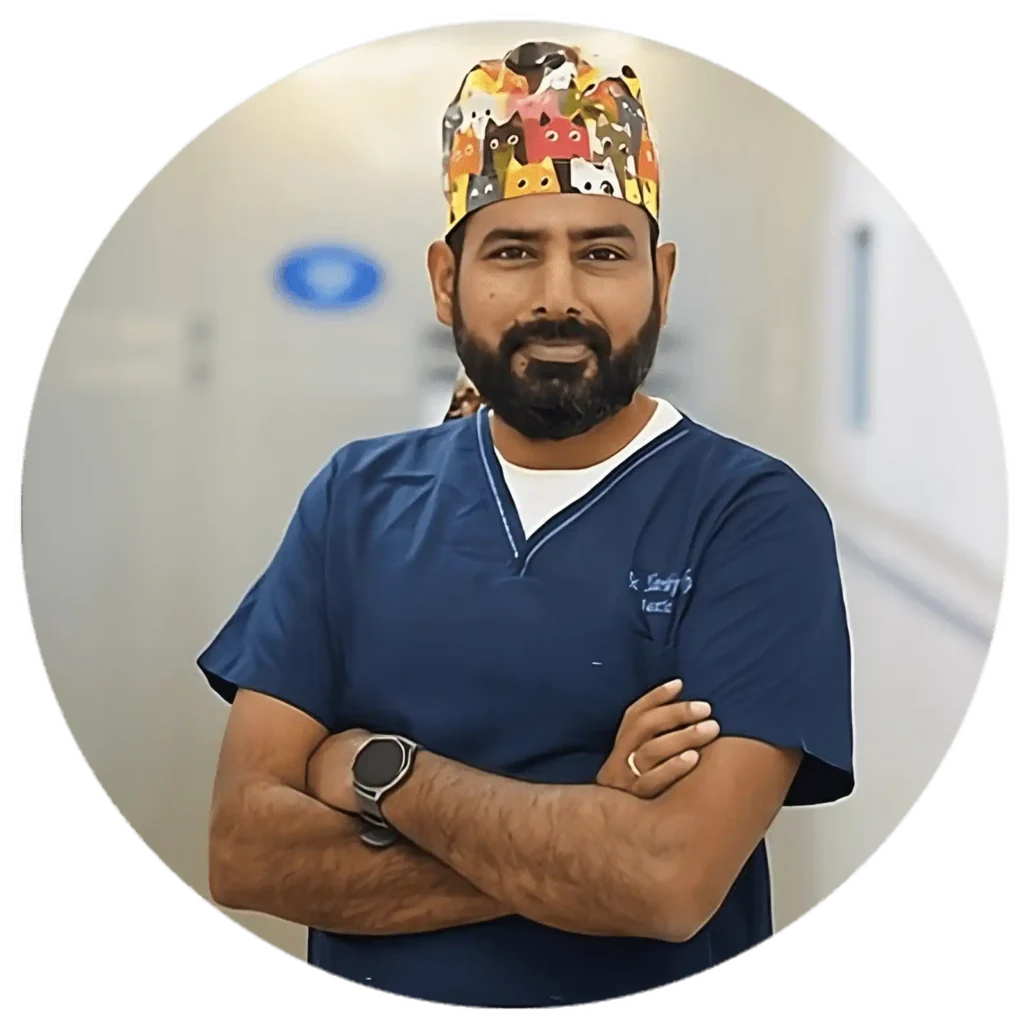
According to Dr Harikiran Chekuri, one of India’s pioneering plastic surgeon, “FUE donor recovery is genuinely straightforward when patients know what each week looks like. Most anxiety comes from not knowing what is normal at each stage rather than anything actually going wrong.“
What Does FUE Donor Area Recovery Look Like Week by Week?
Each week in donor recovery has a distinct appearance and most of what patients worry about in week one is the most normal part of the process.
- Days 1 to 3: Small red dots mark each extraction point across the donor zone with mild swelling and tenderness, and the area feels tight as initial inflammation peaks then begins settling.
- Days 4 to 7: Tiny scabs form over each extraction point as micro-wounds close, redness starts fading from the outer edges inward, and gentle washing begins following the surgeon’s specific protocol for this stage.
- Week 2: Scabs fall off naturally as healing progresses beneath them, visible redness clears significantly, and extraction points become small pale dots that surrounding donor hair begins covering.
- Week 3 to 4: The donor zone looks largely normal to the eye, surrounding hair covers extraction sites comfortably, and most patients are at ease with their hair at its natural length by this point.
- Month 2 to 3: Extraction points have fully integrated into the surrounding scalp, any residual pinkness has cleared, and the donor area is visually indistinguishable from its pre-surgery appearance in the vast majority of patients.
Proper aftercare from day one is what keeps this timeline on track, and patients who follow the protocol consistently heal faster and with less visible evidence than those who don’t. For patients in Hyderabad, Redefine Hair Transplant and Plastic Surgery Center provides stage-specific donor care instructions at discharge rather than a generic recovery sheet.
What Slows Down FUE Donor Area Recovery?
Most donor area complications trace back to specific aftercare mistakes rather than the surgery itself, and knowing what to avoid is as important as knowing the timeline.
- Scratching: The scabbing phase creates itching that is almost universal, but scratching dislodges scabs before wounds have closed and introduces bacteria that extend healing significantly.
- Sun exposure: Direct UV on a healing donor zone darkens extraction point scars and delays fading, and patients who go outdoors without covering the area consistently show more visible scarring at six months.
- Early strenuous exercise: Heavy physical activity in the first two weeks raises blood pressure and scalp tension, reopening micro-wounds at extraction sites and increasing infection risk.
- Tight headwear: Caps or helmets pressing directly onto the donor zone in the first ten days create friction against healing extraction points and disrupt the scab layer slowing closure.
- Skipping follow-up: Folliculitis, localised infection, and uneven healing are caught and treated easily at follow-up appointments and become significantly harder to manage when left unattended.
Getting these basics right is what separates a smooth four-week recovery from one that extends unnecessarily. Read about FUE scars to understand how the donor area looks at one year and what determines the final scarring outcome long term.
Your donor area is healing right now. Know what to protect and what to watch for.
Why Choose Redefine for FUE Hair Transplant and Donor Area Care?
Dr. Harikiran Chekuri is one of India’s pioneering surgeons in hair transplant and the post-operative care structure at Redefine is built around stage-specific guidance because donor area problems that develop in the first two weeks are almost entirely preventable with the right instructions given at the right time.
Patients who come to Redefine Hair Transplant and Plastic Surgery Center leave with a clear week by week recovery plan covering both donor and recipient zones, with follow-up checkpoints built in to catch anything that needs attention before it becomes a problem.
Frequently Asked Questions
How long does the FUE donor area take to heal?
Most patients see the donor area looking visually normal within three to four weeks, with full integration of extraction points by month two to three.
Is redness in the donor area after FUE normal?
Yes, redness in the first two weeks is part of normal healing and fades from the outer edges inward as extraction points close.
Can I exercise after FUE surgery?
Light walking is fine from day three, but strenuous exercise should be avoided for the first two weeks to prevent reopening extraction sites.
Does the donor area look different after FUE?
In most patients the donor area is visually indistinguishable from pre-surgery by month three, with extraction points covered by surrounding hair.
REFERENCE LINKS
- International Society of Hair Restoration Surgery: https://www.ishrs.org
- American Academy of Dermatology — Hair Loss: https://www.aad.org/public/diseases/hair-loss
- PubMed Central — FUE Donor Area Outcomes: https://www.ncbi.nlm.nih.gov/pmc/articles/PMC6066700/
Disclaimer: Reference links are provided solely for academic and clinical context and do not imply endorsement or accountability for third-party medical content.